Application Portfolio Management (APM) Best Practices - Define the categories of data worth capturing for every application - not a data model, but a data strategy
Application Portfolio Management (APM) Best Practices
Chapter 26. Define the categories of data worth capturing for every application - not a data model, but a data strategy
Executive Summary: Chapter Overview
IF4ITThe Bottom Line
Core Concepts
| Concept | Definition & Strategic Role |
|---|---|
| Data Strategy vs. Data Model | A data strategy identifies the categories of information the portfolio needs and the decisions each category supports; a data model specifies attributes, types, and constraints. Strategy precedes model. |
| Categories of Application Data | The high-level classes of information a portfolio requires — descriptive (what is this application), relationship (what does it connect to), financial (what does it cost), operational (how does it perform), compliance (what is it subject to), and strategic (how does it map to business intent). |
Quick Q&A
Question: What fails when APM programs start with a data model?
Question: How should the categories translate to specific attributes over time?
Read More Below
Overview
APM implementations frequently fail because they try to capture too much data too quickly, with too much required precision. Teams define exhaustive schemas with dozens of mandatory fields before a single application has been inventoried. Application Owners are presented with complex data entry requirements they find burdensome and inaccurate. Data quality degrades immediately because the collection burden is too high to sustain. The portfolio becomes a partially-populated schema with low confidence and low utility rather than a high-quality foundation for decisions.
Best Practice
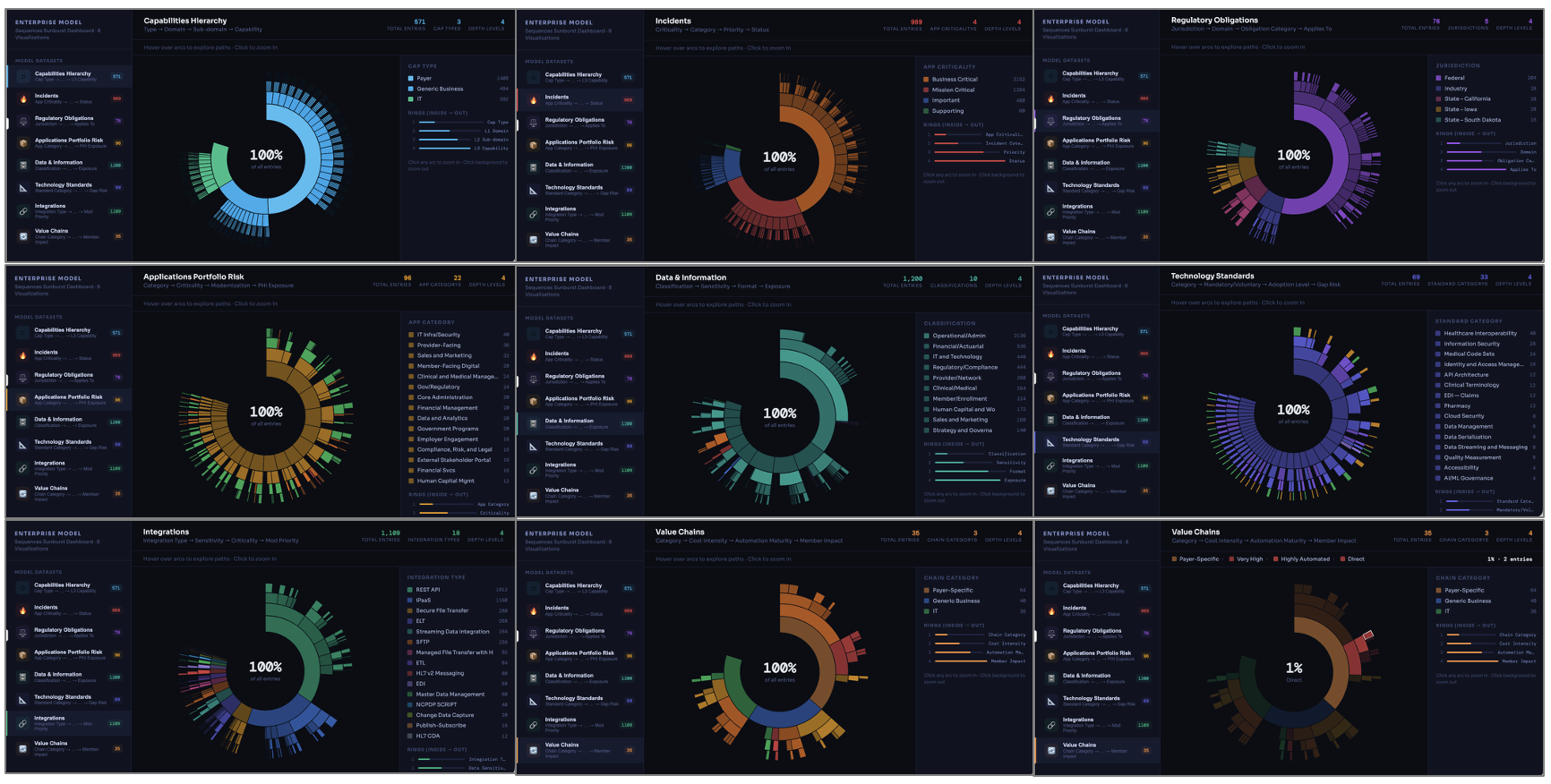
Define a data strategy rather than a data model. The data strategy identifies the categories of information worth capturing for APM purposes and their relative priority. Identity information establishes what the application is and what it does. Ownership information establishes who is accountable for it at the practice, application, and business levels. Business context establishes what capabilities and organizational units depend on it and how critical it is to ongoing operations. Lifecycle status captures where the application is in its lifecycle and what its planned trajectory is. Financial information captures what the application costs in full - including license fees, infrastructure, support, staffing, and technical debt remediation costs - and how that cost is classified. Technical context captures what technology it uses, where it runs, what its technical fitness is, and what it connects to. Risk information captures the security, compliance, vendor, and operational risks it carries. Each organization should define the specific attributes within each category that reflect its own needs and maturity level.
Benefit(s)
A data strategy that prioritizes categories over exhaustive field lists produces portfolio data that is complete enough to be useful while realistic enough to be maintained. Application Owners understand what they are being asked to contribute and why it matters. Portfolio data quality is higher because the collection burden is proportionate to the value of the data collected. The data that is captured is the data that drives decisions, rather than a comprehensive schema of which only a fraction is ever consulted.
How to cite this page
When referencing this page in academic work, internal standards, or external publications, include the page title, IF4IT as author and publisher (The International Foundation for Information Technology (IF4IT), LLC), the URL, and your access date.
Example (informal web citation):
The International Foundation for Information Technology (IF4IT), LLC. Define the categories of data worth capturing for every application - not a data model, but a data strategy | Application Portfolio Management (APM) Best Practices. https://if4it.org/best-practices/application-portfolio-management-apm/define-the-categories-of-data-worth-capturing-for-every-application-not-a-data-model-but-a-data-strategy/ (accessed 2026-07-23).
See About Us for content governance and site-wide citation guidance.
Copyright for The International Foundation for Information Technology (IF4IT), LLC: 2008 - Present
Legal Disclaimers