Start with discovery — know what you have before you claim to manage it - Enterprise Inventory Management Best Practices
Start with discovery — know what you have before you claim to manage it
(Chapter 42 of Enterprise Inventory Management Best Practices)
Executive Summary: Chapter Overview
IF4ITThe Bottom Line
Core Concepts
| Concept | Definition & Strategic Role |
|---|---|
| discovery know you | The central practice addressed by this chapter and the capability the enterprise must govern deliberately. |
| have before claim | The ownership, standards, controls, and operating discipline required to keep inventory information reliable and actionable. |
| Enterprise Model Integration | The way this practice contributes to connected enterprise knowledge, cross-inventory analysis, and better decisions. |
Quick Q&A
Question: What should an enterprise do to apply the guidance in this chapter on start with discovery — know what you have before you claim to manage it?
Read More Below
Overview
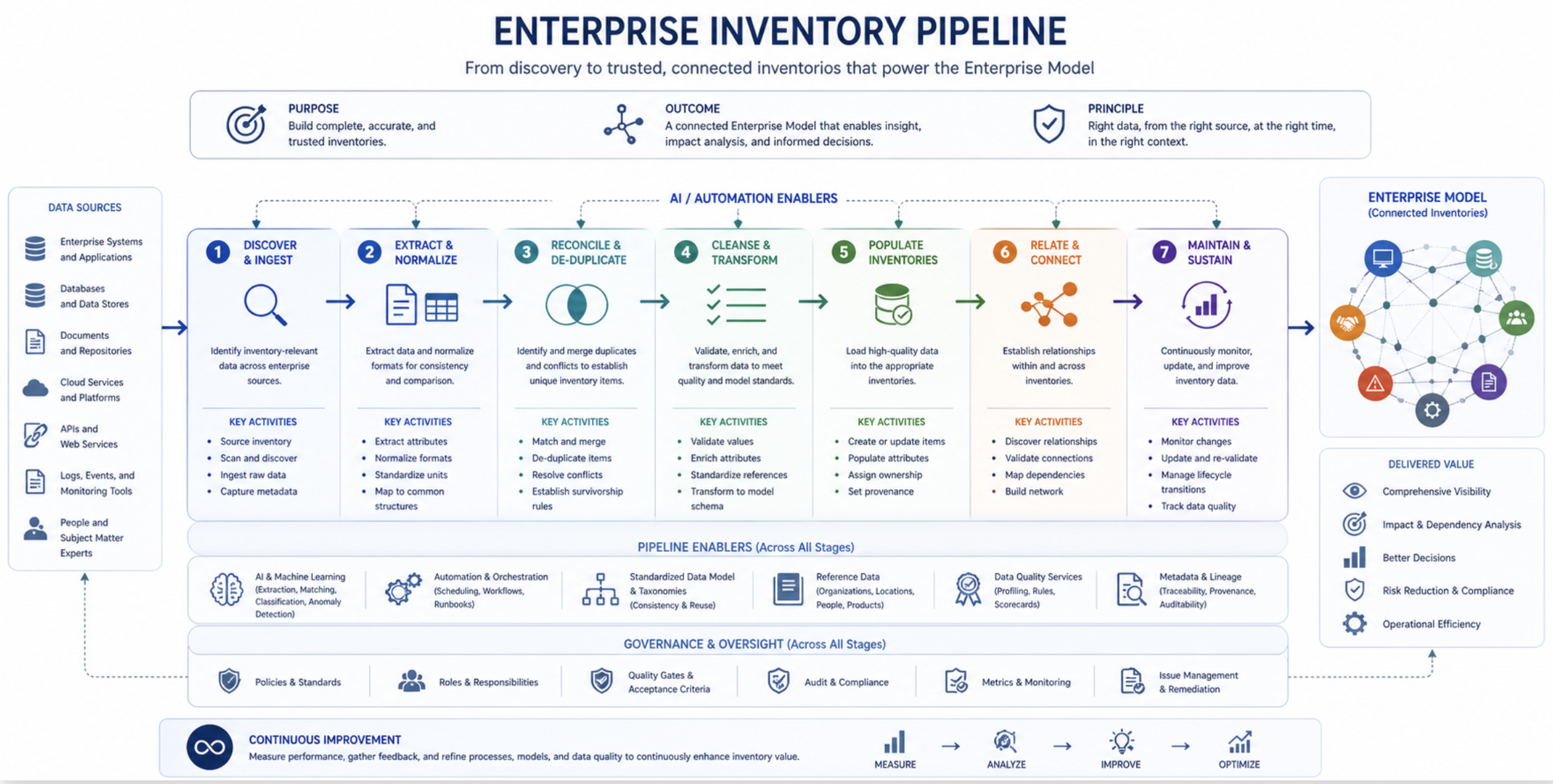
The most common failure mode at the beginning of an inventory initiative is attempting to build a comprehensive, well-structured inventory before understanding what actually exists. Teams define schemas for items they assume they have, populate entries from memory or outdated documentation, and produce inventories that are structurally sound but factually incomplete. Discovery — systematically finding out what actually exists — should precede documentation every time.
Best Practice
Begin every inventory initiative with a structured discovery phase that systematically identifies all items of the inventory type that exist in the enterprise. Use automated discovery tools where available — network scanners for computing devices and network components, software agents for installed applications, cloud account APIs for cloud resources. Supplement automated discovery with interviews, document analysis, and system queries for inventory types that cannot be discovered automatically. Document what is found, including items that were previously unknown, before beginning the population of the formal inventory.
Benefit(s)
Discovery before documentation produces inventories that reflect reality rather than assumptions. Previously unknown items — shadow IT systems, undocumented vendor relationships, informal processes — are surfaced and included. The inventory’s initial population is grounded in what actually exists rather than what teams assume or remember exists. Discovery also reveals the scope of the inventory challenge — the number of items, the diversity of types, the complexity of relationships — which informs realistic estimates of the effort required to build and maintain the inventory.
How to cite this page
When referencing this page in academic work, internal standards, or external publications, include the page title, IF4IT as author and publisher (The International Foundation for Information Technology (IF4IT), LLC), the URL, and your access date.
Example (informal web citation):
The International Foundation for Information Technology (IF4IT), LLC. Start with discovery — know what you have before you claim to manage it | Enterprise Inventory Management Best Practices. https://if4it.org/best-practices/enterprise-inventory-management/start-with-discovery-know-what-you-have-before-you-claim-to-manage-it/ (accessed 2026-09-11).
See About Us for content governance and site-wide citation guidance.
Copyright for The International Foundation for Information Technology (IF4IT), LLC: 2008 - Present
Legal Disclaimers