The International Foundation for Information Technology (IF4IT)
  • Home
  • Best Practices & More
  • Articles
  • Dictionary
  • About Us
  • Contact Us
  • Catalog
  • Search
  1. Topics
  2. Artificial Intelligence

Artificial Intelligence

Share:
Contact Us → Subscribe →
AI Agents Inventory and Attributes

Inventory

AI Agents Inventory and Attributes

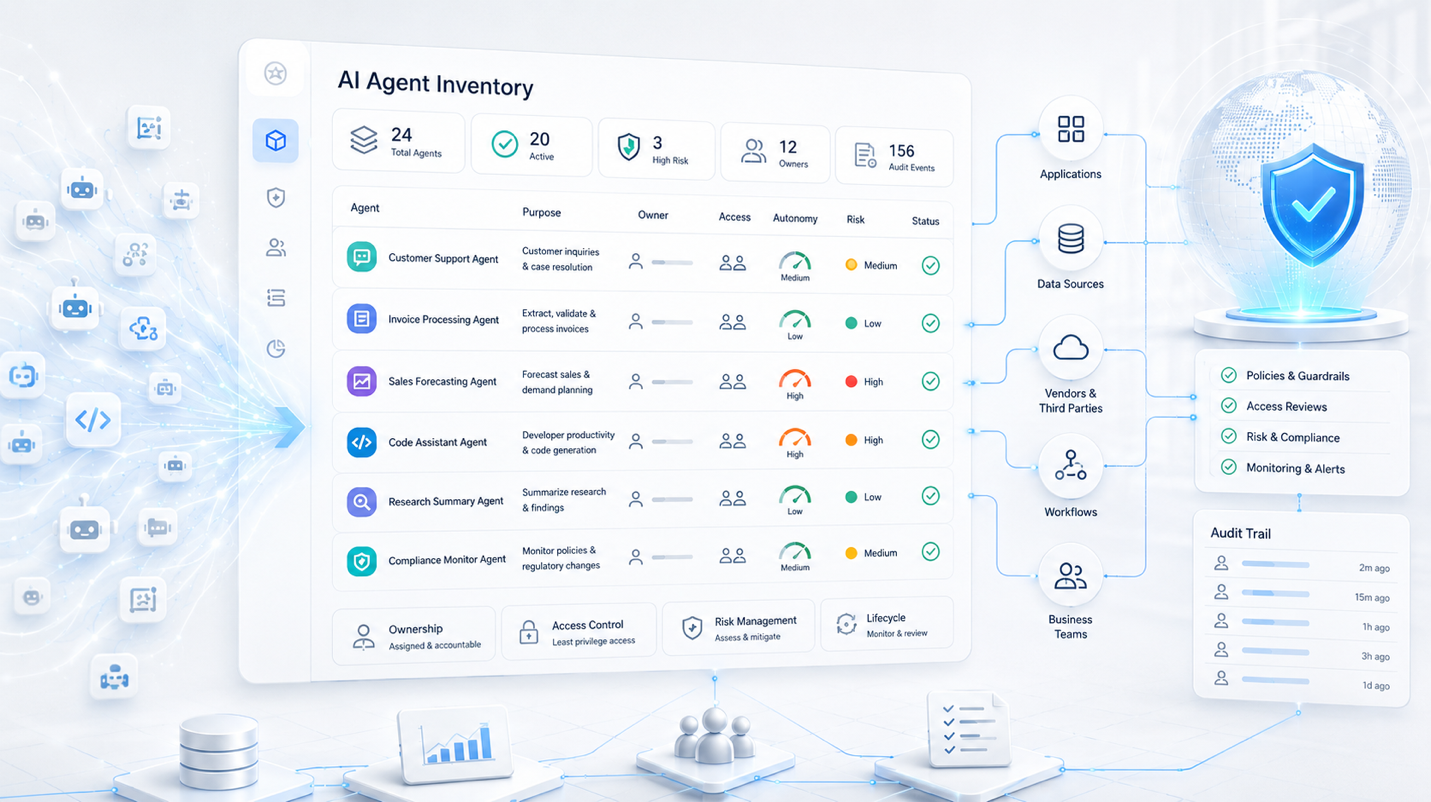
The AI Agents Inventory is the enterprise’s single governed record of the AI agents it builds, buys, or runs — the autonomous, model-driven software actors that take action on systems and data, or communicate with sta...

read more
AI Agents Inventory vs. Registry vs. Catalog: What's the Difference?

Article

AI Agents Inventory vs. Registry vs. Catalog: What's the Difference?

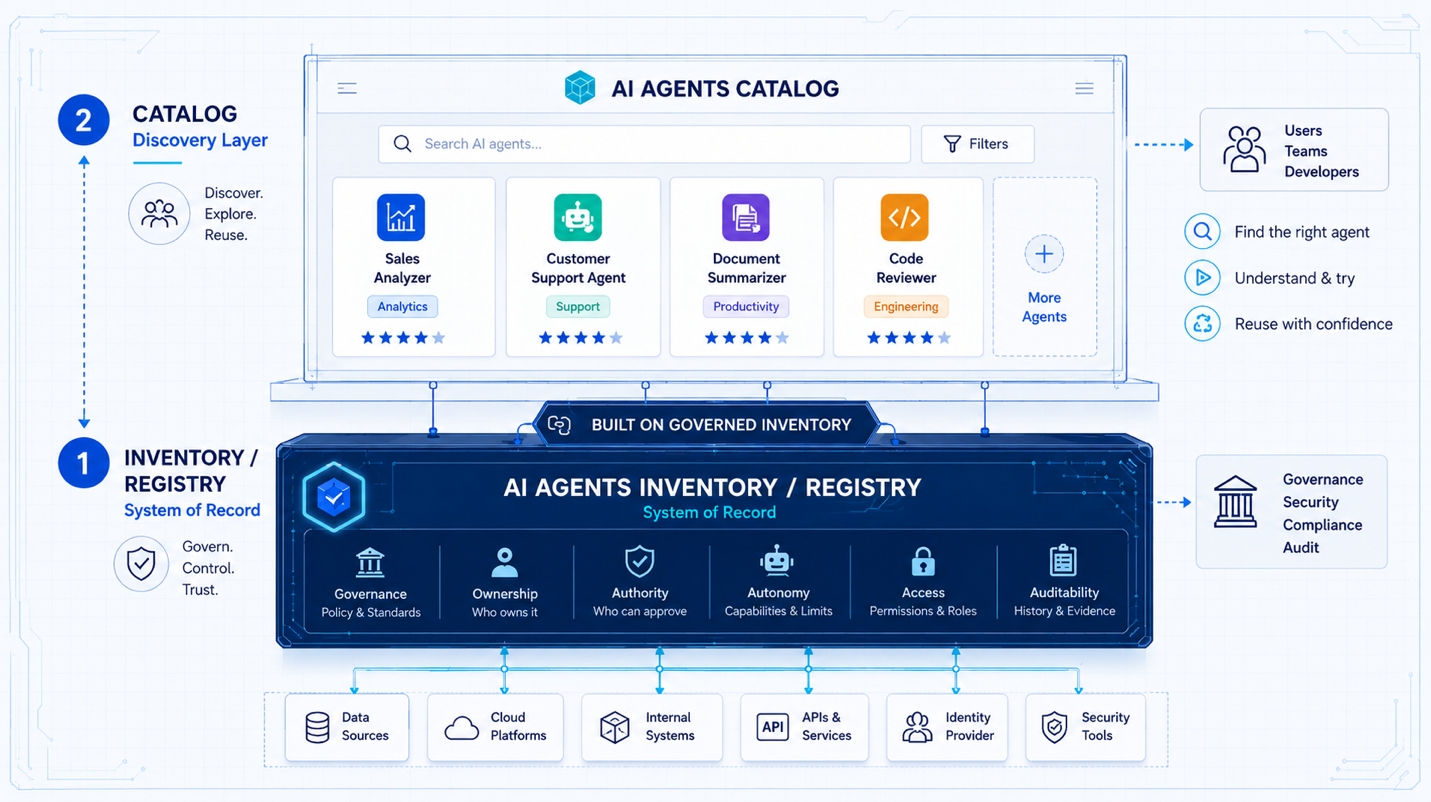
An AI Agents Inventory and an AI Agents Registry are the same thing: a governed record of the AI agents an enterprise has, who owns them, what they can do, and what they can reach. An AI Agents Catalog is different: i...

read more
AI Exposes the Knowledge Debt Enterprises Can No Longer Ignore

Article

AI Exposes the Knowledge Debt Enterprises Can No Longer Ignore

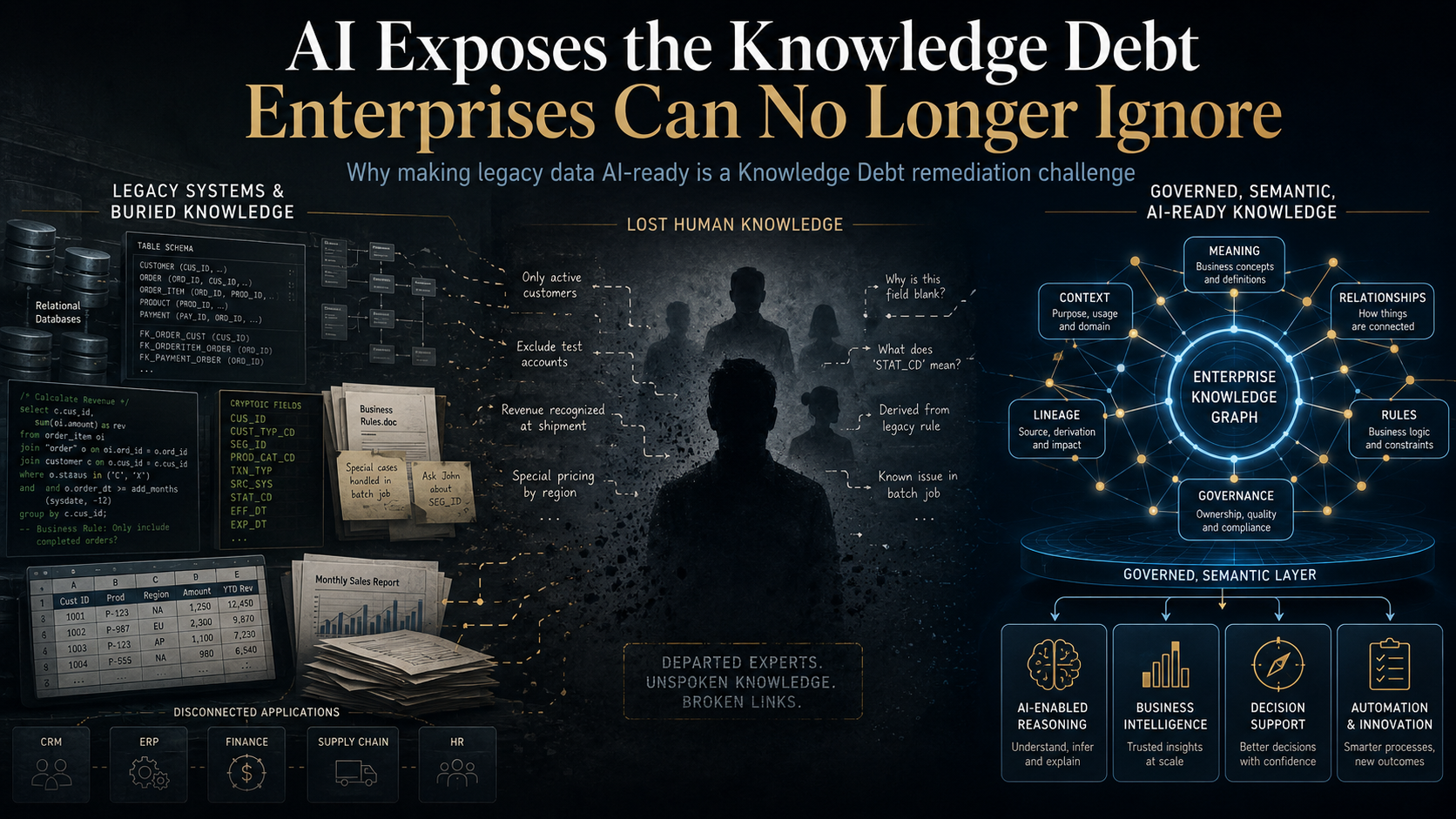
AI is exposing Knowledge Debt: the accumulated loss, fragmentation, and implicit capture of enterprise meaning across systems, data structures, rules, terminology, documentation, and human memory. Making legacy data A...

read more
AI Governance Is an Inventory Problem: Why Enterprise AI Governance Starts With an AI Agent Inventory

Article

AI Governance Is an Inventory Problem: Why Enterprise AI Governance Starts With an AI Agent Inventory

AI governance is not a new discipline. It is inventory governance applied to a new kind of asset. Enterprises struggling to govern Artificial Intelligence (AI) are usually struggling because they cannot see what AI th...

read more
AI Raises the Stakes on Knowing Yourself as an Enterprise

Article

AI Raises the Stakes on Knowing Yourself as an Enterprise

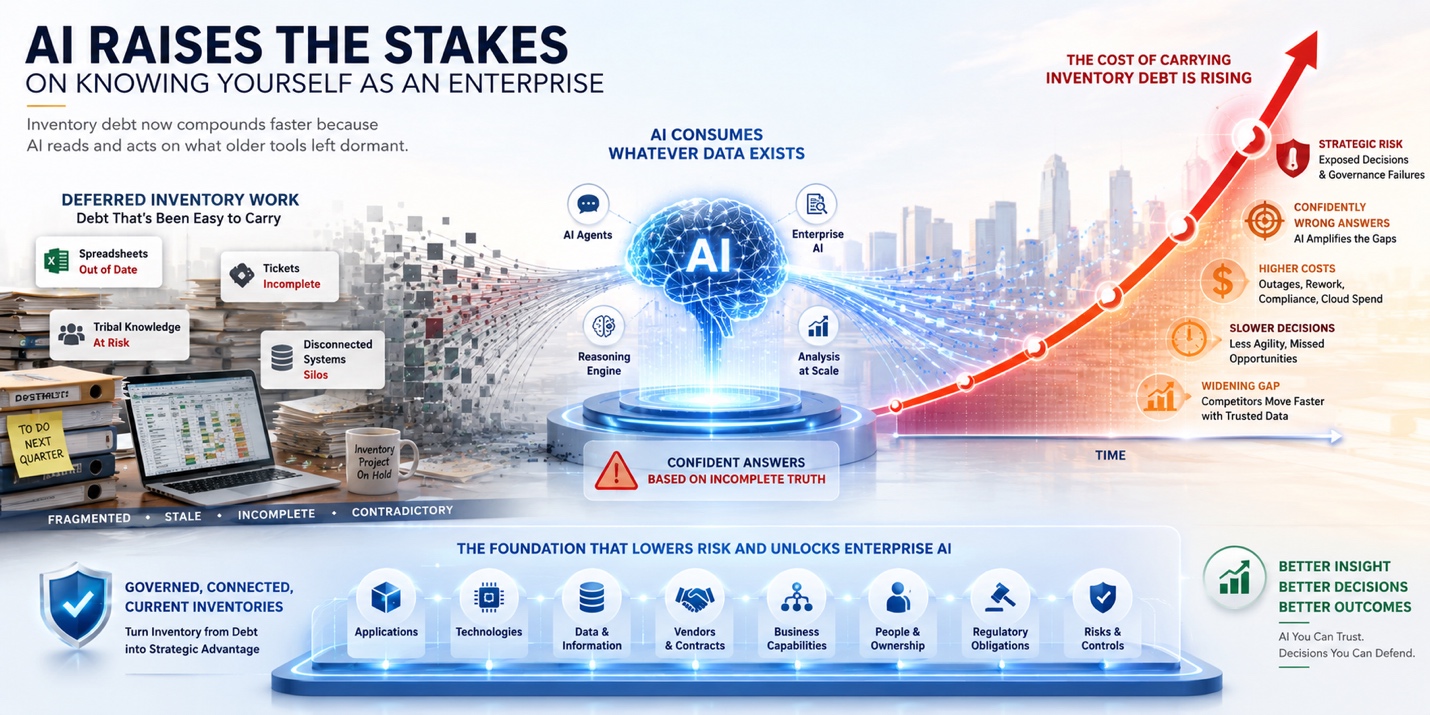
Artificial intelligence sharply increases the cost of carrying incomplete, stale, fragmented, or contradictory enterprise inventory data because AI systems can turn those defects into confident but unreliable answers....

read more
AI Right Isn’t About the Model You Buy — It’s About What You Give It to Reason Over

Article

AI Right Isn’t About the Model You Buy — It’s About What You Give It to Reason Over

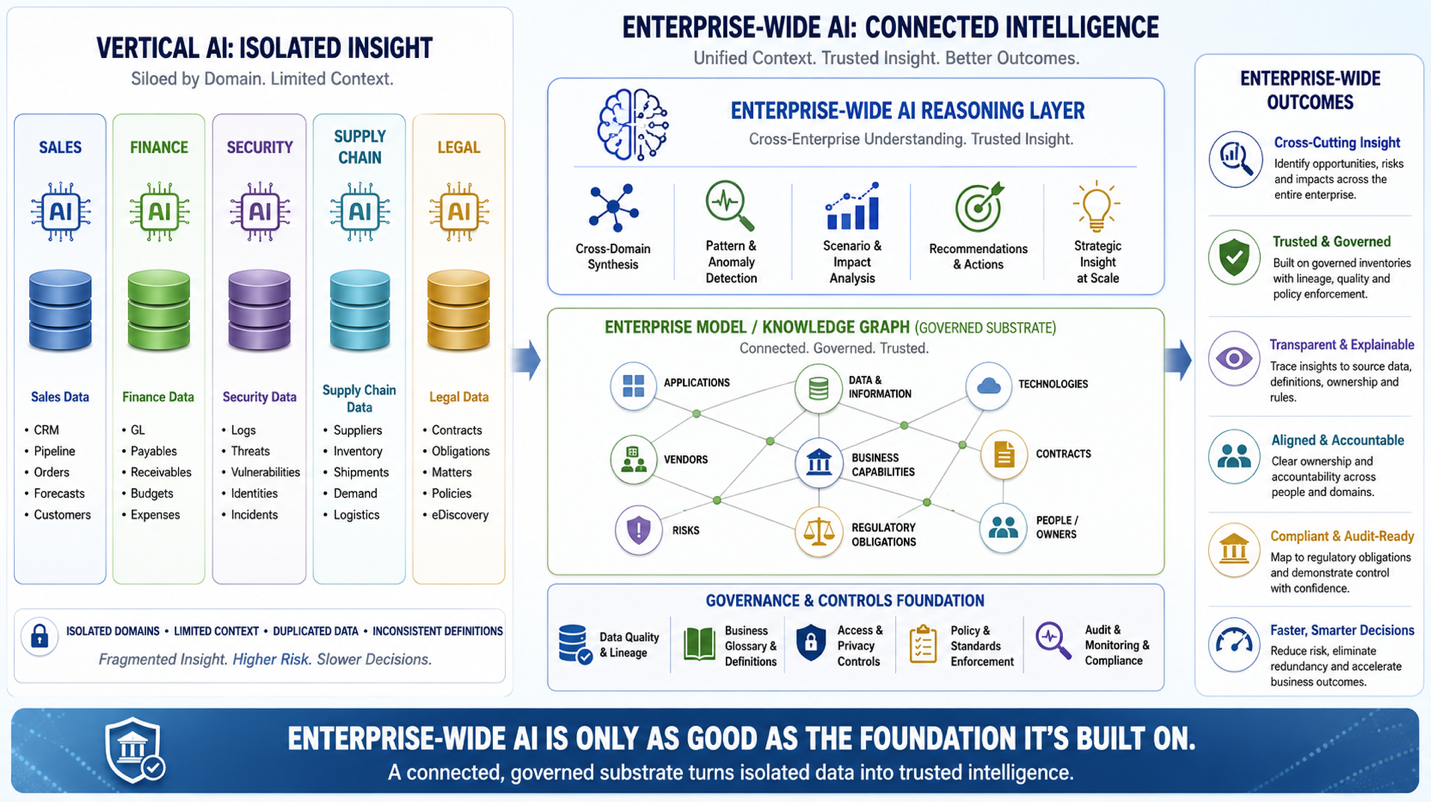
Enterprise-wide Artificial Intelligence cannot become trustworthy merely by selecting a more capable model. It requires a governed, connected substrate that represents the enterprise across domains. Vertical AI can de...

read more
Best Practices for Making Legacy Data Semantic and AI-Ready

Best Practice

Best Practices for Making Legacy Data Semantic and AI-Ready

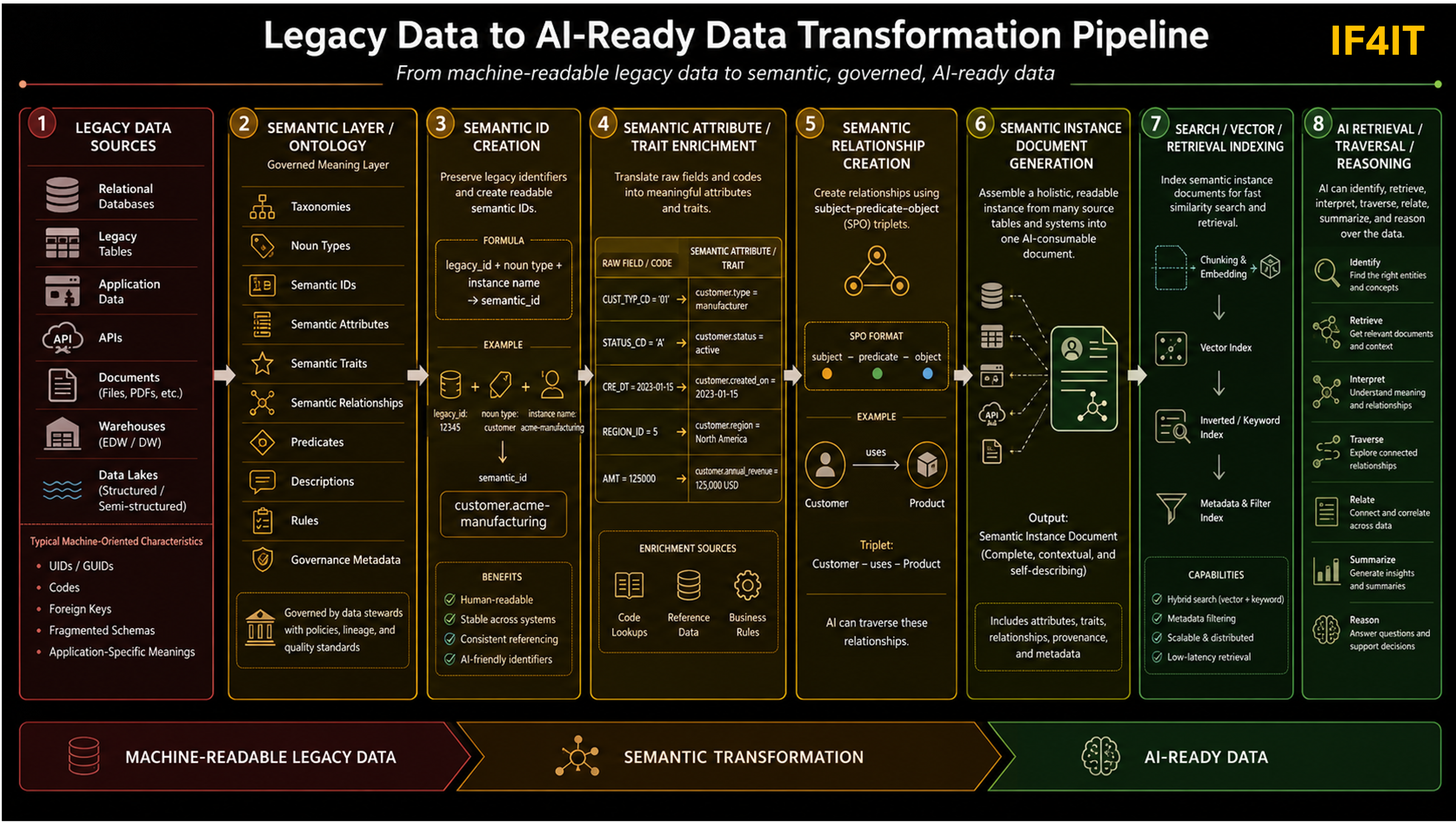
Making legacy data semantic and AI-ready is an enterprise knowledge discipline that preserves source integrity while adding governed meaning, relationships, lineage, and retrieval context. When enterprises treat conne...

read more
Enterprise AI Governance Best Practices

Best Practice

Enterprise AI Governance Best Practices

Enterprise AI Governance is not a standalone tool or committee; it is the enterprise operating discipline that makes artificial intelligence visible, accountable, controlled, evidenced, and improvable across business,...

read more
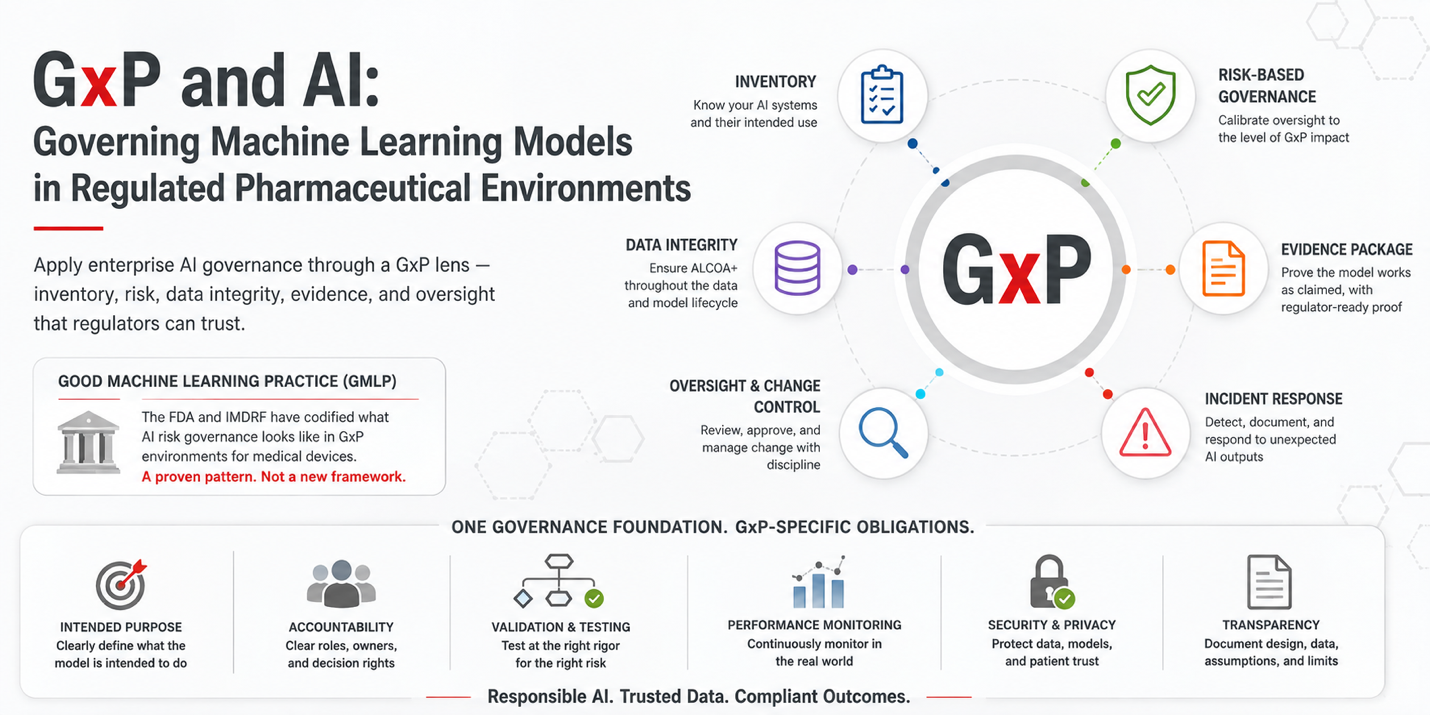
GxP and AI: Governing Machine Learning Models in Regulated Pharmaceutical Environments

Article

GxP and AI: Governing Machine Learning Models in Regulated Pharmaceutical Environments

Governing AI and machine learning models used in GxP-regulated processes doesn't require inventing a new governance framework — it requires applying the enterprise AI governance disciplines IF4IT already establishes t...

read more
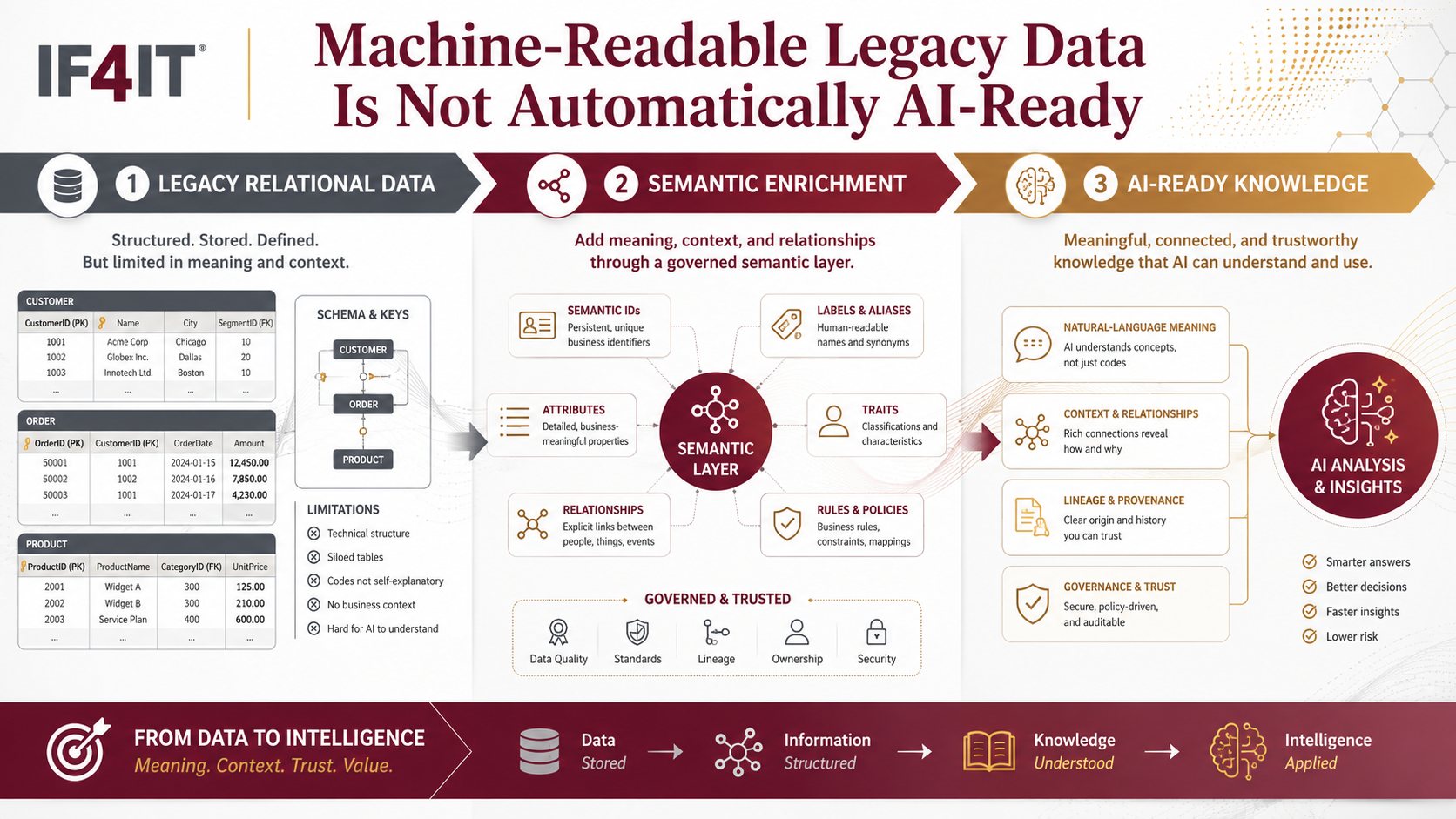
Legacy Data That Is Machine-Readable Is Not Automatically AI-Ready

Article

Legacy Data That Is Machine-Readable Is Not Automatically AI-Ready

Machine-readable legacy data is a starting point, not proof that data is ready for AI consumption. Enterprises that simply connect AI to relational tables, APIs, files, or warehouses may give AI access while still wit...

read more
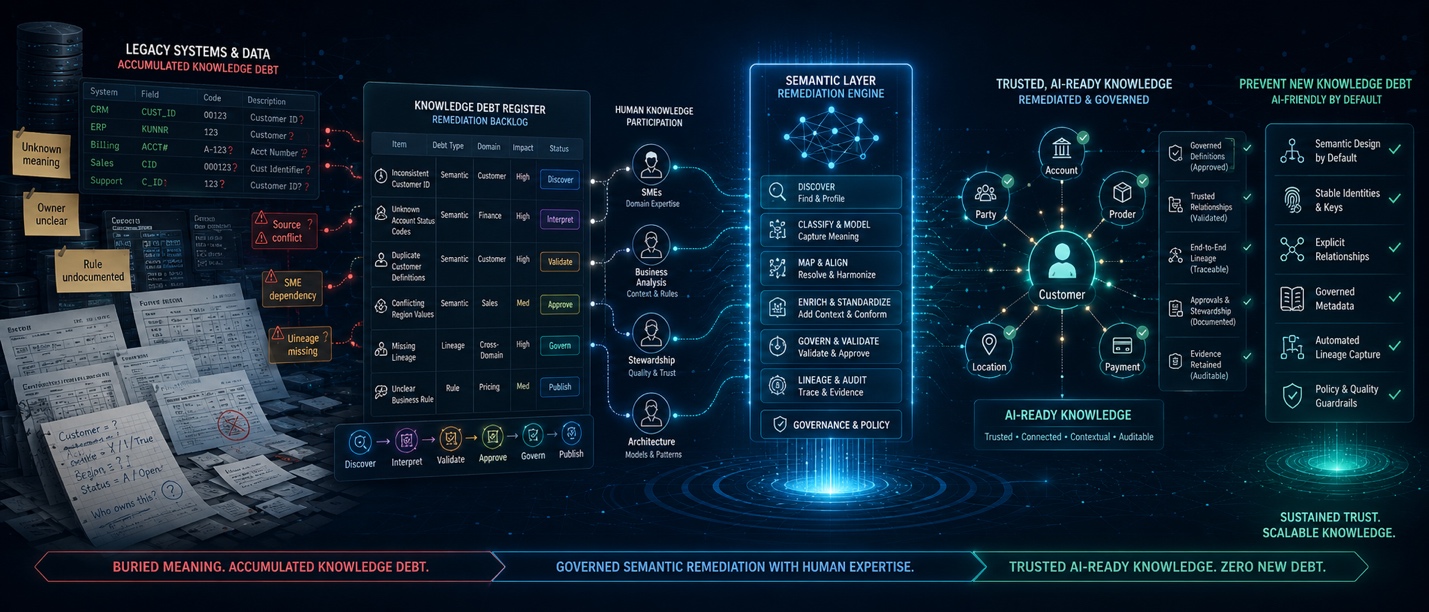
Making Legacy Data AI-Ready Is Knowledge Debt Remediation

Article

Making Legacy Data AI-Ready Is Knowledge Debt Remediation

Making legacy data semantic and AI-ready is Knowledge Debt remediation: the governed work of making hidden, fragmented, outdated, inconsistent, inaccessible, or poorly governed enterprise meaning explicit. When enterp...

read more
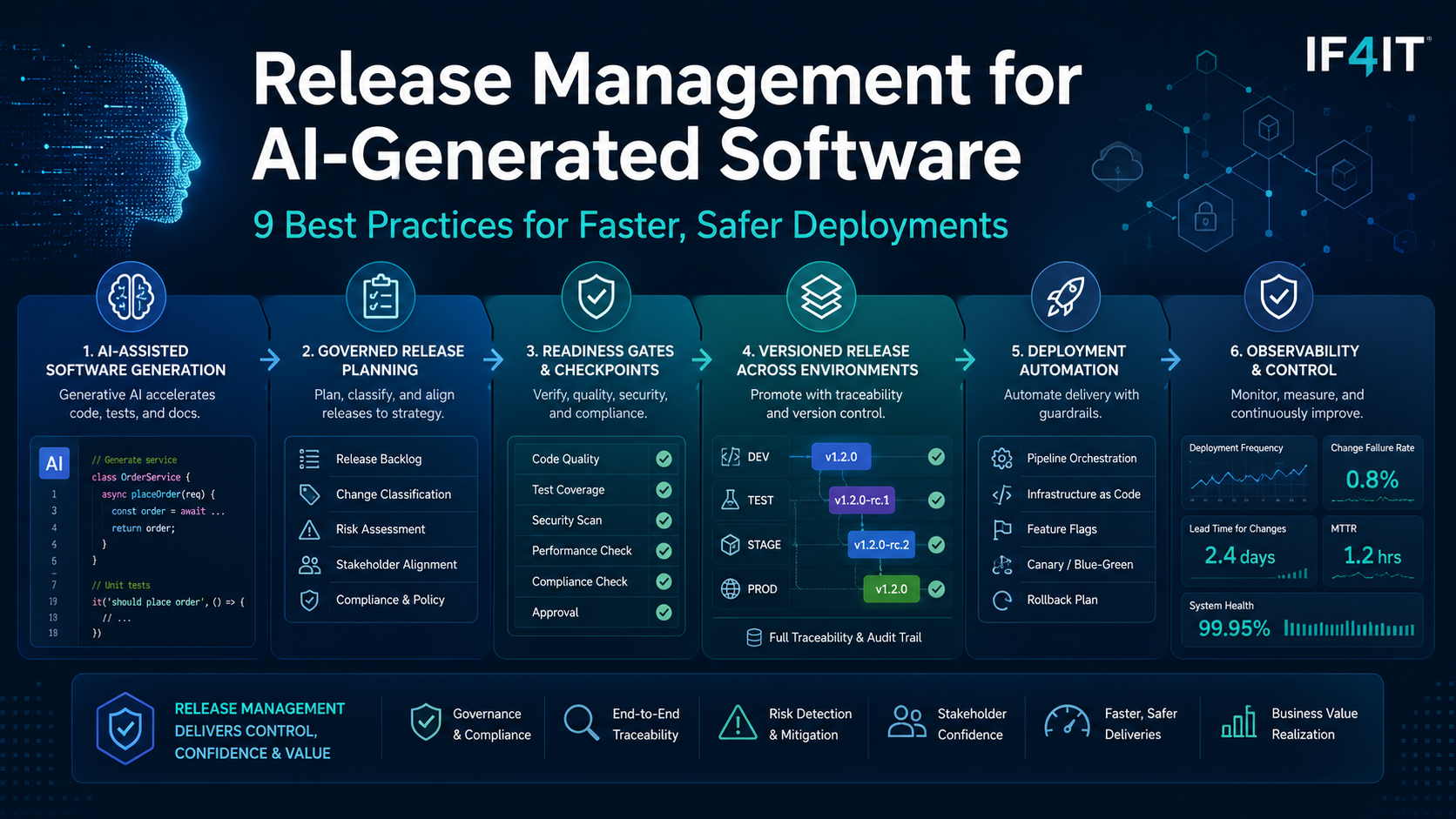
Release Management for AI-Generated Software: 9 Best Practices for Faster, Safer Deployments

Article

Release Management for AI-Generated Software: 9 Best Practices for Faster, Safer Deployments

Generative AI can accelerate software creation, but it does not prove that the resulting Change Set is ready, traceable, recoverable, or safe to release. Enterprises create unnecessary risk when generation speed is tr...

read more
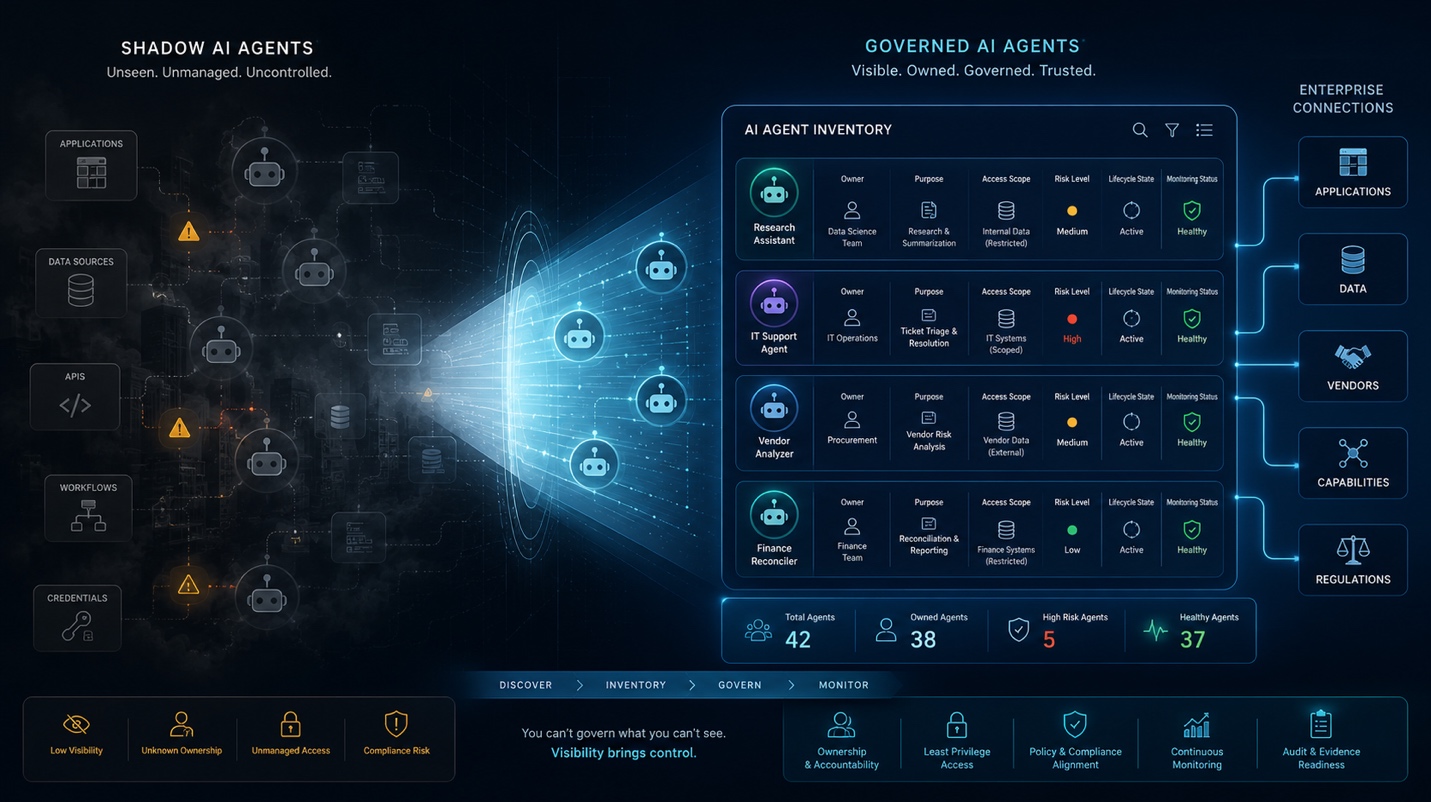
Shadow AI Agents: Why You Can't Govern the Agents You Can't See

Article

Shadow AI Agents: Why You Can't Govern the Agents You Can't See

Shadow AI agents are AI agents running inside an enterprise that no one has recorded, owns, or governs. They are not a new category of problem; they are the AI form of an old one, the ungoverned asset, and they arise...

read more
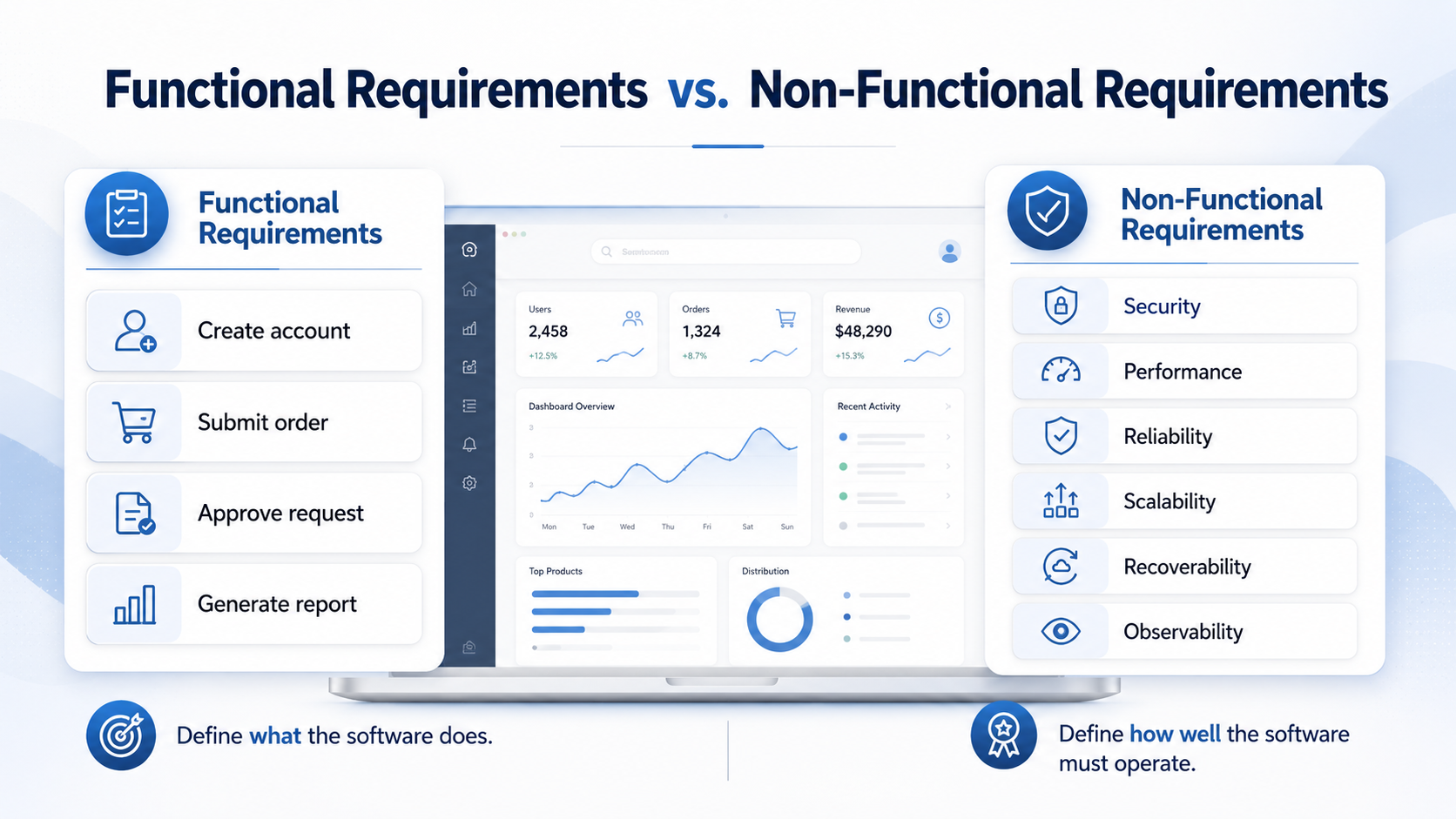
Use Non-Functional Requirements (NFRs) to Expose Critical Gaps in AI Generated Software Like Vibe Code

Article

Use Non-Functional Requirements (NFRs) to Expose Critical Gaps in AI Generated Software Like Vibe Code

AI can generate functional software quickly, but software that appears to work may still contain critical gaps in security, performance, resilience, recoverability, operability, and other production qualities. Non-Fun...

read more
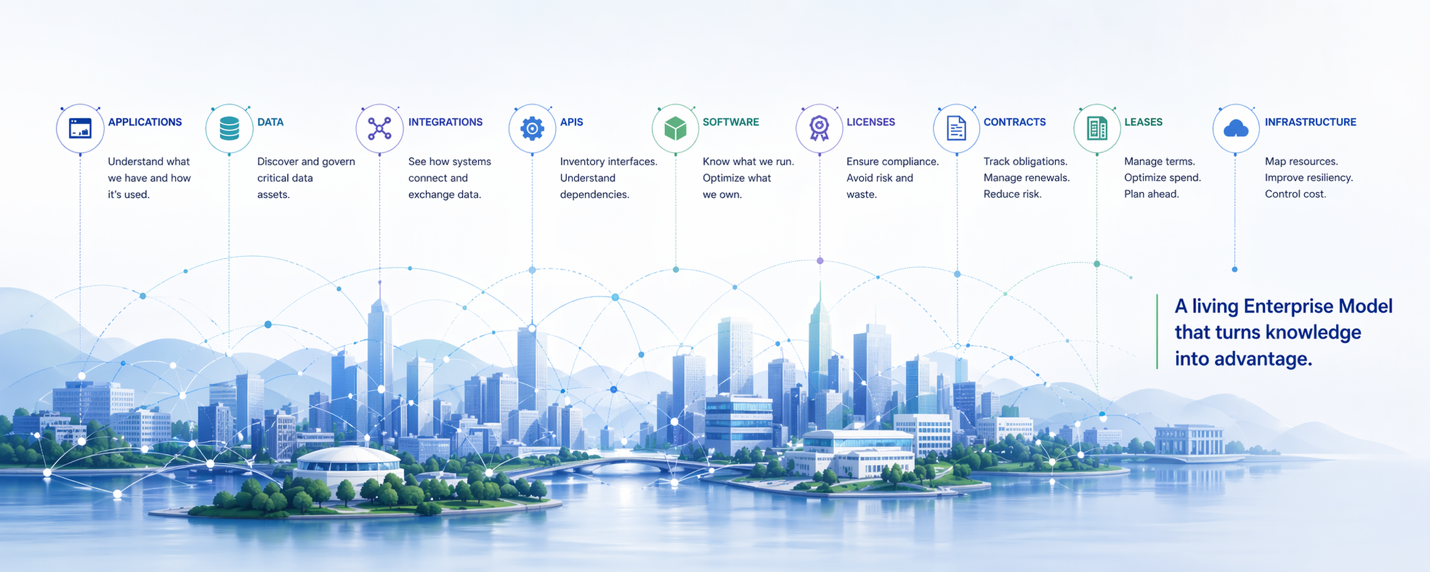
Using AI to Build and Maintain Enterprise Inventories and Models

Article

Using AI to Build and Maintain Enterprise Inventories and Models

Artificial intelligence can dramatically reduce the cost, time, and inconsistency involved in building and maintaining enterprise inventories by extracting, reconciling, cleansing, transforming, populating, and relati...

read more
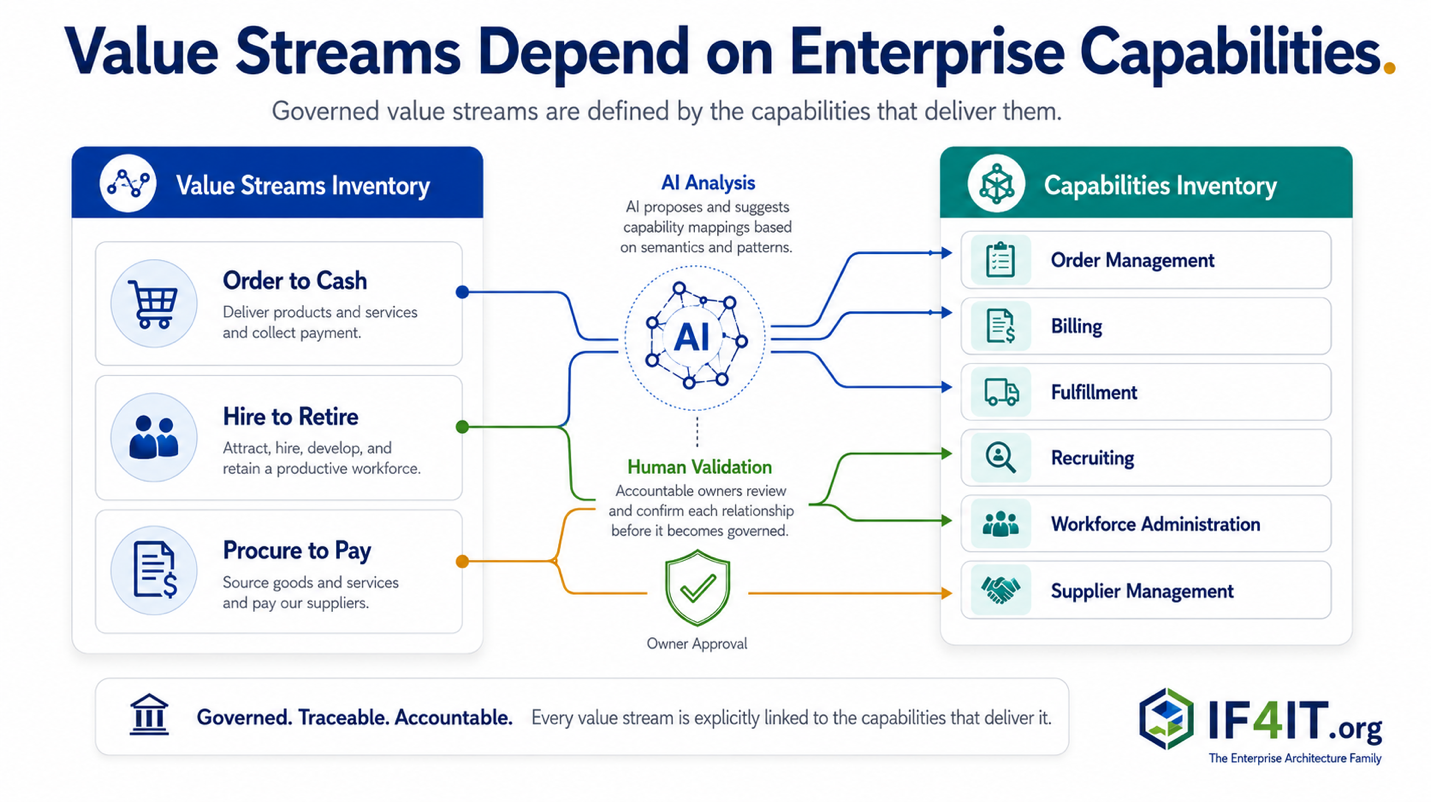
Value Streams Depend on Enterprise Capabilities

Article

Value Streams Depend on Enterprise Capabilities

A value stream is not governed by being named; it is governed by being tied to the specific enterprise capabilities that actually deliver it. Most enterprises can produce a value stream's name from a workshop diagram...

read more
Your Enterprise AI Is Only as Good as Your Enterprise Inventories

Article

Your Enterprise AI Is Only as Good as Your Enterprise Inventories

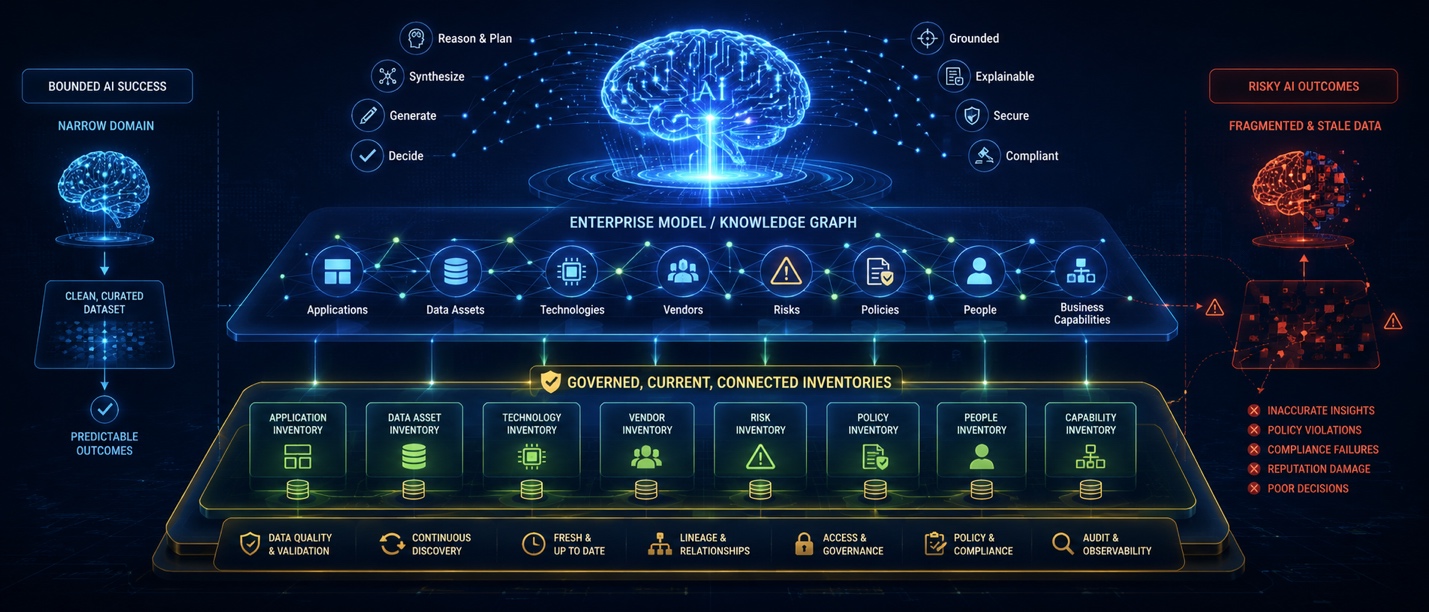
Domain-specific AI can succeed with clean, bounded data, but enterprise-spanning AI depends on governed, current, and connected enterprise inventories. Better models, prompts, or retrieval techniques cannot compensate...

read more
AI Agents Inventory vs. Registry vs. Catalog: What's the Difference?

Article

AI Agents Inventory vs. Registry vs. Catalog: What's the Difference?

An AI Agents Inventory and an AI Agents Registry are the same thing: a governed record of the AI agents an enterprise has, who owns them, what they can do, and what they can reach. An AI Agents Catalog is different: i...

read more
AI Exposes the Knowledge Debt Enterprises Can No Longer Ignore

Article

AI Exposes the Knowledge Debt Enterprises Can No Longer Ignore

AI is exposing Knowledge Debt: the accumulated loss, fragmentation, and implicit capture of enterprise meaning across systems, data structures, rules, terminology, documentation, and human memory. Making legacy data A...

read more
AI Governance Is an Inventory Problem: Why Enterprise AI Governance Starts With an AI Agent Inventory

Article

AI Governance Is an Inventory Problem: Why Enterprise AI Governance Starts With an AI Agent Inventory

AI governance is not a new discipline. It is inventory governance applied to a new kind of asset. Enterprises struggling to govern Artificial Intelligence (AI) are usually struggling because they cannot see what AI th...

read more
AI Raises the Stakes on Knowing Yourself as an Enterprise

Article

AI Raises the Stakes on Knowing Yourself as an Enterprise

Artificial intelligence sharply increases the cost of carrying incomplete, stale, fragmented, or contradictory enterprise inventory data because AI systems can turn those defects into confident but unreliable answers....

read more
AI Right Isn’t About the Model You Buy — It’s About What You Give It to Reason Over

Article

AI Right Isn’t About the Model You Buy — It’s About What You Give It to Reason Over

Enterprise-wide Artificial Intelligence cannot become trustworthy merely by selecting a more capable model. It requires a governed, connected substrate that represents the enterprise across domains. Vertical AI can de...

read more
GxP and AI: Governing Machine Learning Models in Regulated Pharmaceutical Environments

Article

GxP and AI: Governing Machine Learning Models in Regulated Pharmaceutical Environments

Governing AI and machine learning models used in GxP-regulated processes doesn't require inventing a new governance framework — it requires applying the enterprise AI governance disciplines IF4IT already establishes t...

read more
Legacy Data That Is Machine-Readable Is Not Automatically AI-Ready

Article

Legacy Data That Is Machine-Readable Is Not Automatically AI-Ready

Machine-readable legacy data is a starting point, not proof that data is ready for AI consumption. Enterprises that simply connect AI to relational tables, APIs, files, or warehouses may give AI access while still wit...

read more
Making Legacy Data AI-Ready Is Knowledge Debt Remediation

Article

Making Legacy Data AI-Ready Is Knowledge Debt Remediation

Making legacy data semantic and AI-ready is Knowledge Debt remediation: the governed work of making hidden, fragmented, outdated, inconsistent, inaccessible, or poorly governed enterprise meaning explicit. When enterp...

read more
Release Management for AI-Generated Software: 9 Best Practices for Faster, Safer Deployments

Article

Release Management for AI-Generated Software: 9 Best Practices for Faster, Safer Deployments

Generative AI can accelerate software creation, but it does not prove that the resulting Change Set is ready, traceable, recoverable, or safe to release. Enterprises create unnecessary risk when generation speed is tr...

read more
Shadow AI Agents: Why You Can't Govern the Agents You Can't See

Article

Shadow AI Agents: Why You Can't Govern the Agents You Can't See

Shadow AI agents are AI agents running inside an enterprise that no one has recorded, owns, or governs. They are not a new category of problem; they are the AI form of an old one, the ungoverned asset, and they arise...

read more
Use Non-Functional Requirements (NFRs) to Expose Critical Gaps in AI Generated Software Like Vibe Code

Article

Use Non-Functional Requirements (NFRs) to Expose Critical Gaps in AI Generated Software Like Vibe Code

AI can generate functional software quickly, but software that appears to work may still contain critical gaps in security, performance, resilience, recoverability, operability, and other production qualities. Non-Fun...

read more
Using AI to Build and Maintain Enterprise Inventories and Models

Article

Using AI to Build and Maintain Enterprise Inventories and Models

Artificial intelligence can dramatically reduce the cost, time, and inconsistency involved in building and maintaining enterprise inventories by extracting, reconciling, cleansing, transforming, populating, and relati...

read more
Value Streams Depend on Enterprise Capabilities

Article

Value Streams Depend on Enterprise Capabilities

A value stream is not governed by being named; it is governed by being tied to the specific enterprise capabilities that actually deliver it. Most enterprises can produce a value stream's name from a workshop diagram...

read more
Your Enterprise AI Is Only as Good as Your Enterprise Inventories

Article

Your Enterprise AI Is Only as Good as Your Enterprise Inventories

Domain-specific AI can succeed with clean, bounded data, but enterprise-spanning AI depends on governed, current, and connected enterprise inventories. Better models, prompts, or retrieval techniques cannot compensate...

read more
Best Practices for Making Legacy Data Semantic and AI-Ready

Best Practice

Best Practices for Making Legacy Data Semantic and AI-Ready

Making legacy data semantic and AI-ready is an enterprise knowledge discipline that preserves source integrity while adding governed meaning, relationships, lineage, and retrieval context. When enterprises treat conne...

read more
Enterprise AI Governance Best Practices

Best Practice

Enterprise AI Governance Best Practices

Enterprise AI Governance is not a standalone tool or committee; it is the enterprise operating discipline that makes artificial intelligence visible, accountable, controlled, evidenced, and improvable across business,...

read more
AI Agents Inventory and Attributes

Inventory

AI Agents Inventory and Attributes

The AI Agents Inventory is the enterprise’s single governed record of the AI agents it builds, buys, or runs — the autonomous, model-driven software actors that take action on systems and data, or communicate with sta...

read more
© The International Foundation for Information Technology (IF4IT) 2008 - Present
Legal Disclaimers