The International Foundation for Information Technology (IF4IT)
  • Home
  • Best Practices & More
  • Articles
  • Dictionary
  • About Us
  • Contact Us
  • Catalog
  • Search
  1. Topics
  2. Enterprise Architecture

Enterprise Architecture

Share:
Contact Us → Subscribe →
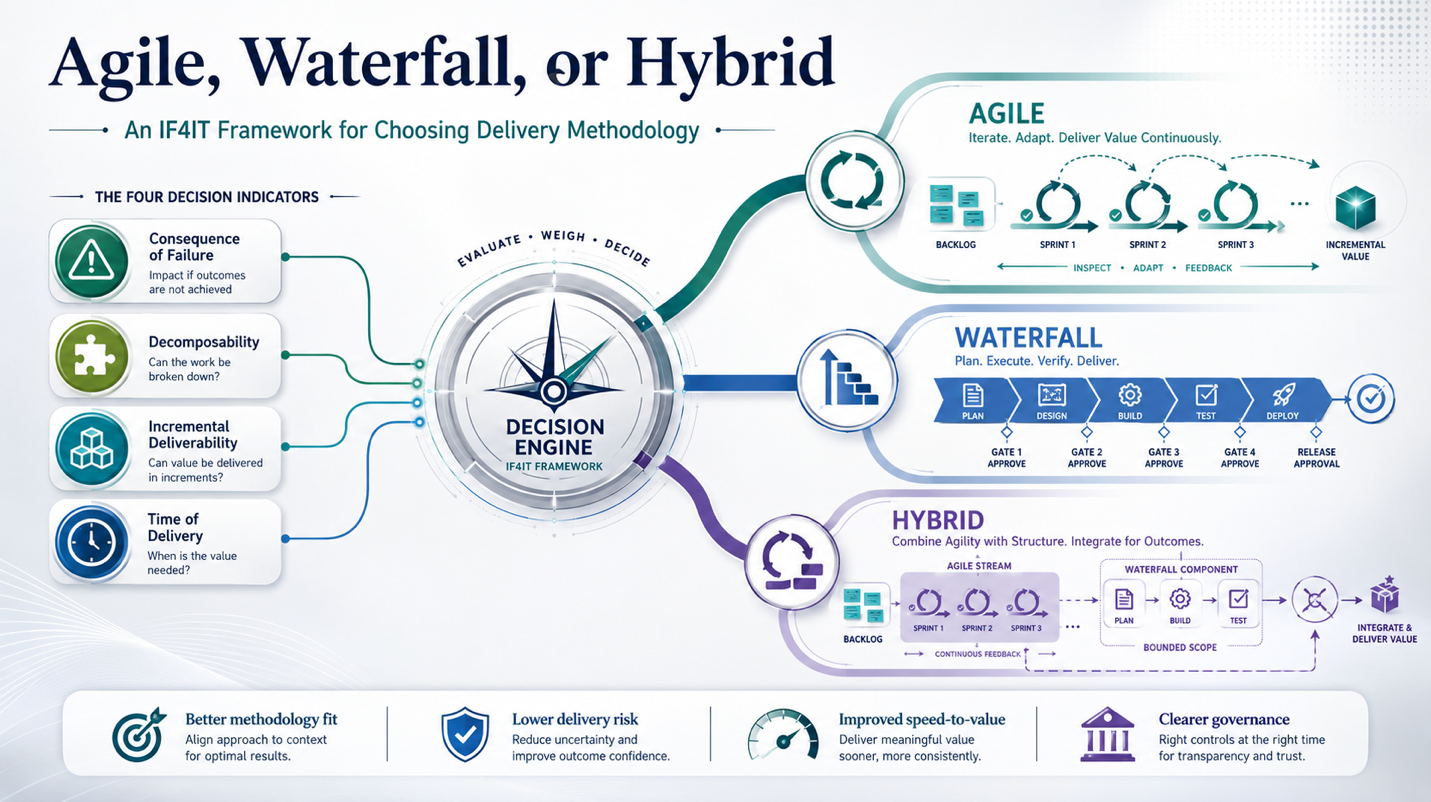
Agile, Waterfall, or Hybrid: An IF4IT Framework for Choosing Delivery Methodology

Best Practice

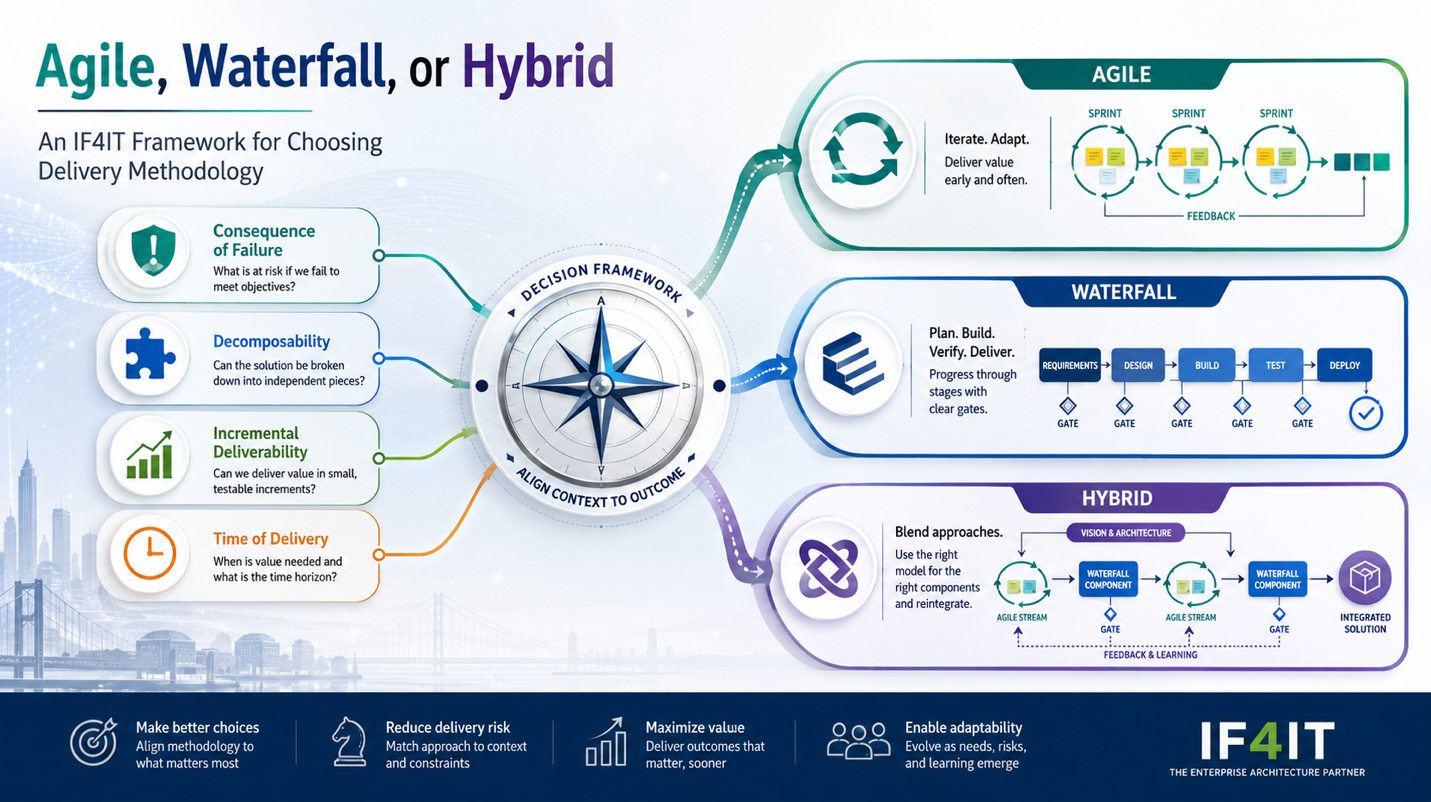
Agile, Waterfall, or Hybrid: An IF4IT Framework for Choosing Delivery Methodology

Delivery methodology is not an enterprise preference; it is a fit decision determined by the nature of the Product or Service being delivered. When organizations force all work through Agile, Waterfall, or a convenien...

read more
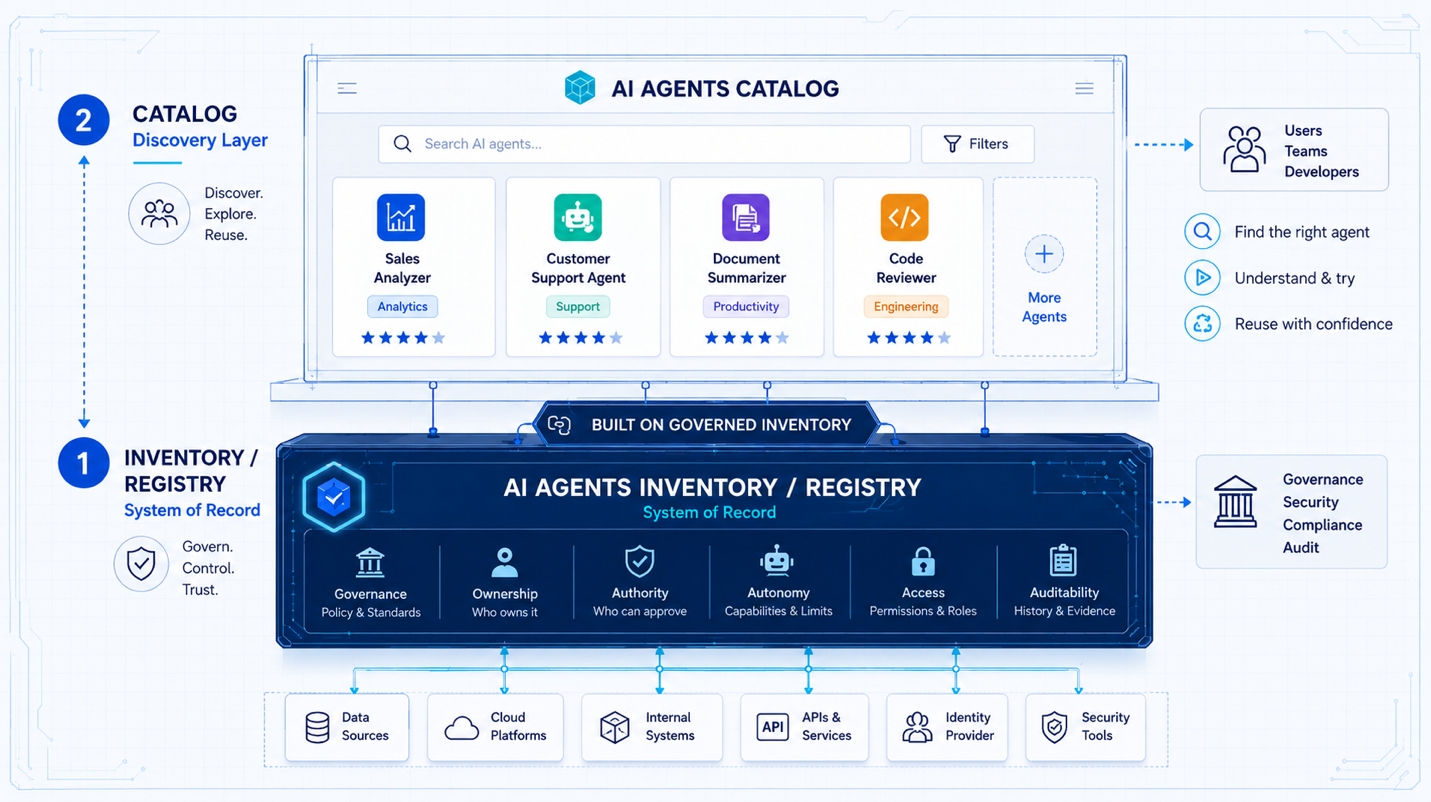
AI Agents Inventory vs. Registry vs. Catalog: What's the Difference?

Article

AI Agents Inventory vs. Registry vs. Catalog: What's the Difference?

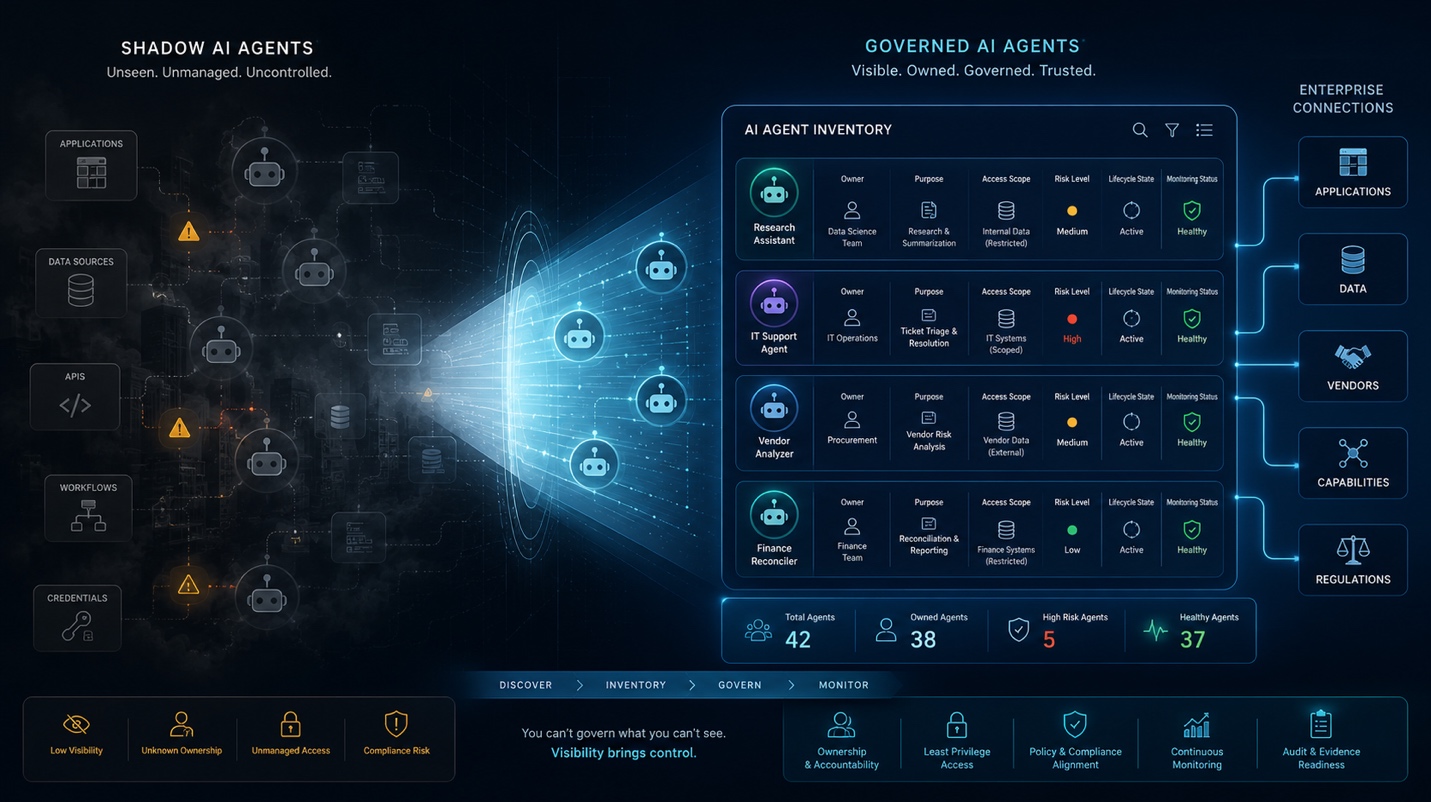
An AI Agents Inventory and an AI Agents Registry are the same thing: a governed record of the AI agents an enterprise has, who owns them, what they can do, and what they can reach. An AI Agents Catalog is different: i...

read more
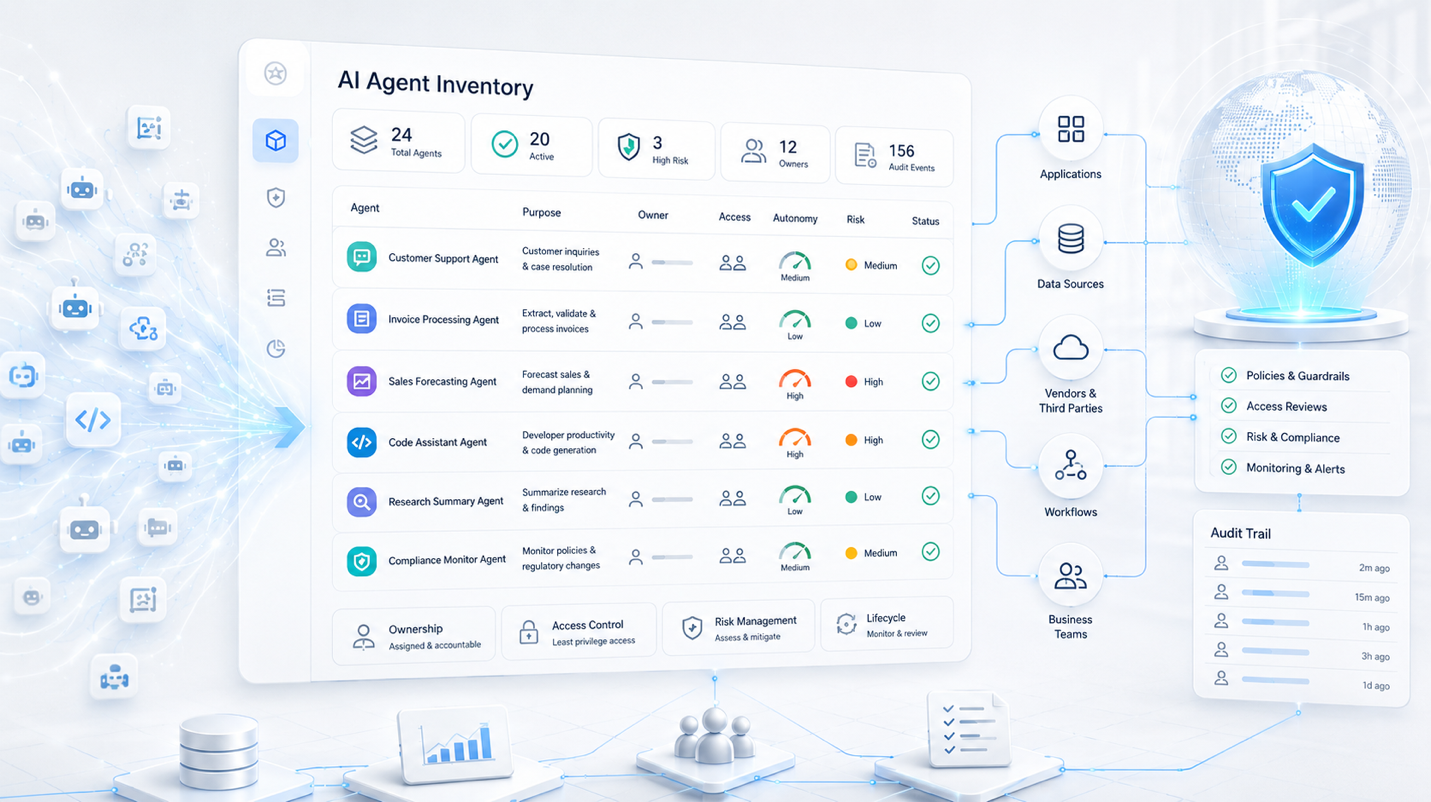
AI Governance Is an Inventory Problem: Why Enterprise AI Governance Starts With an AI Agent Inventory

Article

AI Governance Is an Inventory Problem: Why Enterprise AI Governance Starts With an AI Agent Inventory

AI governance is not a new discipline. It is inventory governance applied to a new kind of asset. Enterprises struggling to govern Artificial Intelligence (AI) are usually struggling because they cannot see what AI th...

read more
Best Practices for Making Legacy Data Semantic and AI-Ready

Best Practice

Best Practices for Making Legacy Data Semantic and AI-Ready

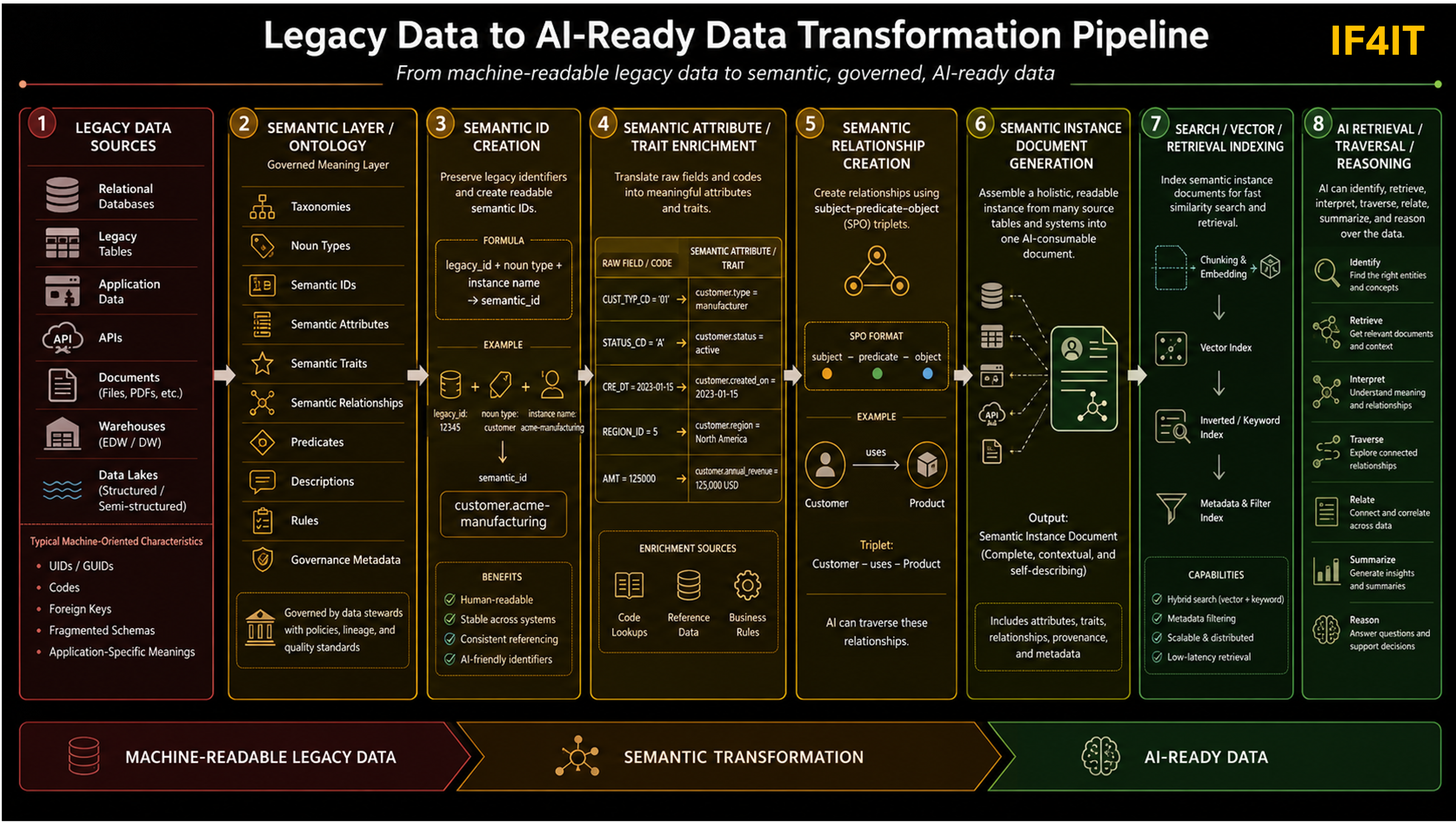
Making legacy data semantic and AI-ready is an enterprise knowledge discipline that preserves source integrity while adding governed meaning, relationships, lineage, and retrieval context. When enterprises treat conne...

read more
Building and Using Enterprise Knowledge Models with AI-Generated Data Graphs

Article

Building and Using Enterprise Knowledge Models with AI-Generated Data Graphs

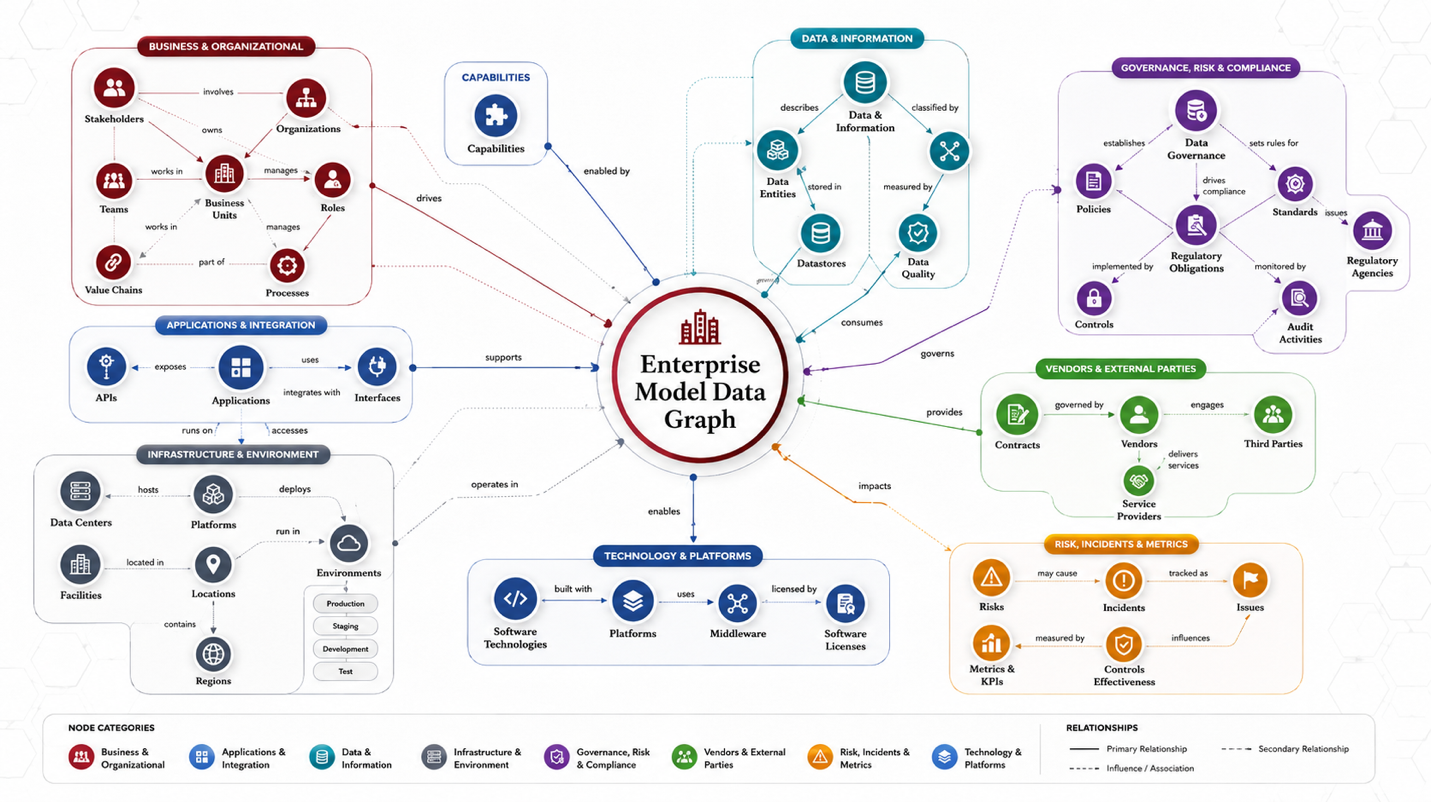
AI-generated data graphs can transform scattered enterprise knowledge into a connected Enterprise Knowledge Model that humans and AI can query, traverse, visualize, and reason over. Without a governed <u>Taxonomy</u>,...

read more
Capabilities Inventory and Attributes

Inventory

Capabilities Inventory and Attributes

The Capabilities Inventory is the governed enterprise record of the business and IT capabilities the enterprise performs, intends to perform, or has decided to exit. It provides the stable capability vocabulary that l...

read more
Data and Information Inventory and Attributes

Inventory

Data and Information Inventory and Attributes

The Data and Information Inventory is not a data catalog or a list of files; it is the governed logical vocabulary for every named data and information type the enterprise produces, consumes, stores, or transmits. Wit...

read more
Designing, Building, and Maintaining Comprehensive and Usable Enterprise Capability Models

Best Practice

Designing, Building, and Maintaining Comprehensive and Usable Enterprise Capability Models

A comprehensive Enterprise Capability Model is a governed, inventory-backed knowledge asset that represents the durable abilities an enterprise performs, intends to perform, or has decided to exit. This document expla...

read more
Enterprise Architecture Value Model

Model

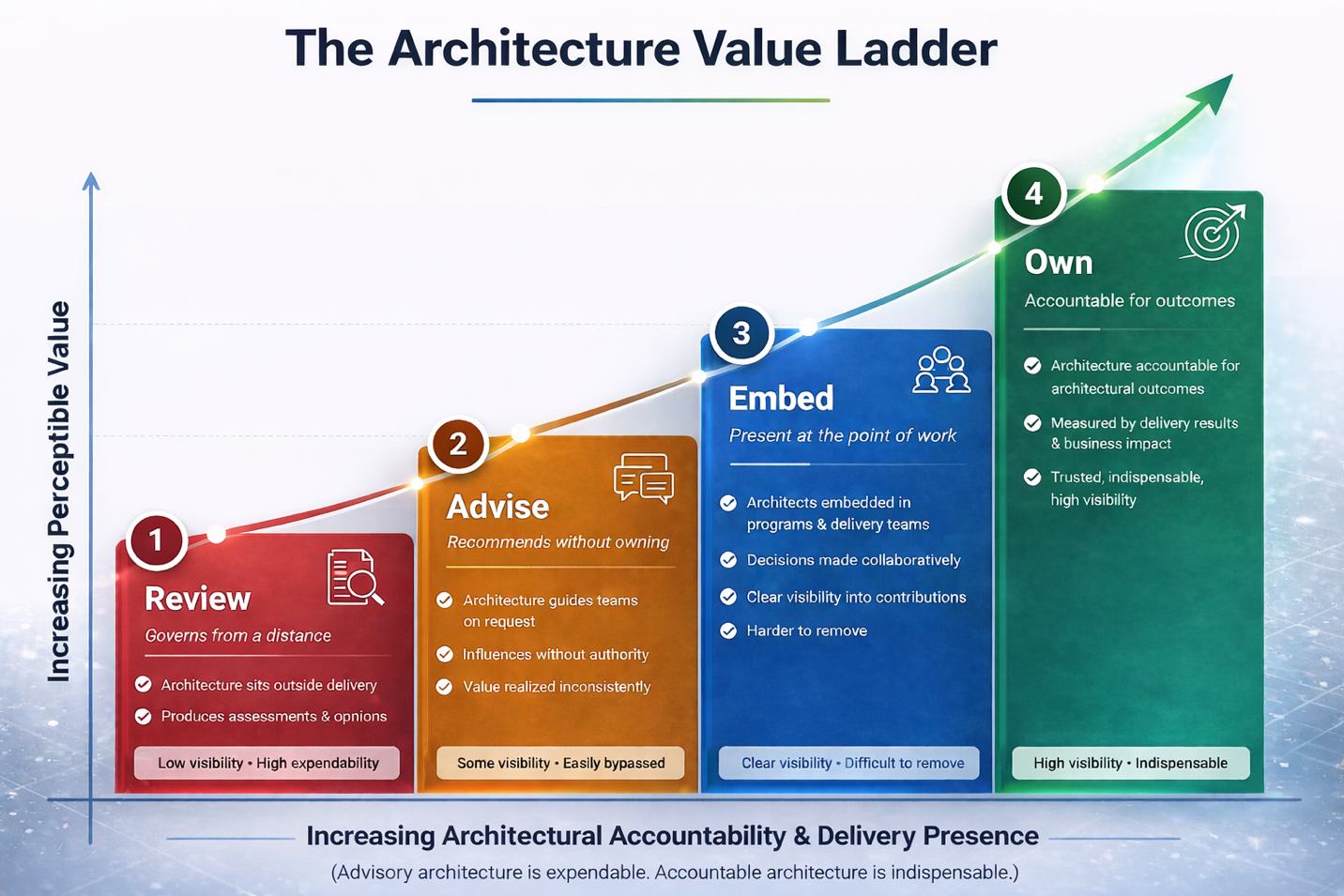
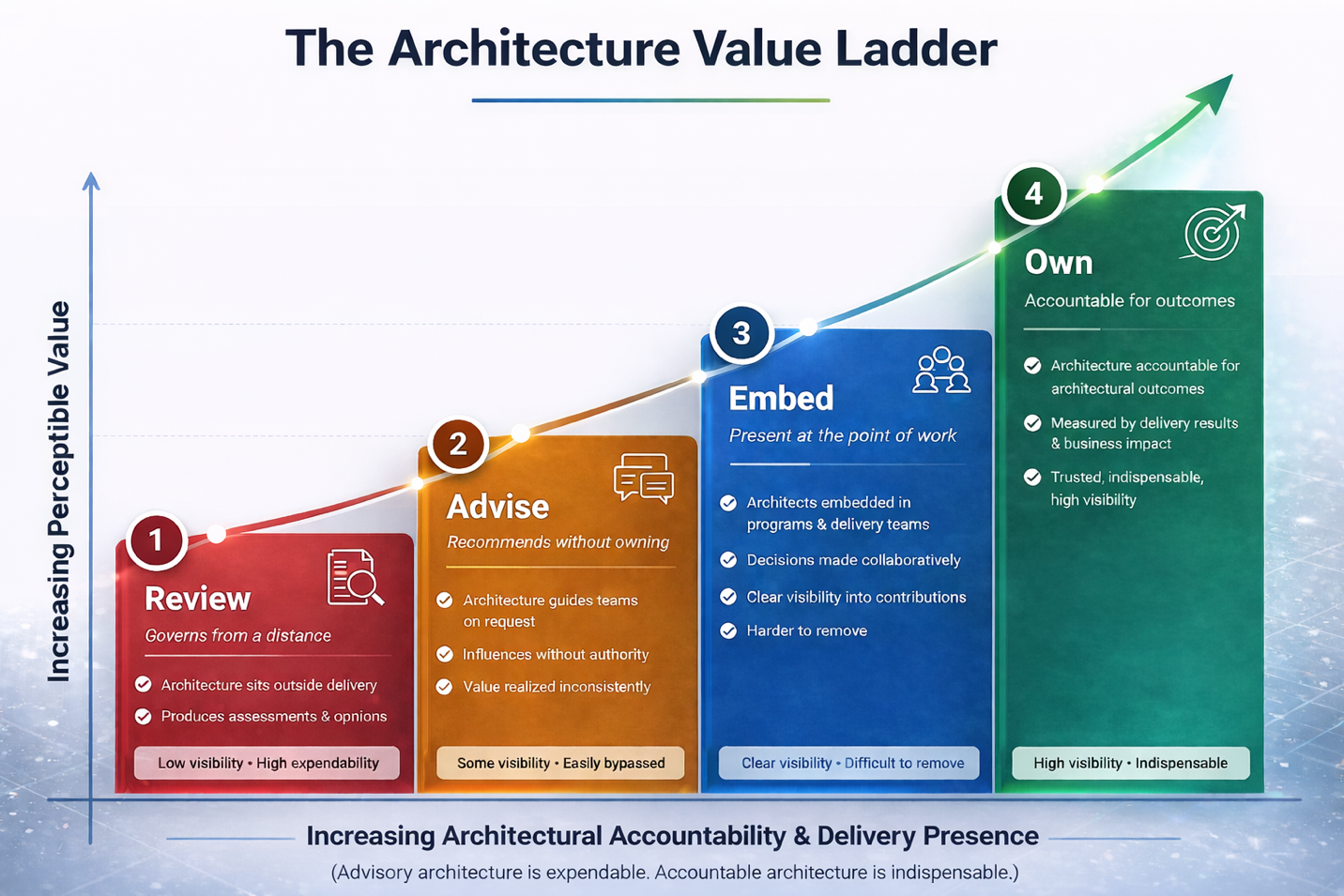
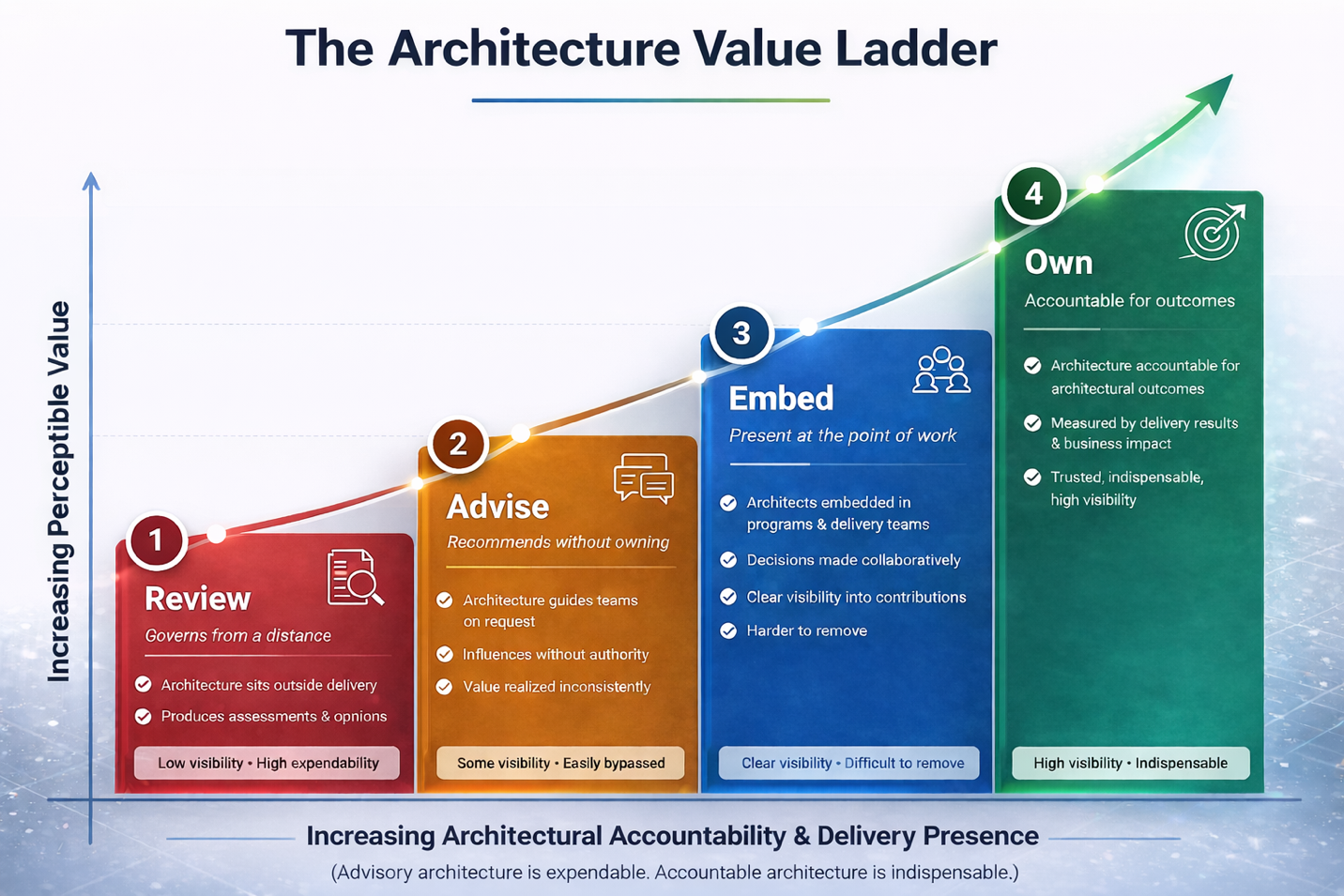
Enterprise Architecture Value Model

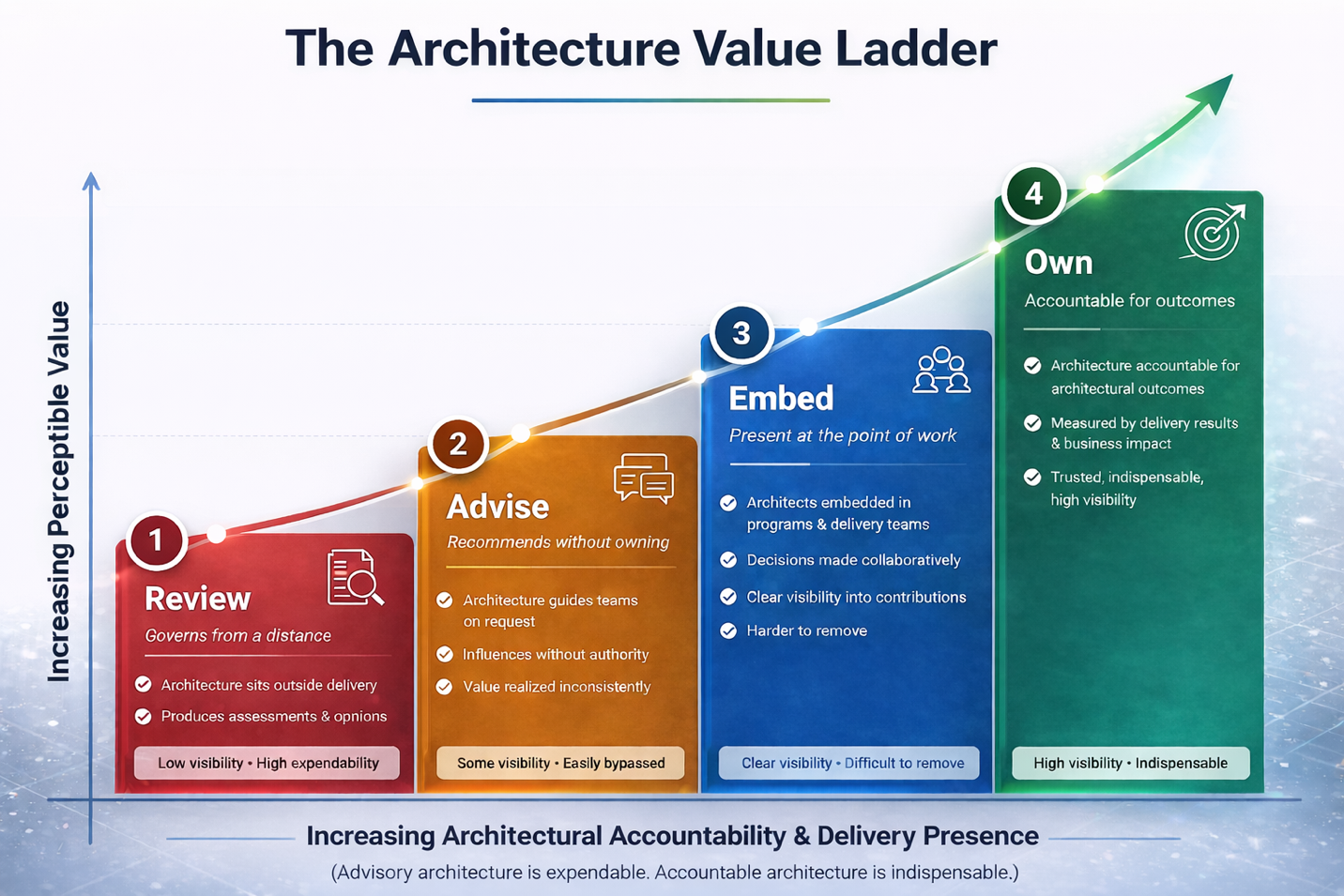
The Enterprise Architecture Value Model explains that an architecture function becomes strategically valuable when it moves beyond review and advice into accountable delivery and ownership. It gives CIOs, CTOs, Chief...

read more
Enterprise Capabilities Models (ECMs) as a Knowledge Management Tools

Article

Enterprise Capabilities Models (ECMs) as a Knowledge Management Tools

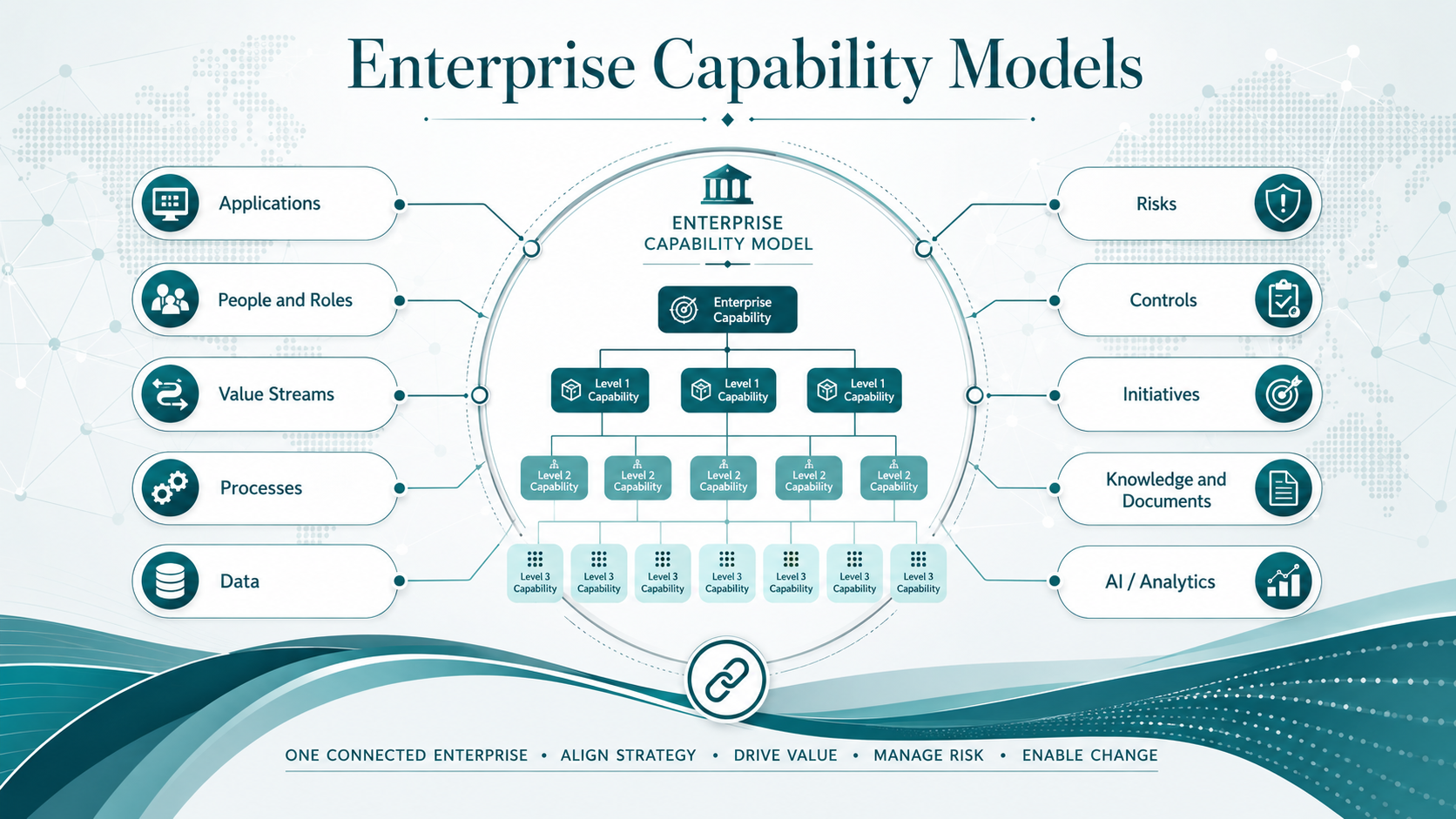
Enterprise Capability Models become far more valuable when enterprises use them as shared knowledge structures rather than static architecture diagrams. By relating capabilities to applications, processes, data, risks...

read more
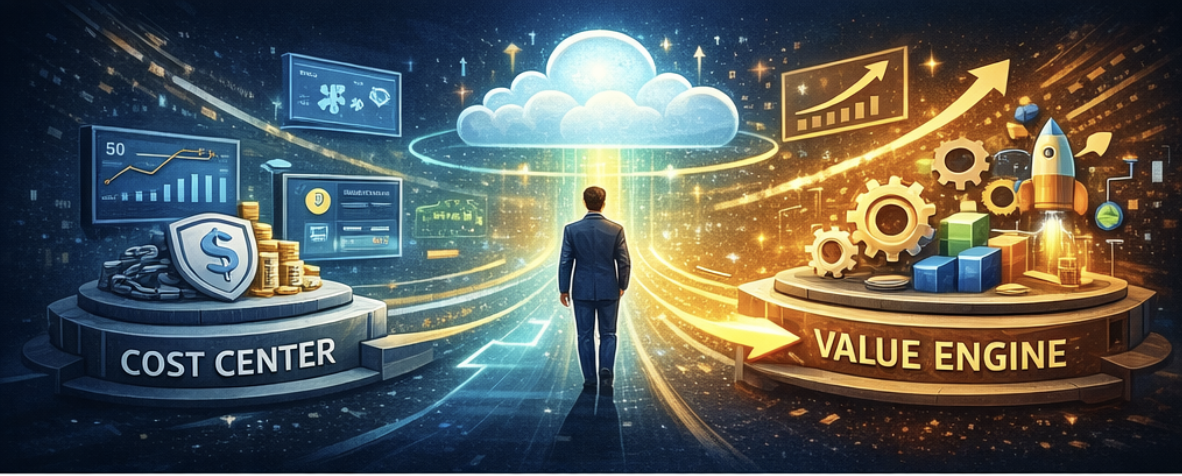
From Cost Center to Value Engine: Reframing the Role of IT in the Modern Enterprise

Article

From Cost Center to Value Engine: Reframing the Role of IT in the Modern Enterprise

IT becomes a value engine when its operating model, investment decisions, and performance measures are explicitly tied to measurable business outcomes. Reframing IT requires product and service ownership, financial tr...

read more
Integrations Inventory and Attributes

Inventory

Integrations Inventory and Attributes

The Integrations Inventory is the governed record of every data and information flow, making integration complexity, dependency risk, data sensitivity, technology usage, and cross-boundary movement visible across the...

read more
Inventories Are Worth More Together — The Network Effect of a Connected Enterprise Model

Article

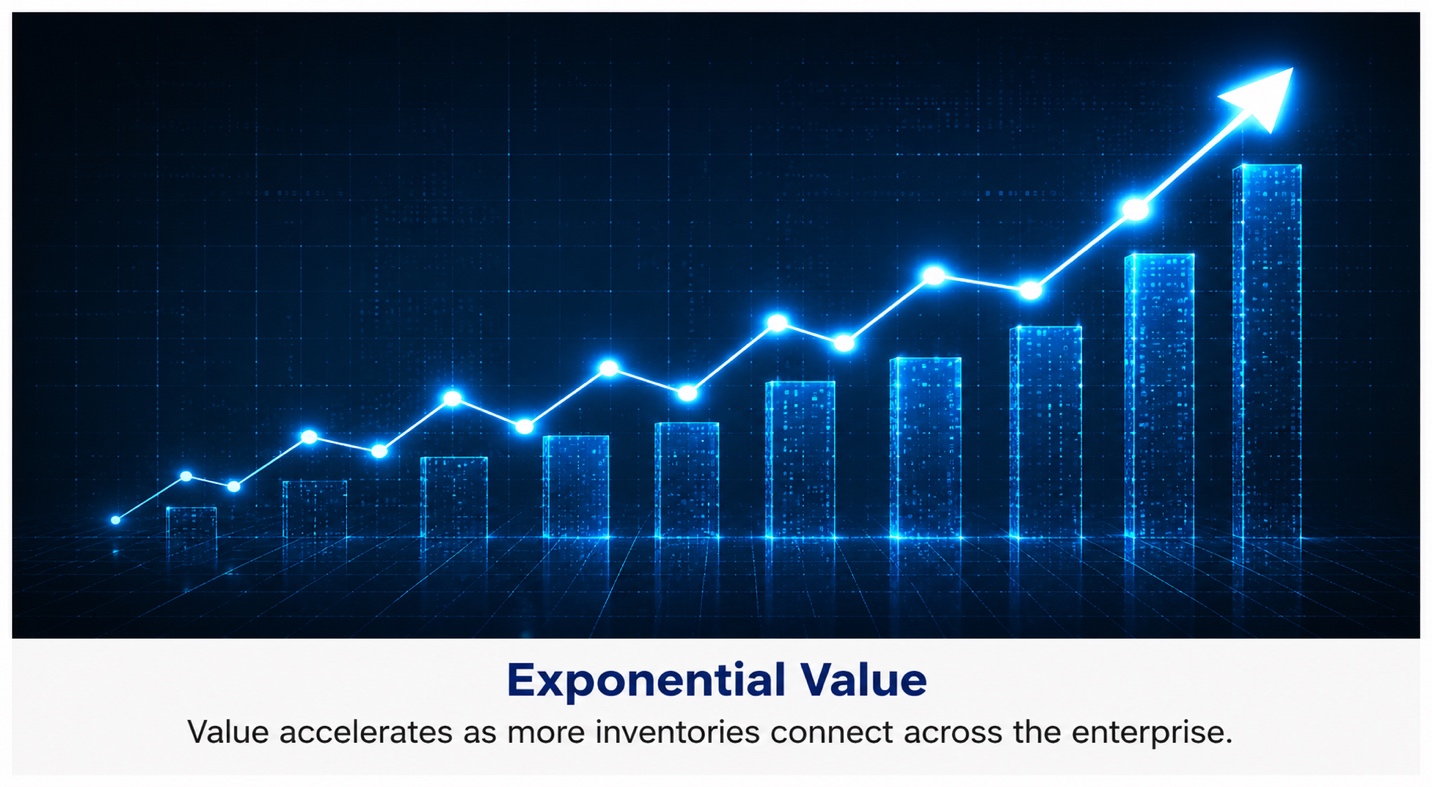
Inventories Are Worth More Together — The Network Effect of a Connected Enterprise Model

Enterprise inventories create their greatest value when they are governed as connected parts of an Enterprise Model rather than as isolated lists. Each new inventory adds its own information and expands the questions...

read more
Make Architecture More Valuable: Have Enterprise Architecture Own the CMDB

Article

Make Architecture More Valuable: Have Enterprise Architecture Own the CMDB

Enterprise Architecture should own and govern the Configuration Management Database because Architecture has the upstream lifecycle visibility, cross-domain scope, and modeling discipline required to maintain its logi...

read more
Make Architecture More Valuable: Take on At-Risk & High-Risk Initiatives

Article

Make Architecture More Valuable: Take on At-Risk & High-Risk Initiatives

Architecture becomes indispensable when it moves beyond advisory governance and accepts accountability for the enterprise’s most consequential delivery outcomes. A dedicated At-Risk Architecture Practice embeds senior...

read more
Make Architecture More Valuable: Take Ownership of Enterprise Process Automations and the Service Catalog

Article

Make Architecture More Valuable: Take Ownership of Enterprise Process Automations and the Service Catalog

Enterprise Architecture becomes more visible and indispensable when it owns operational assets that the enterprise depends on every day. Taking responsibility for enterprise process automations and the service catalog...

read more
Non-Functional Requirements (NFRs) Framework for Software Systems

Framework

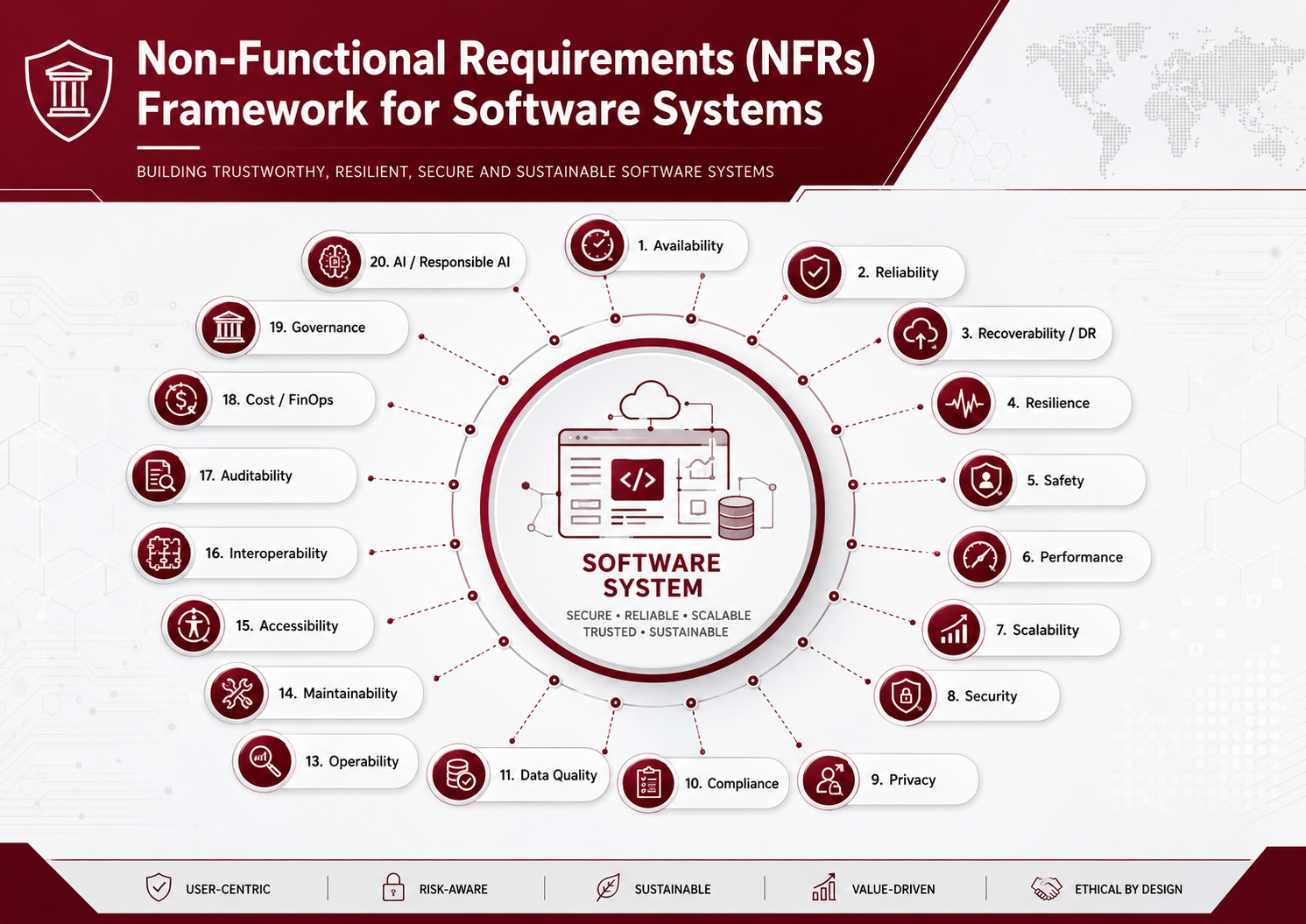
Non-Functional Requirements (NFRs) Framework for Software Systems

Non-Functional Requirements (NFRs) define the software qualities, operating expectations, validation methods, and assurance evidence that determine whether a system is fit for purpose. When NFRs are vague, missing, or...

read more
Not Everything Can Be Agile

Article

Not Everything Can Be Agile

Delivery methodology must be selected according to the intrinsic characteristics and risks of the work, not imposed as an enterprise-wide preference. Agile is appropriate when work can be decomposed into independently...

read more
Regulatory Agencies Inventory and Attributes

Inventory

Regulatory Agencies Inventory and Attributes

The Regulatory Agencies Inventory is the governed root of the enterprise compliance hierarchy, identifying every body whose authority, standards, or market-access requirements create formal obligations for the enterpr...

read more
Service Catalog Best Practices

Best Practice

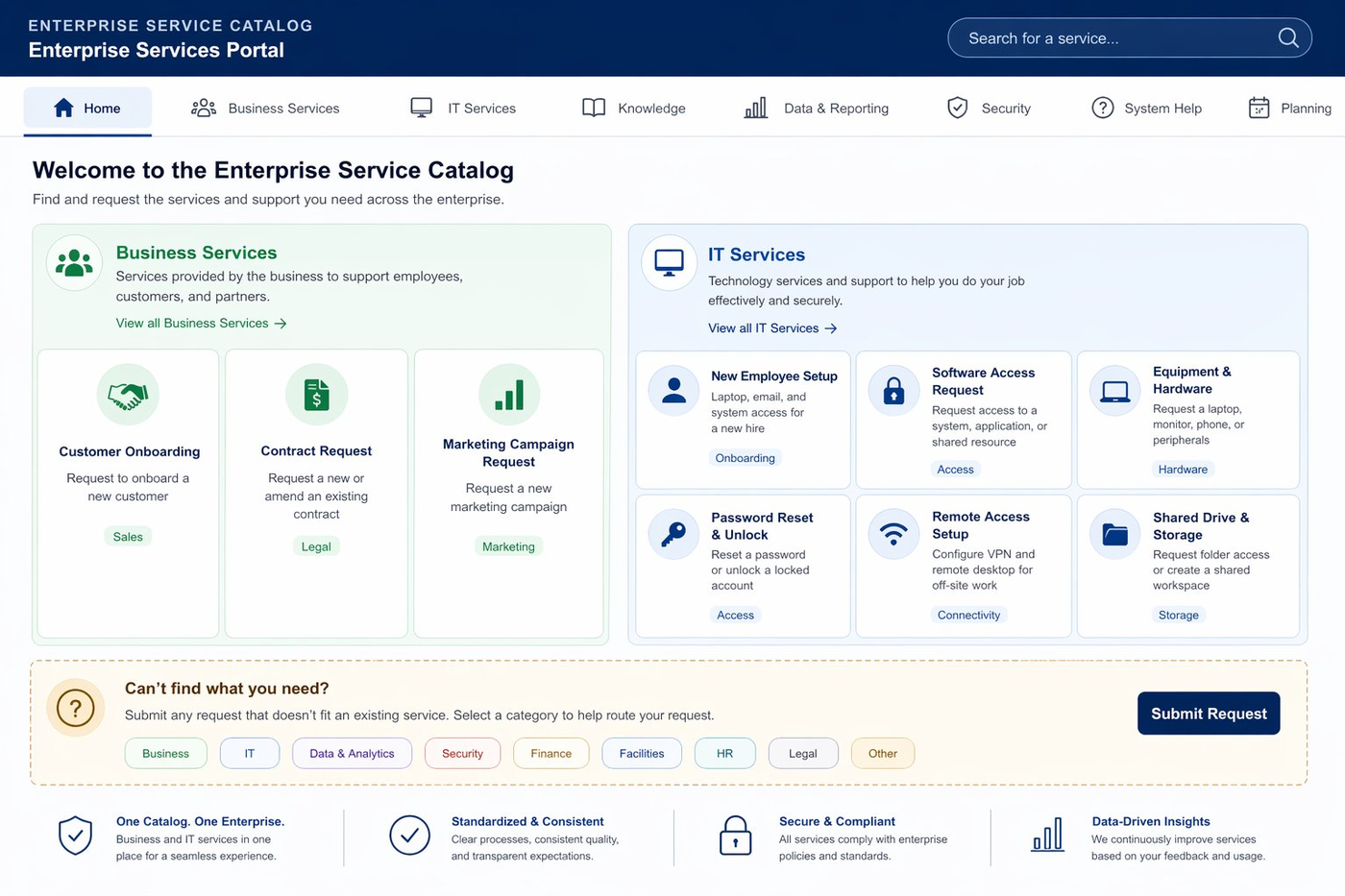
Service Catalog Best Practices

A Service Catalog is the enterprise-facing service publication and request interface that makes services discoverable, understandable, requestable, governable, and continuously improvable across business and technolog...

read more
Service Management Best Practices

Best Practice

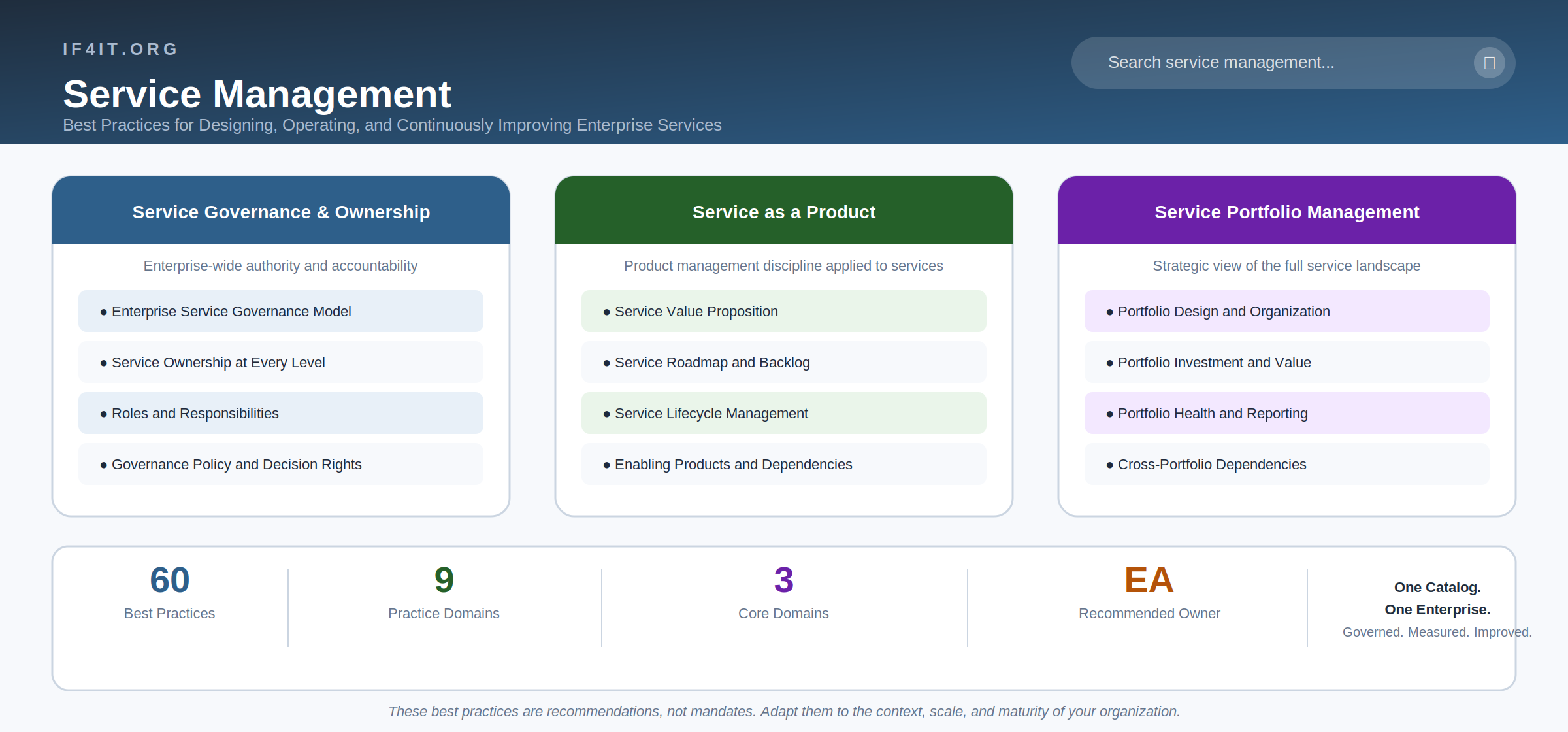
Service Management Best Practices

Service Management is not a ticketing tool or a help desk queue; it is the enterprise discipline for defining, owning, exposing, fulfilling, measuring, governing, and improving services as managed value-delivery asset...

read more
Services Inventory and Attributes

Inventory

Services Inventory and Attributes

The Services Inventory is not a Service Catalog or a list of request forms; it is the governed enterprise registry of every Service the enterprise has chosen to govern as a managed value-delivery asset across every li...

read more
Shadow AI Agents: Why You Can't Govern the Agents You Can't See

Article

Shadow AI Agents: Why You Can't Govern the Agents You Can't See

Shadow AI agents are AI agents running inside an enterprise that no one has recorded, owns, or governs. They are not a new category of problem; they are the AI form of an old one, the ungoverned asset, and they arise...

read more
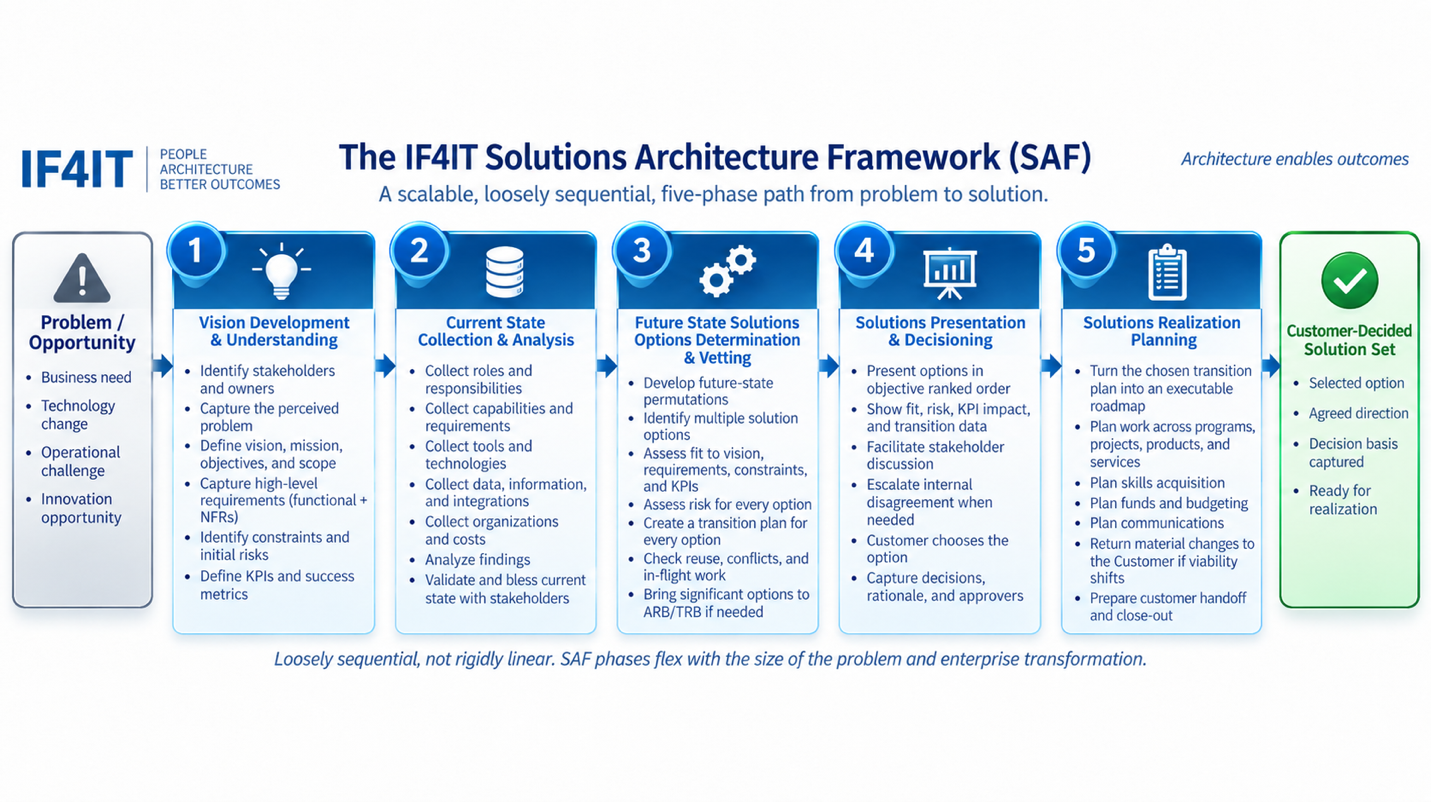
Solutions Architecture Best Practices and Framework

Best Practice

Solutions Architecture Best Practices and Framework

Solutions Architecture is not a new invention or a technology-selection exercise; it is a decades-proven consulting pattern, now standardized into one repeatable, governed discipline that turns an IT or Business probl...

read more
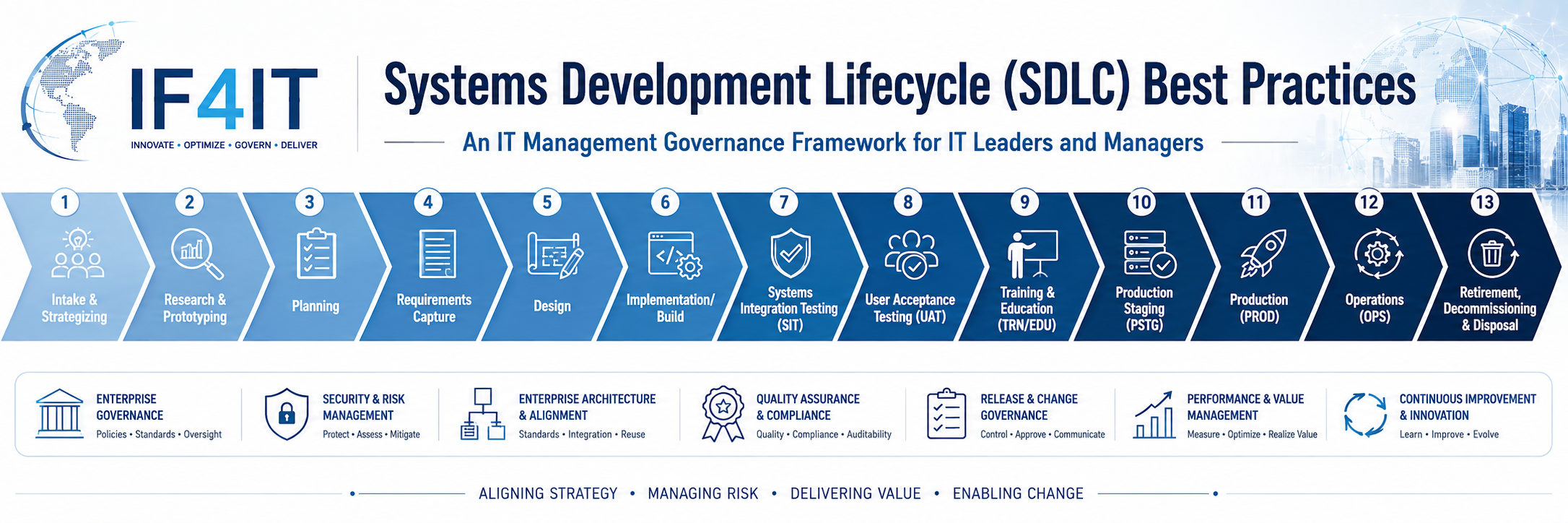
Systems Development Lifecycle (SDLC) Best Practices

Best Practice

Systems Development Lifecycle (SDLC) Best Practices

The IF4IT Systems Development Lifecycle (SDLC) is an IT management governance framework for leaders and managers—not merely a software-development process. It provides a comprehensive, tailorable 13-phase lifecycle fo...

read more
Technical Debt Management Best Practices

Best Practice

Technical Debt Management Best Practices

Technical Debt Management is the IT Management discipline for governing technical conditions and unresolved obligations that make governed Assets more costly, difficult, risky, or constrained to change, operate, secur...

read more
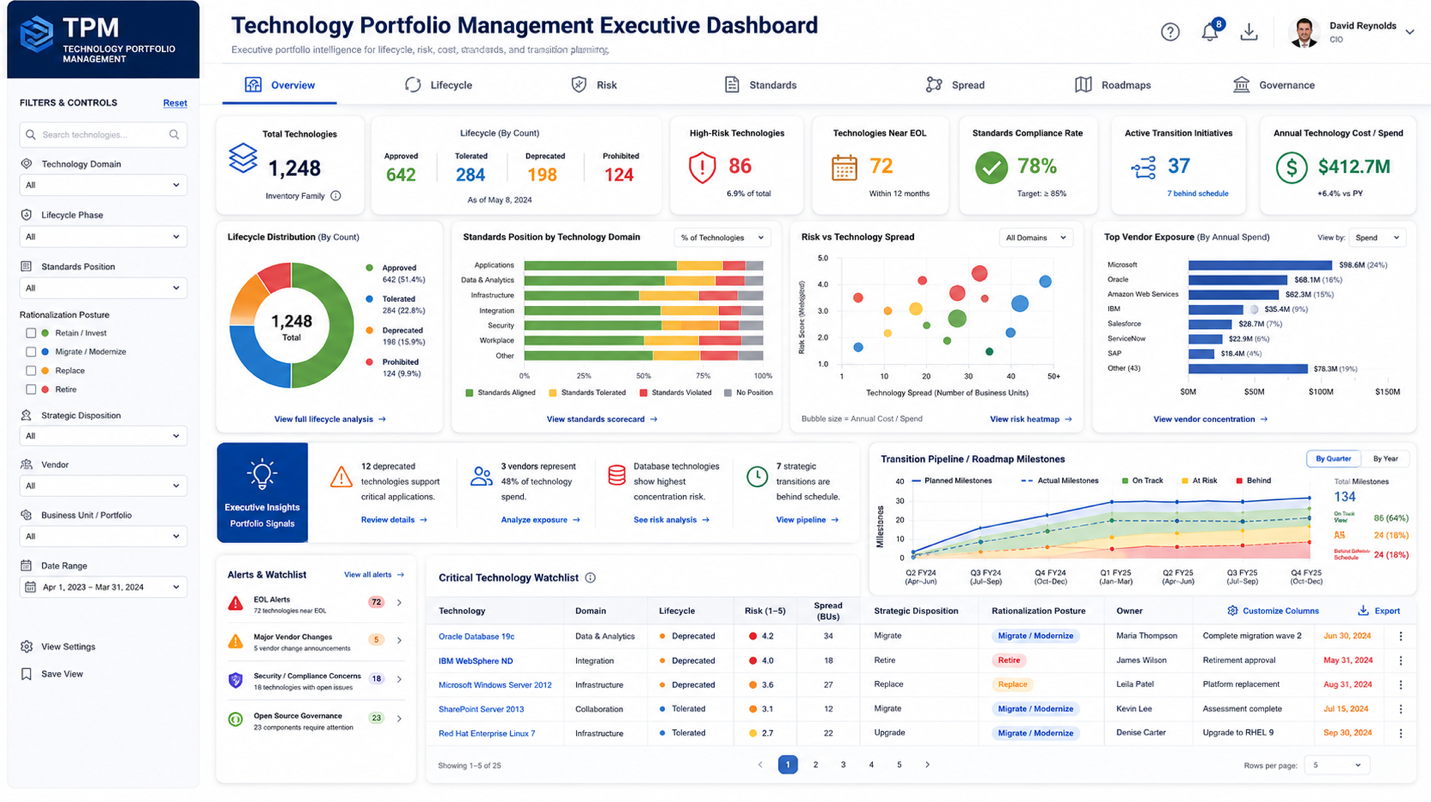
Technology Portfolio Management (TPM) Best Practices

Best Practice

Technology Portfolio Management (TPM) Best Practices

Technology Portfolio Management is the enterprise discipline for governing technologies as strategic assets through connected inventories, explicit ownership, lifecycle and standards controls, evidence-based assessmen...

read more
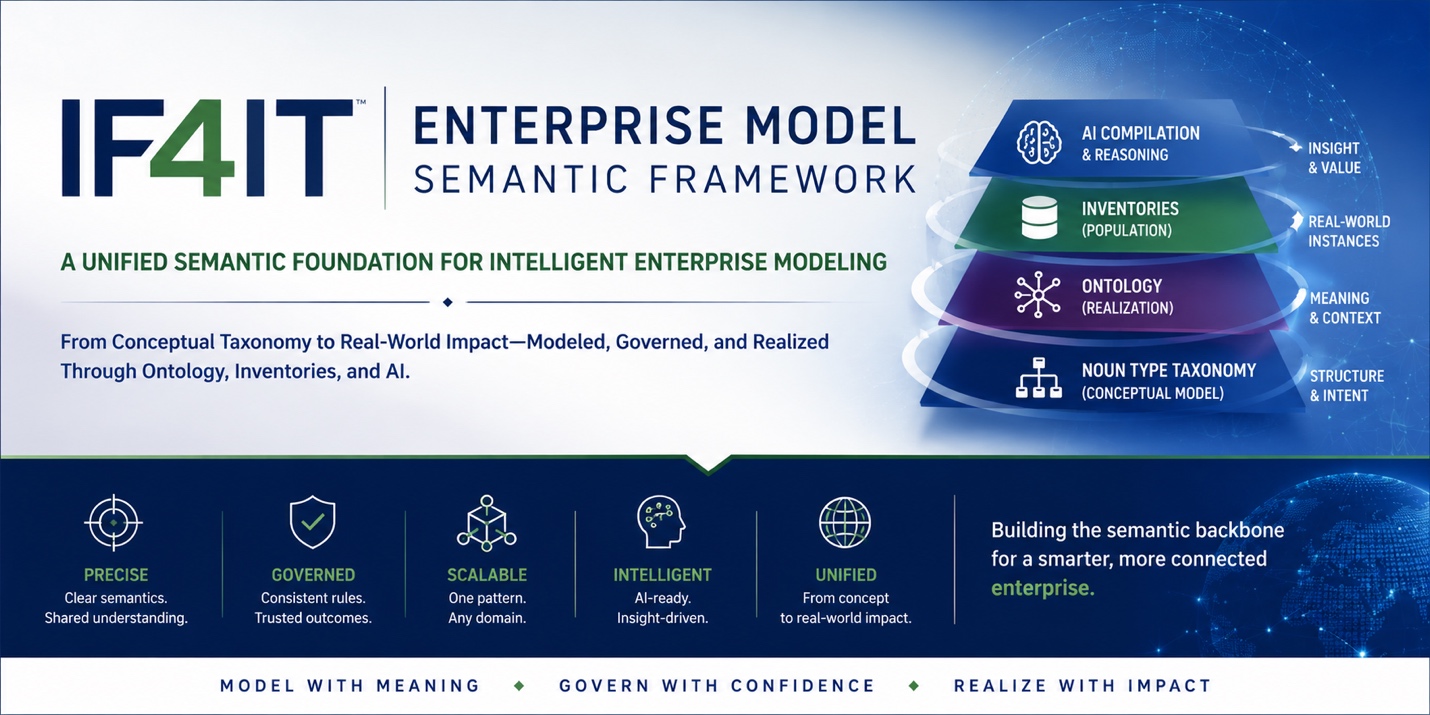
The IF4IT Enterprise Model and Modeling Best Practices

Best Practice

The IF4IT Enterprise Model and Modeling Best Practices

The IF4IT Enterprise Model and Modeling Best Practices explains how enterprises can design, govern, and use an AI-consumable semantic Enterprise Model that represents what the enterprise has, how those things relate,...

read more
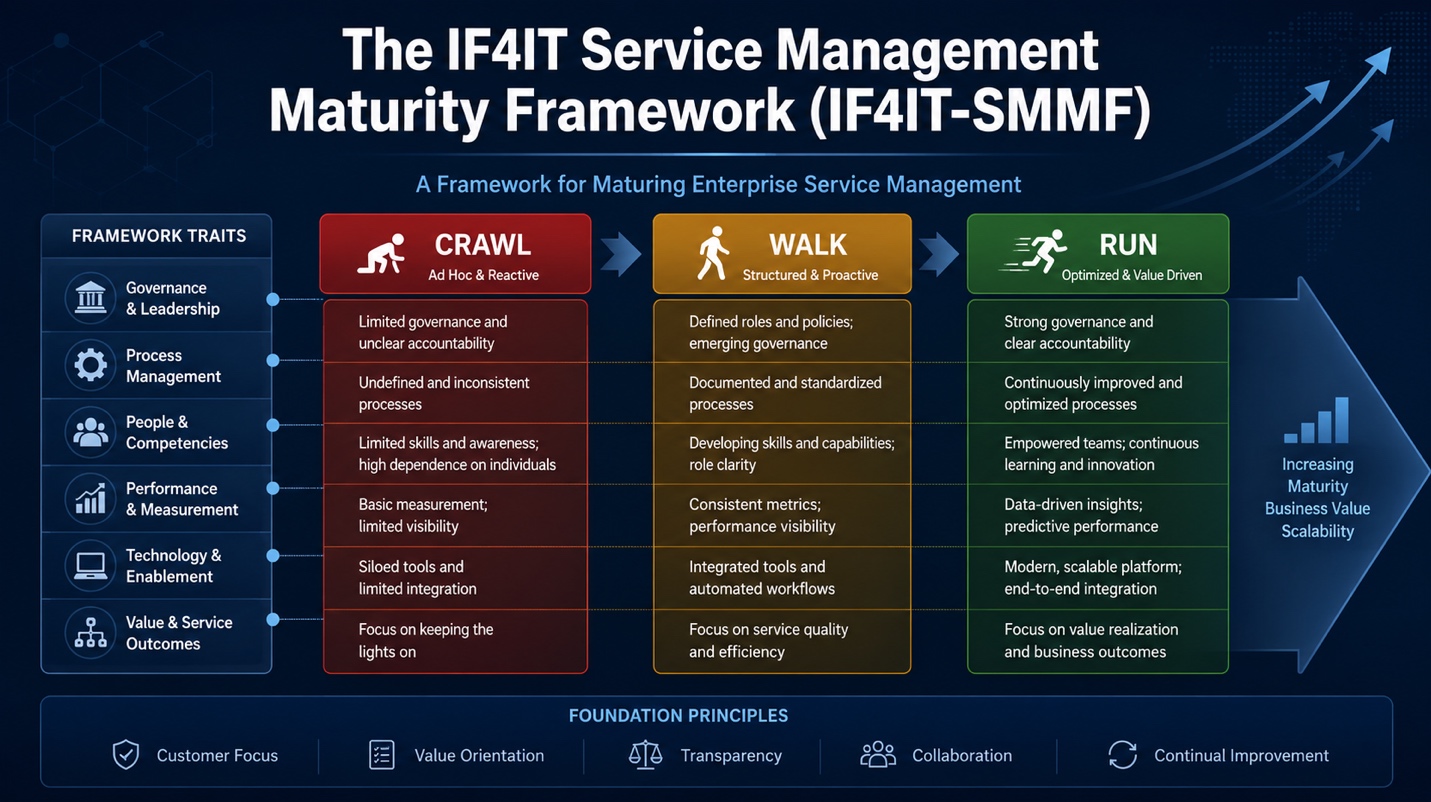
The IF4IT Service Management Maturity Framework (IF4IT-SMMF) for Small, Midsized, and Large Enterprises

Framework

The IF4IT Service Management Maturity Framework (IF4IT-SMMF) for Small, Midsized, and Large Enterprises

The IF4IT Service Management Maturity Framework (IF4IT-SMMF) gives Small, Midsized, and Large Enterprises a rigorous instrument to identify their current Service Management maturity across thirteen traits, prescribe t...

read more
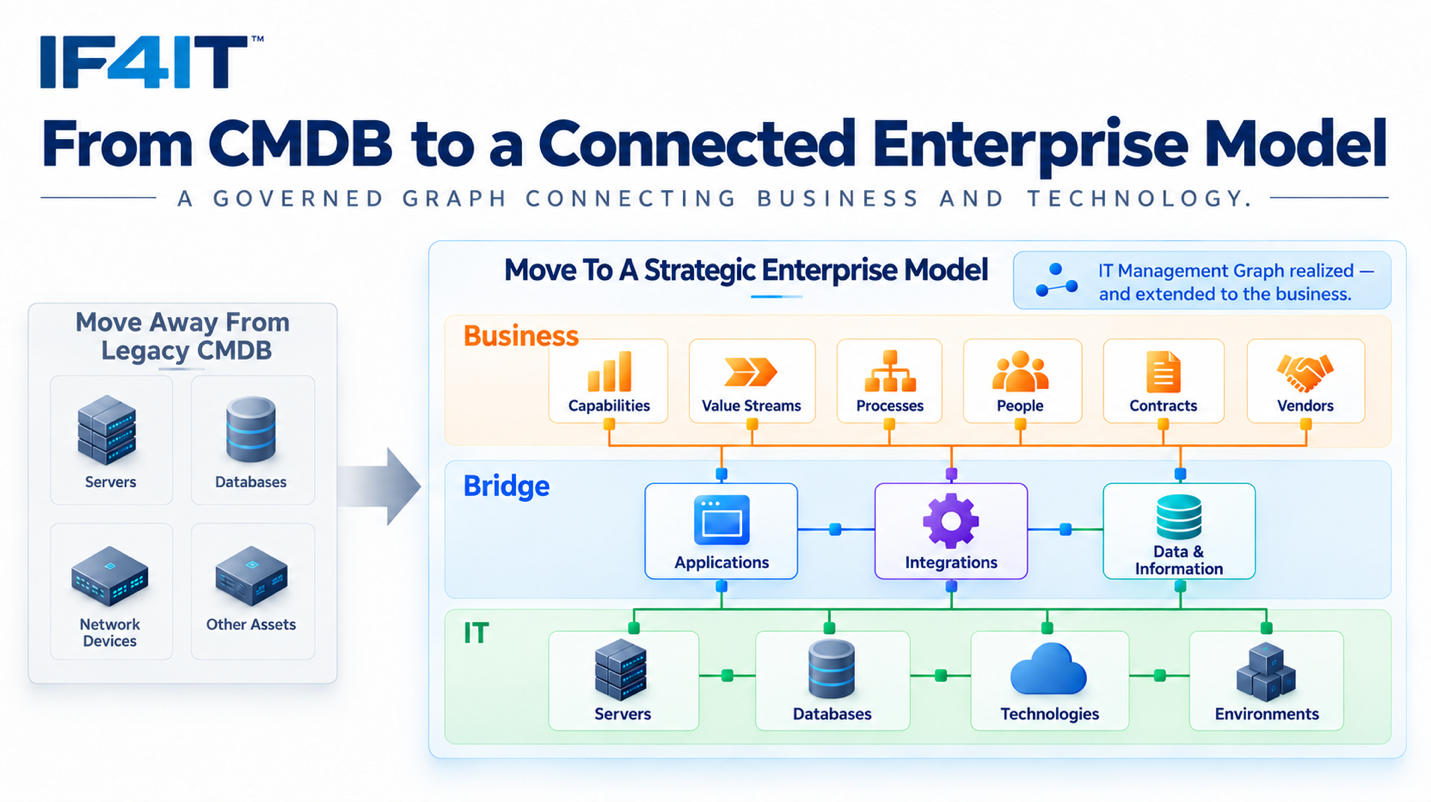
The IT Management Graph — How an Enterprise Model Delivers What the CMDB Never Could

Article

The IT Management Graph — How an Enterprise Model Delivers What the CMDB Never Could

CMDB implementations have a well-documented history of failure, predominantly because the bridge between discovered assets and the business is rarely built, and Forrester has declared the CMDB term dead in favor of an...

read more
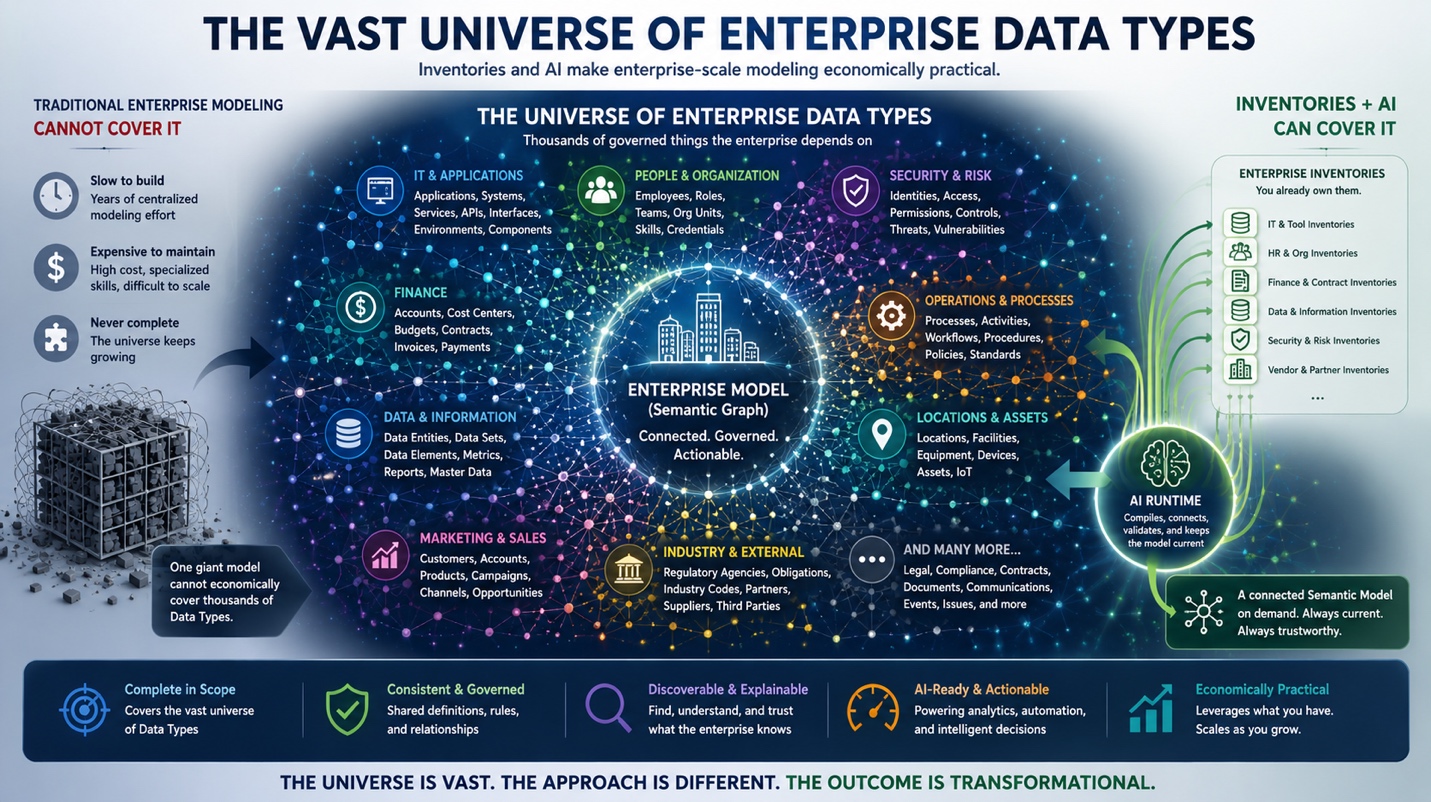
The Universe Of Enterprise Data Types Is Vast — Why Traditional Enterprise Modeling Cannot Cover It But Inventories And AI Can

Article

The Universe Of Enterprise Data Types Is Vast — Why Traditional Enterprise Modeling Cannot Cover It But Inventories And AI Can

Traditional centralized enterprise modeling cannot economically or operationally cover the full universe of enterprise Data Types. Enterprises can instead combine governed inventories with AI to compile a connected, s...

read more
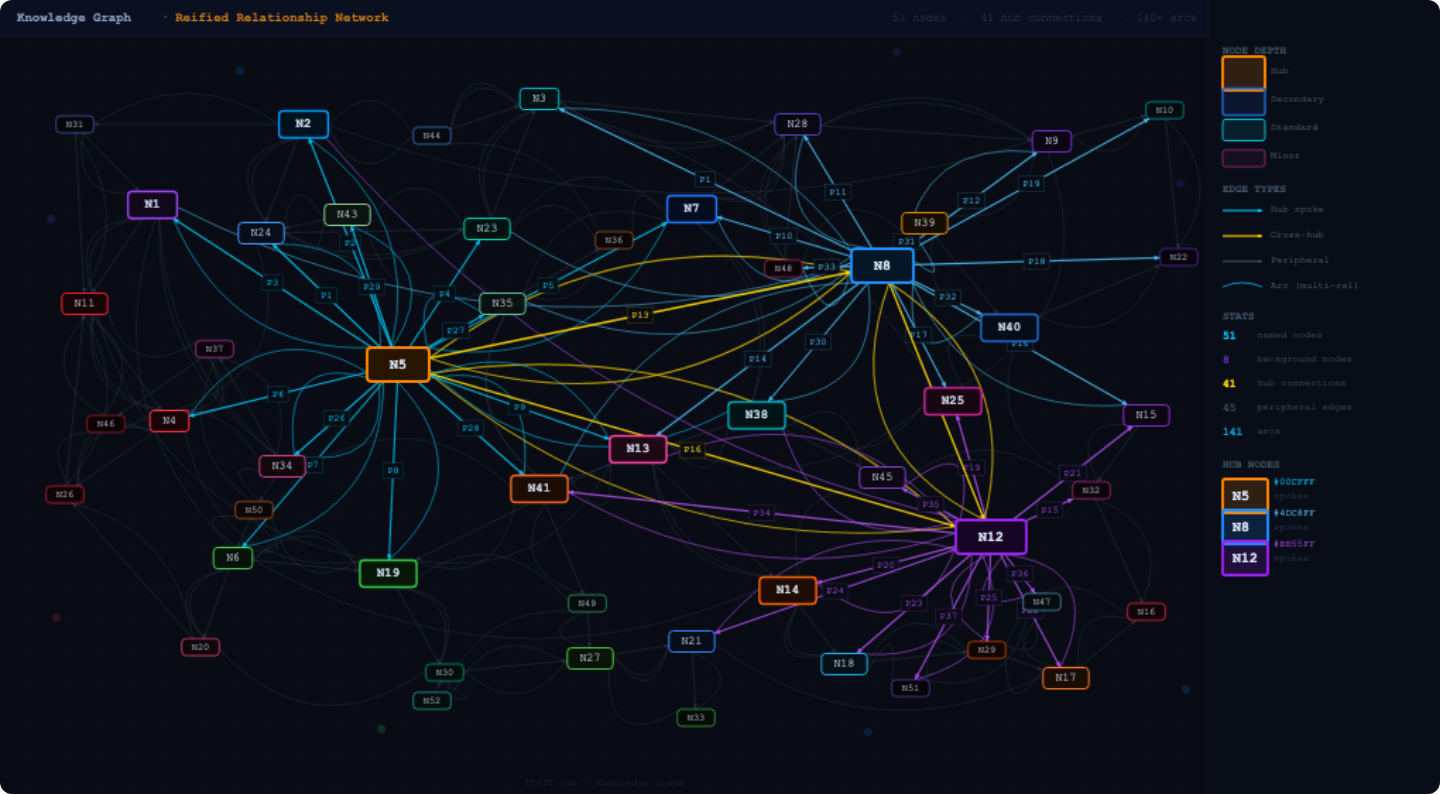
Understanding Reified Relationships, N-Tuples, and How They Give Life to Data

Article

Understanding Reified Relationships, N-Tuples, and How They Give Life to Data

Reification turns a relationship from an implicit connector into a first-class data object that can carry meaning, context, history, and governance. N-tuple depth describes how richly each reified relationship is repr...

read more
Using AI to Build and Maintain Enterprise Inventories and Models

Article

Using AI to Build and Maintain Enterprise Inventories and Models

Artificial intelligence can dramatically reduce the cost, time, and inconsistency involved in building and maintaining enterprise inventories by extracting, reconciling, cleansing, transforming, populating, and relati...

read more
Value Streams Depend on Enterprise Capabilities

Article

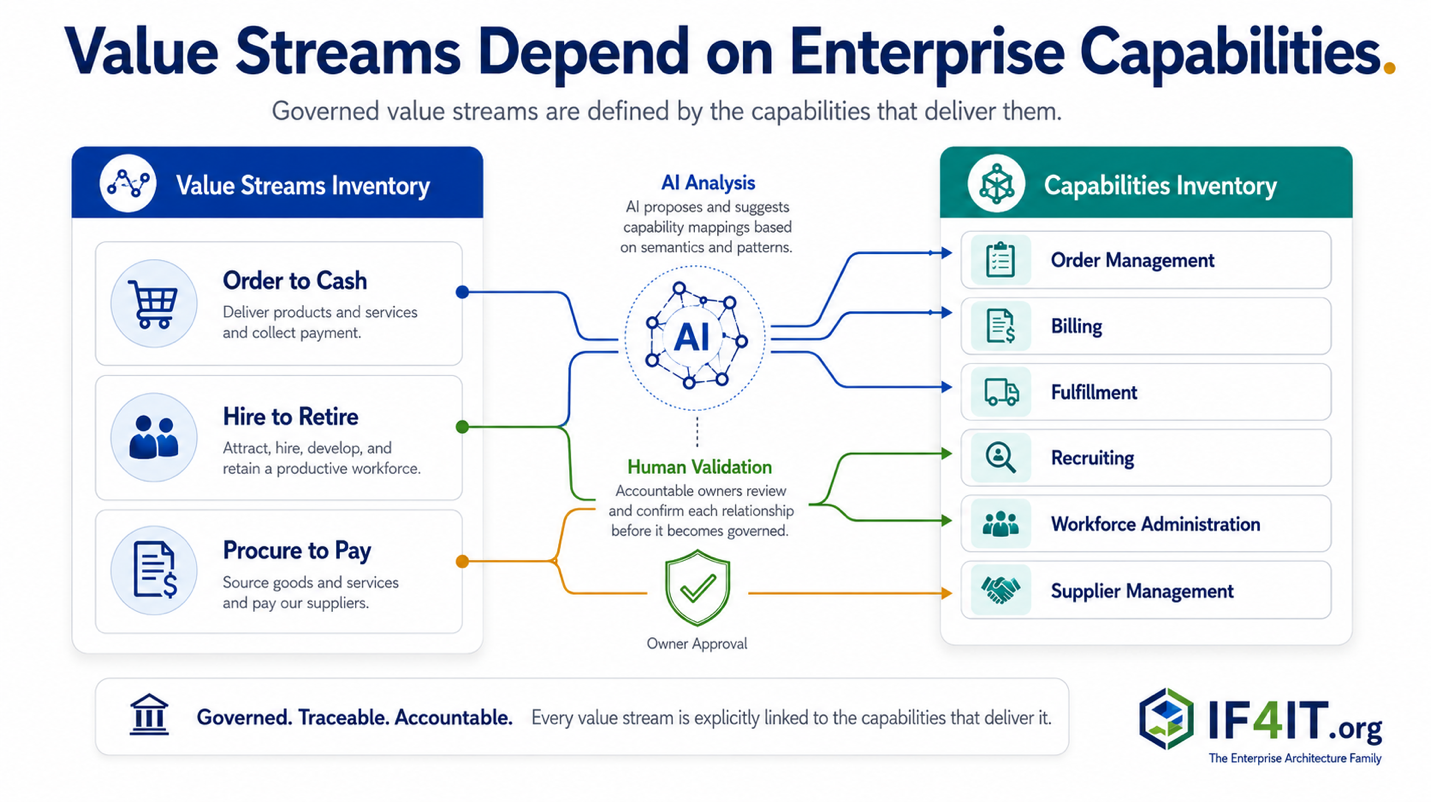
Value Streams Depend on Enterprise Capabilities

A value stream is not governed by being named; it is governed by being tied to the specific enterprise capabilities that actually deliver it. Most enterprises can produce a value stream's name from a workshop diagram...

read more
Value Streams Inventory and Attributes

Inventory

Value Streams Inventory and Attributes

The Value Streams Inventory is the governed enterprise record of the end-to-end flows through which the organization delivers value to stakeholders. Without it, enterprises cannot reliably see how value is delivered,...

read more
Vendors Inventory and Attributes

Inventory

Vendors Inventory and Attributes

The Vendors Inventory is the governed enterprise record of third-party organizations that provide technology, services, data, or capabilities to the enterprise. Without a reliable Vendors Inventory, leaders cannot con...

read more
Why Business Architecture and Enterprise Architecture Practices Often Fail

Article

Why Business Architecture and Enterprise Architecture Practices Often Fail

Architecture practices earn durable executive support when they are accountable for measurable business outcomes rather than documents, diagrams, and advisory activity alone. When Business Architecture and Enterprise...

read more
AI Agents Inventory vs. Registry vs. Catalog: What's the Difference?

Article

AI Agents Inventory vs. Registry vs. Catalog: What's the Difference?

An AI Agents Inventory and an AI Agents Registry are the same thing: a governed record of the AI agents an enterprise has, who owns them, what they can do, and what they can reach. An AI Agents Catalog is different: i...

read more
AI Governance Is an Inventory Problem: Why Enterprise AI Governance Starts With an AI Agent Inventory

Article

AI Governance Is an Inventory Problem: Why Enterprise AI Governance Starts With an AI Agent Inventory

AI governance is not a new discipline. It is inventory governance applied to a new kind of asset. Enterprises struggling to govern Artificial Intelligence (AI) are usually struggling because they cannot see what AI th...

read more
Building and Using Enterprise Knowledge Models with AI-Generated Data Graphs

Article

Building and Using Enterprise Knowledge Models with AI-Generated Data Graphs

AI-generated data graphs can transform scattered enterprise knowledge into a connected Enterprise Knowledge Model that humans and AI can query, traverse, visualize, and reason over. Without a governed <u>Taxonomy</u>,...

read more
Enterprise Capabilities Models (ECMs) as a Knowledge Management Tools

Article

Enterprise Capabilities Models (ECMs) as a Knowledge Management Tools

Enterprise Capability Models become far more valuable when enterprises use them as shared knowledge structures rather than static architecture diagrams. By relating capabilities to applications, processes, data, risks...

read more
From Cost Center to Value Engine: Reframing the Role of IT in the Modern Enterprise

Article

From Cost Center to Value Engine: Reframing the Role of IT in the Modern Enterprise

IT becomes a value engine when its operating model, investment decisions, and performance measures are explicitly tied to measurable business outcomes. Reframing IT requires product and service ownership, financial tr...

read more
Inventories Are Worth More Together — The Network Effect of a Connected Enterprise Model

Article

Inventories Are Worth More Together — The Network Effect of a Connected Enterprise Model

Enterprise inventories create their greatest value when they are governed as connected parts of an Enterprise Model rather than as isolated lists. Each new inventory adds its own information and expands the questions...

read more
Make Architecture More Valuable: Have Enterprise Architecture Own the CMDB

Article

Make Architecture More Valuable: Have Enterprise Architecture Own the CMDB

Enterprise Architecture should own and govern the Configuration Management Database because Architecture has the upstream lifecycle visibility, cross-domain scope, and modeling discipline required to maintain its logi...

read more
Make Architecture More Valuable: Take on At-Risk & High-Risk Initiatives

Article

Make Architecture More Valuable: Take on At-Risk & High-Risk Initiatives

Architecture becomes indispensable when it moves beyond advisory governance and accepts accountability for the enterprise’s most consequential delivery outcomes. A dedicated At-Risk Architecture Practice embeds senior...

read more
Make Architecture More Valuable: Take Ownership of Enterprise Process Automations and the Service Catalog

Article

Make Architecture More Valuable: Take Ownership of Enterprise Process Automations and the Service Catalog

Enterprise Architecture becomes more visible and indispensable when it owns operational assets that the enterprise depends on every day. Taking responsibility for enterprise process automations and the service catalog...

read more
Not Everything Can Be Agile

Article

Not Everything Can Be Agile

Delivery methodology must be selected according to the intrinsic characteristics and risks of the work, not imposed as an enterprise-wide preference. Agile is appropriate when work can be decomposed into independently...

read more
Shadow AI Agents: Why You Can't Govern the Agents You Can't See

Article

Shadow AI Agents: Why You Can't Govern the Agents You Can't See

Shadow AI agents are AI agents running inside an enterprise that no one has recorded, owns, or governs. They are not a new category of problem; they are the AI form of an old one, the ungoverned asset, and they arise...

read more
The IT Management Graph — How an Enterprise Model Delivers What the CMDB Never Could

Article

The IT Management Graph — How an Enterprise Model Delivers What the CMDB Never Could

CMDB implementations have a well-documented history of failure, predominantly because the bridge between discovered assets and the business is rarely built, and Forrester has declared the CMDB term dead in favor of an...

read more
The Universe Of Enterprise Data Types Is Vast — Why Traditional Enterprise Modeling Cannot Cover It But Inventories And AI Can

Article

The Universe Of Enterprise Data Types Is Vast — Why Traditional Enterprise Modeling Cannot Cover It But Inventories And AI Can

Traditional centralized enterprise modeling cannot economically or operationally cover the full universe of enterprise Data Types. Enterprises can instead combine governed inventories with AI to compile a connected, s...

read more
Understanding Reified Relationships, N-Tuples, and How They Give Life to Data

Article

Understanding Reified Relationships, N-Tuples, and How They Give Life to Data

Reification turns a relationship from an implicit connector into a first-class data object that can carry meaning, context, history, and governance. N-tuple depth describes how richly each reified relationship is repr...

read more
Using AI to Build and Maintain Enterprise Inventories and Models

Article

Using AI to Build and Maintain Enterprise Inventories and Models

Artificial intelligence can dramatically reduce the cost, time, and inconsistency involved in building and maintaining enterprise inventories by extracting, reconciling, cleansing, transforming, populating, and relati...

read more
Value Streams Depend on Enterprise Capabilities

Article

Value Streams Depend on Enterprise Capabilities

A value stream is not governed by being named; it is governed by being tied to the specific enterprise capabilities that actually deliver it. Most enterprises can produce a value stream's name from a workshop diagram...

read more
Why Business Architecture and Enterprise Architecture Practices Often Fail

Article

Why Business Architecture and Enterprise Architecture Practices Often Fail

Architecture practices earn durable executive support when they are accountable for measurable business outcomes rather than documents, diagrams, and advisory activity alone. When Business Architecture and Enterprise...

read more
Agile, Waterfall, or Hybrid: An IF4IT Framework for Choosing Delivery Methodology

Best Practice

Agile, Waterfall, or Hybrid: An IF4IT Framework for Choosing Delivery Methodology

Delivery methodology is not an enterprise preference; it is a fit decision determined by the nature of the Product or Service being delivered. When organizations force all work through Agile, Waterfall, or a convenien...

read more
Best Practices for Making Legacy Data Semantic and AI-Ready

Best Practice

Best Practices for Making Legacy Data Semantic and AI-Ready

Making legacy data semantic and AI-ready is an enterprise knowledge discipline that preserves source integrity while adding governed meaning, relationships, lineage, and retrieval context. When enterprises treat conne...

read more
Designing, Building, and Maintaining Comprehensive and Usable Enterprise Capability Models

Best Practice

Designing, Building, and Maintaining Comprehensive and Usable Enterprise Capability Models

A comprehensive Enterprise Capability Model is a governed, inventory-backed knowledge asset that represents the durable abilities an enterprise performs, intends to perform, or has decided to exit. This document expla...

read more
Service Catalog Best Practices

Best Practice

Service Catalog Best Practices

A Service Catalog is the enterprise-facing service publication and request interface that makes services discoverable, understandable, requestable, governable, and continuously improvable across business and technolog...

read more
Service Management Best Practices

Best Practice

Service Management Best Practices

Service Management is not a ticketing tool or a help desk queue; it is the enterprise discipline for defining, owning, exposing, fulfilling, measuring, governing, and improving services as managed value-delivery asset...

read more
Solutions Architecture Best Practices and Framework

Best Practice

Solutions Architecture Best Practices and Framework

Solutions Architecture is not a new invention or a technology-selection exercise; it is a decades-proven consulting pattern, now standardized into one repeatable, governed discipline that turns an IT or Business probl...

read more
Systems Development Lifecycle (SDLC) Best Practices

Best Practice

Systems Development Lifecycle (SDLC) Best Practices

The IF4IT Systems Development Lifecycle (SDLC) is an IT management governance framework for leaders and managers—not merely a software-development process. It provides a comprehensive, tailorable 13-phase lifecycle fo...

read more
Technical Debt Management Best Practices

Best Practice

Technical Debt Management Best Practices

Technical Debt Management is the IT Management discipline for governing technical conditions and unresolved obligations that make governed Assets more costly, difficult, risky, or constrained to change, operate, secur...

read more
Technology Portfolio Management (TPM) Best Practices

Best Practice

Technology Portfolio Management (TPM) Best Practices

Technology Portfolio Management is the enterprise discipline for governing technologies as strategic assets through connected inventories, explicit ownership, lifecycle and standards controls, evidence-based assessmen...

read more
The IF4IT Enterprise Model and Modeling Best Practices

Best Practice

The IF4IT Enterprise Model and Modeling Best Practices

The IF4IT Enterprise Model and Modeling Best Practices explains how enterprises can design, govern, and use an AI-consumable semantic Enterprise Model that represents what the enterprise has, how those things relate,...

read more
Non-Functional Requirements (NFRs) Framework for Software Systems

Framework

Non-Functional Requirements (NFRs) Framework for Software Systems

Non-Functional Requirements (NFRs) define the software qualities, operating expectations, validation methods, and assurance evidence that determine whether a system is fit for purpose. When NFRs are vague, missing, or...

read more
The IF4IT Service Management Maturity Framework (IF4IT-SMMF) for Small, Midsized, and Large Enterprises

Framework

The IF4IT Service Management Maturity Framework (IF4IT-SMMF) for Small, Midsized, and Large Enterprises

The IF4IT Service Management Maturity Framework (IF4IT-SMMF) gives Small, Midsized, and Large Enterprises a rigorous instrument to identify their current Service Management maturity across thirteen traits, prescribe t...

read more
Capabilities Inventory and Attributes

Inventory

Capabilities Inventory and Attributes

The Capabilities Inventory is the governed enterprise record of the business and IT capabilities the enterprise performs, intends to perform, or has decided to exit. It provides the stable capability vocabulary that l...

read more
Data and Information Inventory and Attributes

Inventory

Data and Information Inventory and Attributes

The Data and Information Inventory is not a data catalog or a list of files; it is the governed logical vocabulary for every named data and information type the enterprise produces, consumes, stores, or transmits. Wit...

read more
Integrations Inventory and Attributes

Inventory

Integrations Inventory and Attributes

The Integrations Inventory is the governed record of every data and information flow, making integration complexity, dependency risk, data sensitivity, technology usage, and cross-boundary movement visible across the...

read more
Regulatory Agencies Inventory and Attributes

Inventory

Regulatory Agencies Inventory and Attributes

The Regulatory Agencies Inventory is the governed root of the enterprise compliance hierarchy, identifying every body whose authority, standards, or market-access requirements create formal obligations for the enterpr...

read more
Services Inventory and Attributes

Inventory

Services Inventory and Attributes

The Services Inventory is not a Service Catalog or a list of request forms; it is the governed enterprise registry of every Service the enterprise has chosen to govern as a managed value-delivery asset across every li...

read more
Value Streams Inventory and Attributes

Inventory

Value Streams Inventory and Attributes

The Value Streams Inventory is the governed enterprise record of the end-to-end flows through which the organization delivers value to stakeholders. Without it, enterprises cannot reliably see how value is delivered,...

read more
Vendors Inventory and Attributes

Inventory

Vendors Inventory and Attributes

The Vendors Inventory is the governed enterprise record of third-party organizations that provide technology, services, data, or capabilities to the enterprise. Without a reliable Vendors Inventory, leaders cannot con...

read more
Enterprise Architecture Value Model

Model

Enterprise Architecture Value Model

The Enterprise Architecture Value Model explains that an architecture function becomes strategically valuable when it moves beyond review and advice into accountable delivery and ownership. It gives CIOs, CTOs, Chief...

read more
© The International Foundation for Information Technology (IF4IT) 2008 - Present
Legal Disclaimers