The International Foundation for Information Technology (IF4IT)
  • Home
  • Best Practices & More
  • Articles
  • Dictionary
  • About Us
  • Contact Us
  • Catalog
  • Search
  1. Topics
  2. Inventory Management

Inventory Management

Share:
Contact Us → Subscribe →
AI Agents Inventory and Attributes

Inventory

AI Agents Inventory and Attributes

The AI Agents Inventory is the enterprise’s single governed record of the AI agents it builds, buys, or runs — the autonomous, model-driven software actors that take action on systems and data, or communicate with sta...

read more
Applications Inventory and Attributes

Inventory

Applications Inventory and Attributes

The Applications Inventory is the governed enterprise record of every application the organization owns, operates, licenses, or depends on — the authoritative application-level data foundation for the enterprise. With...

read more
Capabilities Inventory and Attributes

Inventory

Capabilities Inventory and Attributes

The Capabilities Inventory is the governed enterprise record of the business and IT capabilities the enterprise performs, intends to perform, or has decided to exit. It provides the stable capability vocabulary that l...

read more
Data and Information Inventory and Attributes

Inventory

Data and Information Inventory and Attributes

The Data and Information Inventory is not a data catalog or a list of files; it is the governed logical vocabulary for every named data and information type the enterprise produces, consumes, stores, or transmits. Wit...

read more
Enterprise Inventory Management Best Practices

Best Practice

Enterprise Inventory Management Best Practices

Enterprise Inventory Management establishes governed, authoritative inventories that collectively form a connected Enterprise Model. The practices in this document help organizations define ownership, improve accuracy...

read more
Integrations Inventory and Attributes

Inventory

Integrations Inventory and Attributes

The Integrations Inventory is the governed record of every data and information flow, making integration complexity, dependency risk, data sensitivity, technology usage, and cross-boundary movement visible across the...

read more
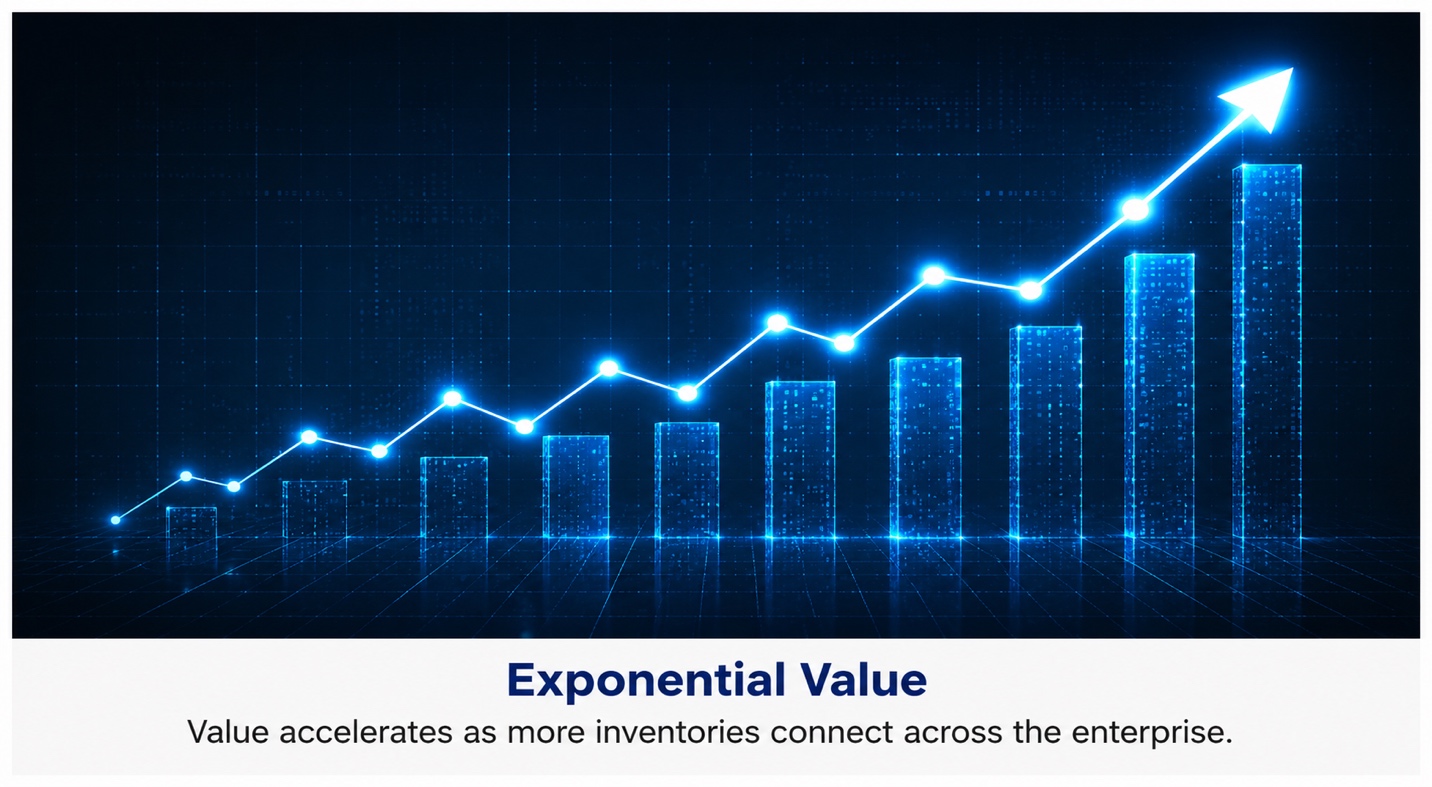
Inventories Are Worth More Together — The Network Effect of a Connected Enterprise Model

Article

Inventories Are Worth More Together — The Network Effect of a Connected Enterprise Model

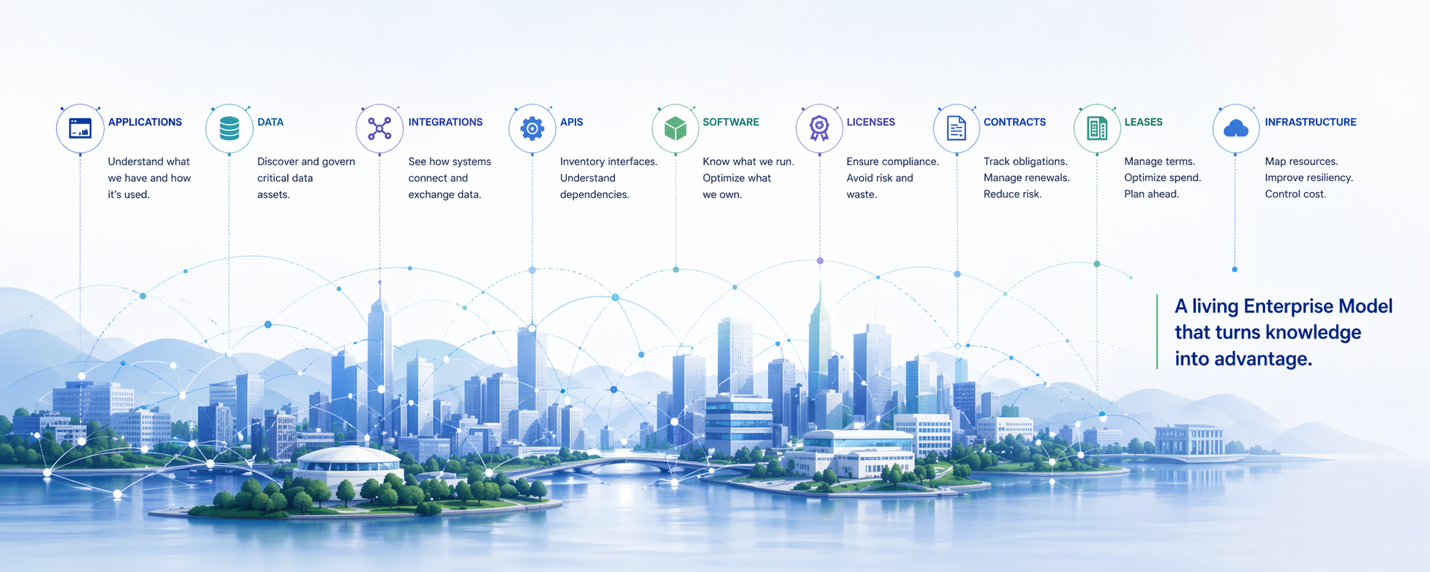
Enterprise inventories create their greatest value when they are governed as connected parts of an Enterprise Model rather than as isolated lists. Each new inventory adds its own information and expands the questions...

read more
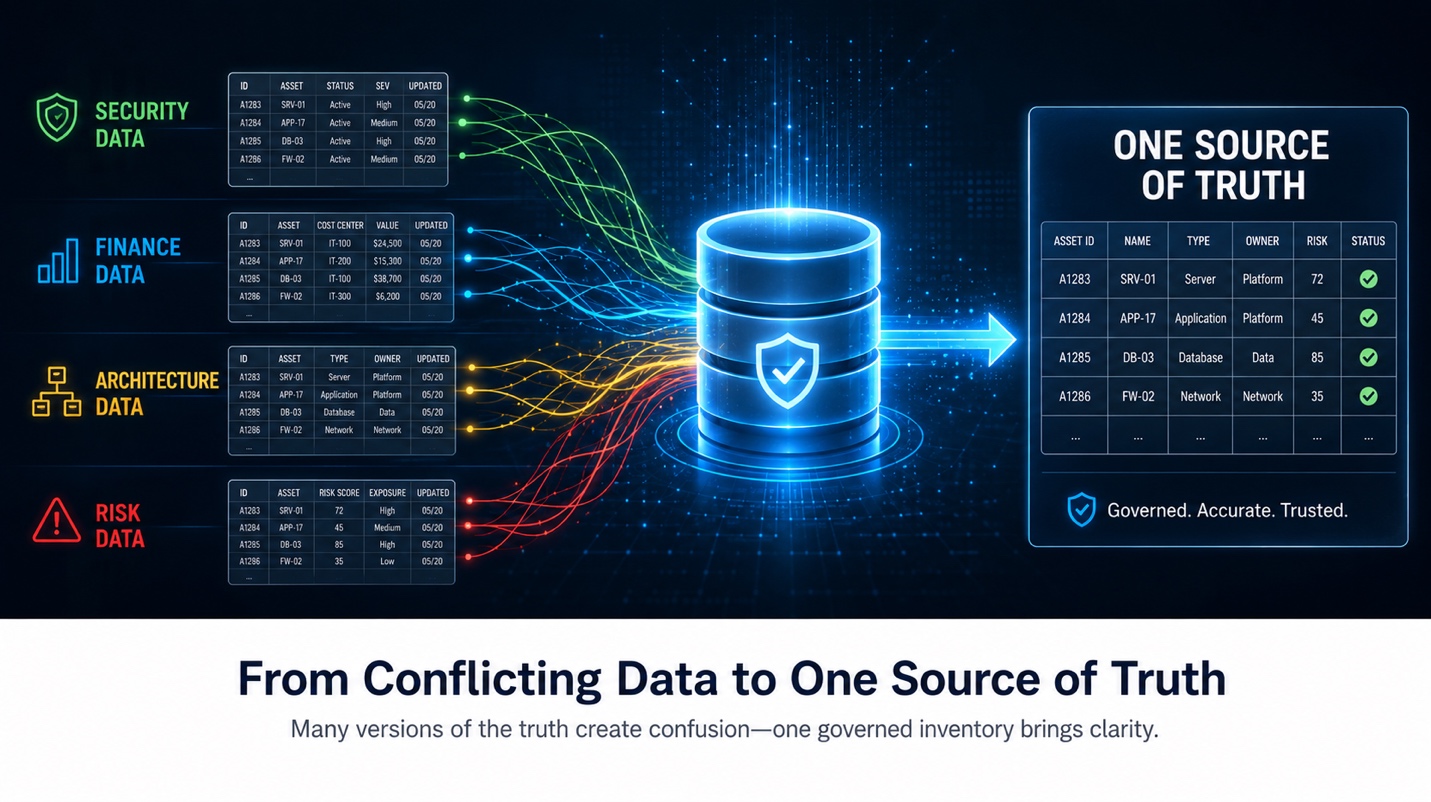
One Source of Truth — How Inventories End the “Whose Numbers Are Right?” Debate

Article

One Source of Truth — How Inventories End the “Whose Numbers Are Right?” Debate

Governed enterprise inventories create a shared and authoritative factual foundation that moves cross-functional debate away from whose data is correct and toward the decisions that matter. Their value depends on reco...

read more
Regulatory Agencies Inventory and Attributes

Inventory

Regulatory Agencies Inventory and Attributes

The Regulatory Agencies Inventory is the governed root of the enterprise compliance hierarchy, identifying every body whose authority, standards, or market-access requirements create formal obligations for the enterpr...

read more
Services Inventory and Attributes

Inventory

Services Inventory and Attributes

The Services Inventory is not a Service Catalog or a list of request forms; it is the governed enterprise registry of every Service the enterprise has chosen to govern as a managed value-delivery asset across every li...

read more
Software Technologies Inventory and Attributes

Inventory

Software Technologies Inventory and Attributes

The Software Technologies Inventory is the authoritative, governed record of every software technology the enterprise procures, deploys, operates, or depends on — the database engines, runtimes, middleware, platforms,...

read more
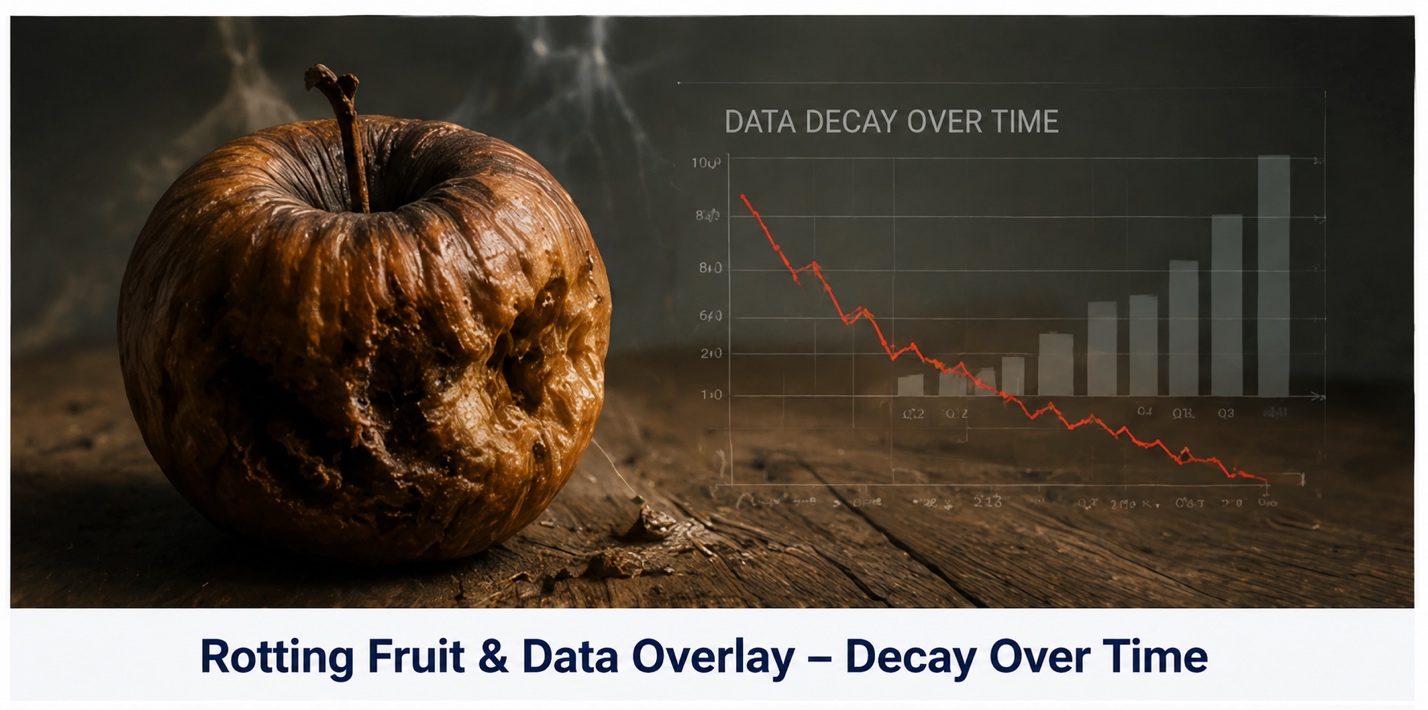
Stale Data Lies — Why an Inventory Is Never “Done”

Article

Stale Data Lies — Why an Inventory Is Never “Done”

An enterprise inventory is only trustworthy while it remains current. Because enterprise assets, owners, relationships, and operating conditions change continuously, inventory maintenance must be treated as an endurin...

read more
Successful Knowledge Management Requires Enterprise Inventories

Article

Successful Knowledge Management Requires Enterprise Inventories

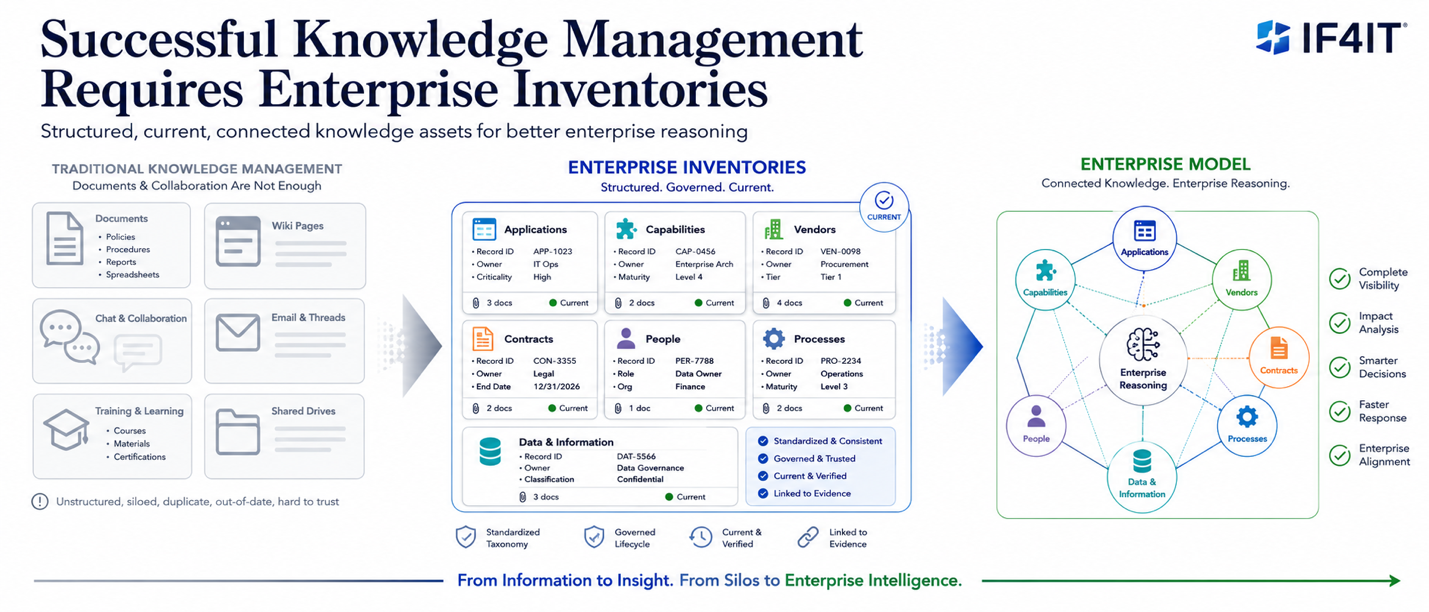
Knowledge Management programs that focus on documents, wikis, and collaboration tools while overlooking enterprise inventories are managing only part of the enterprise's knowledge. Inventories are commonly treated as...

read more
Technical Debt Inventory and Attributes

Inventory

Technical Debt Inventory and Attributes

The Technical Debt Inventory is the governed record of the Technical Debt Items an enterprise identifies across the Assets it owns, operates, or depends on. Without a governed inventory, Technical Debt remains fragmen...

read more
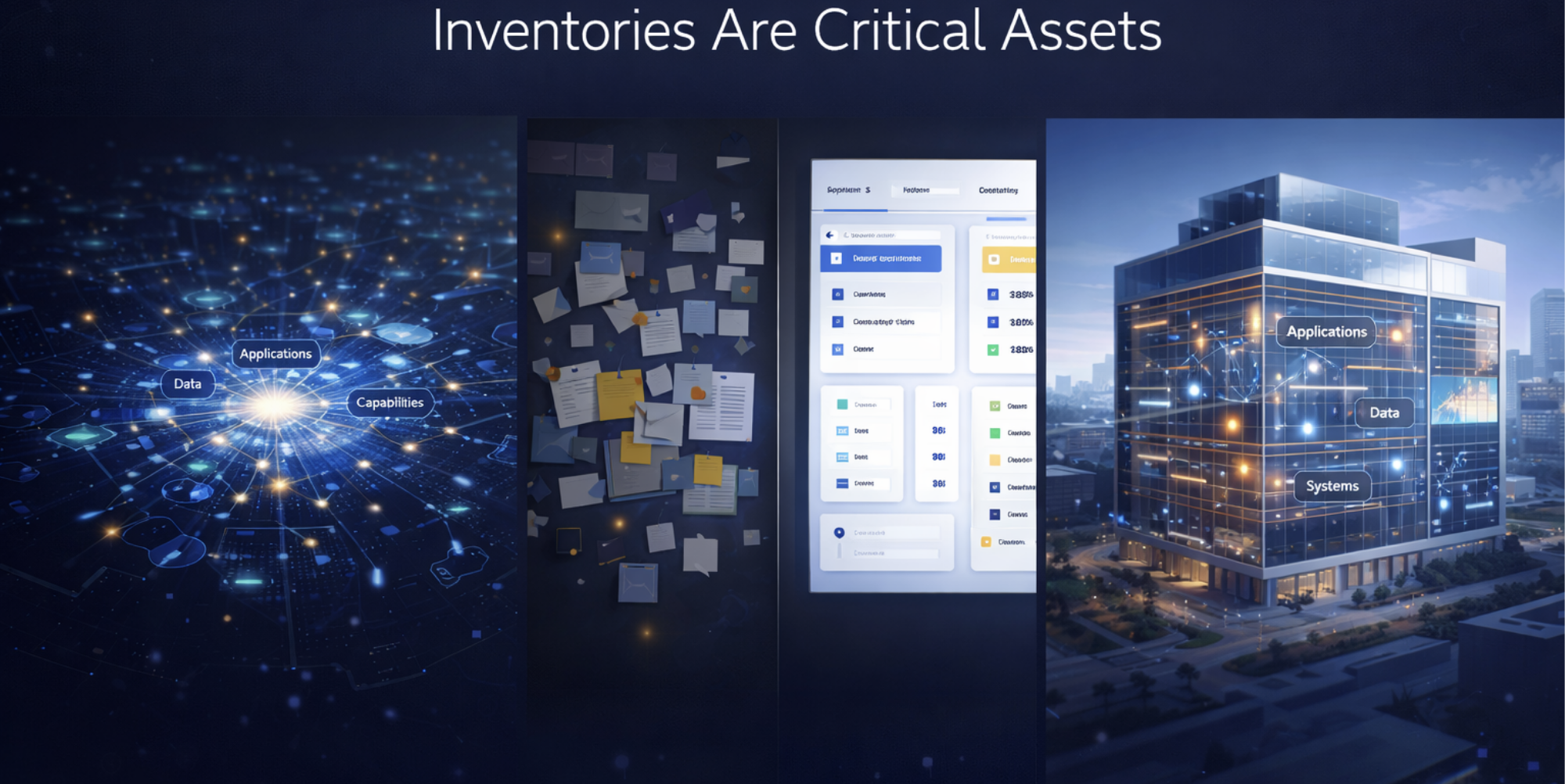
The Cost of Not Knowing — Why Enterprise Inventories Are Critical

Article

The Cost of Not Knowing — Why Enterprise Inventories Are Critical

Enterprises pay a recurring and often hidden cost when they cannot accurately describe their systems, data, ownership, spending, dependencies, and obligations. Governed enterprise inventories reduce this cost by makin...

read more
The IT Management Graph — How an Enterprise Model Delivers What the CMDB Never Could

Article

The IT Management Graph — How an Enterprise Model Delivers What the CMDB Never Could

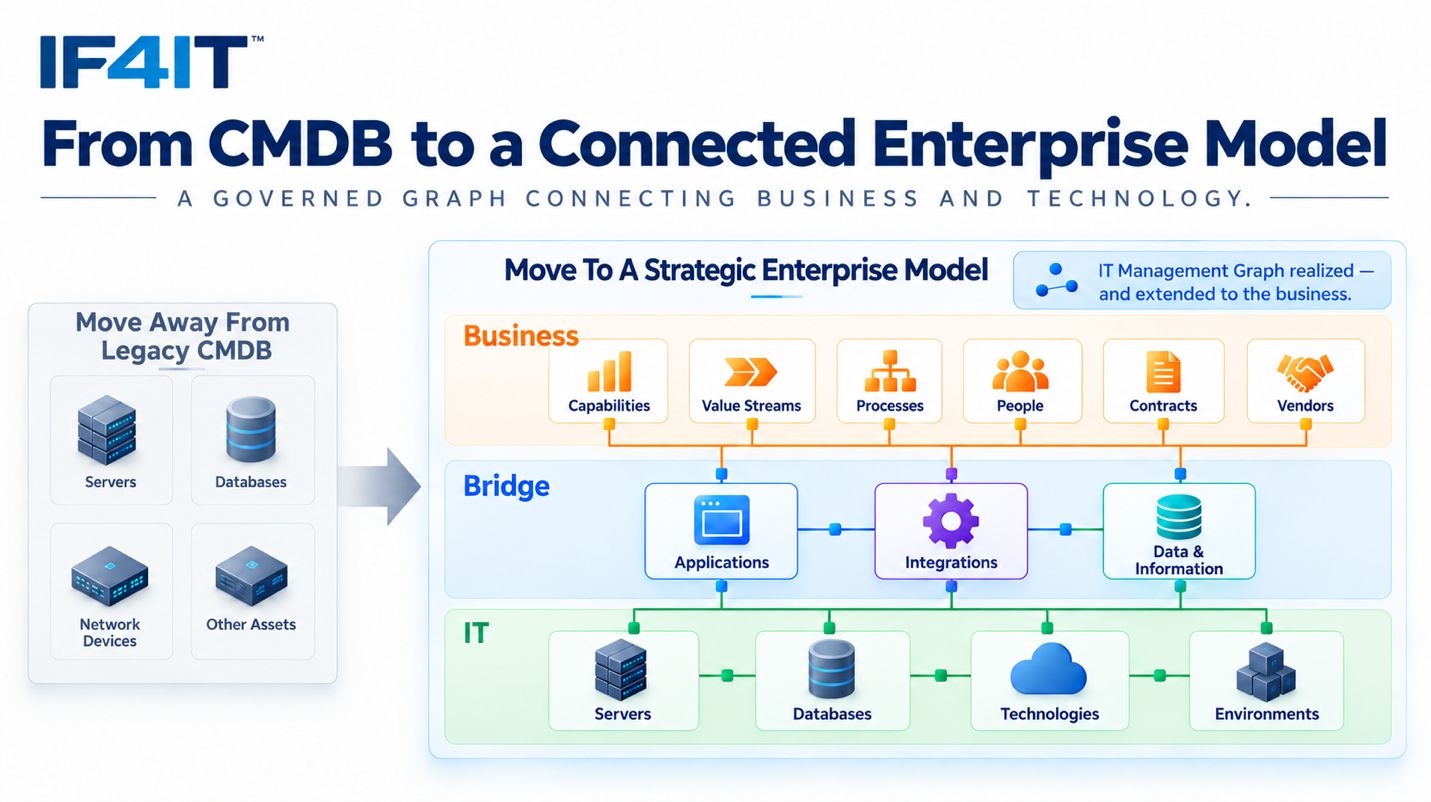
CMDB implementations have a well-documented history of failure, predominantly because the bridge between discovered assets and the business is rarely built, and Forrester has declared the CMDB term dead in favor of an...

read more
Using AI to Build and Maintain Enterprise Inventories and Models

Article

Using AI to Build and Maintain Enterprise Inventories and Models

Artificial intelligence can dramatically reduce the cost, time, and inconsistency involved in building and maintaining enterprise inventories by extracting, reconciling, cleansing, transforming, populating, and relati...

read more
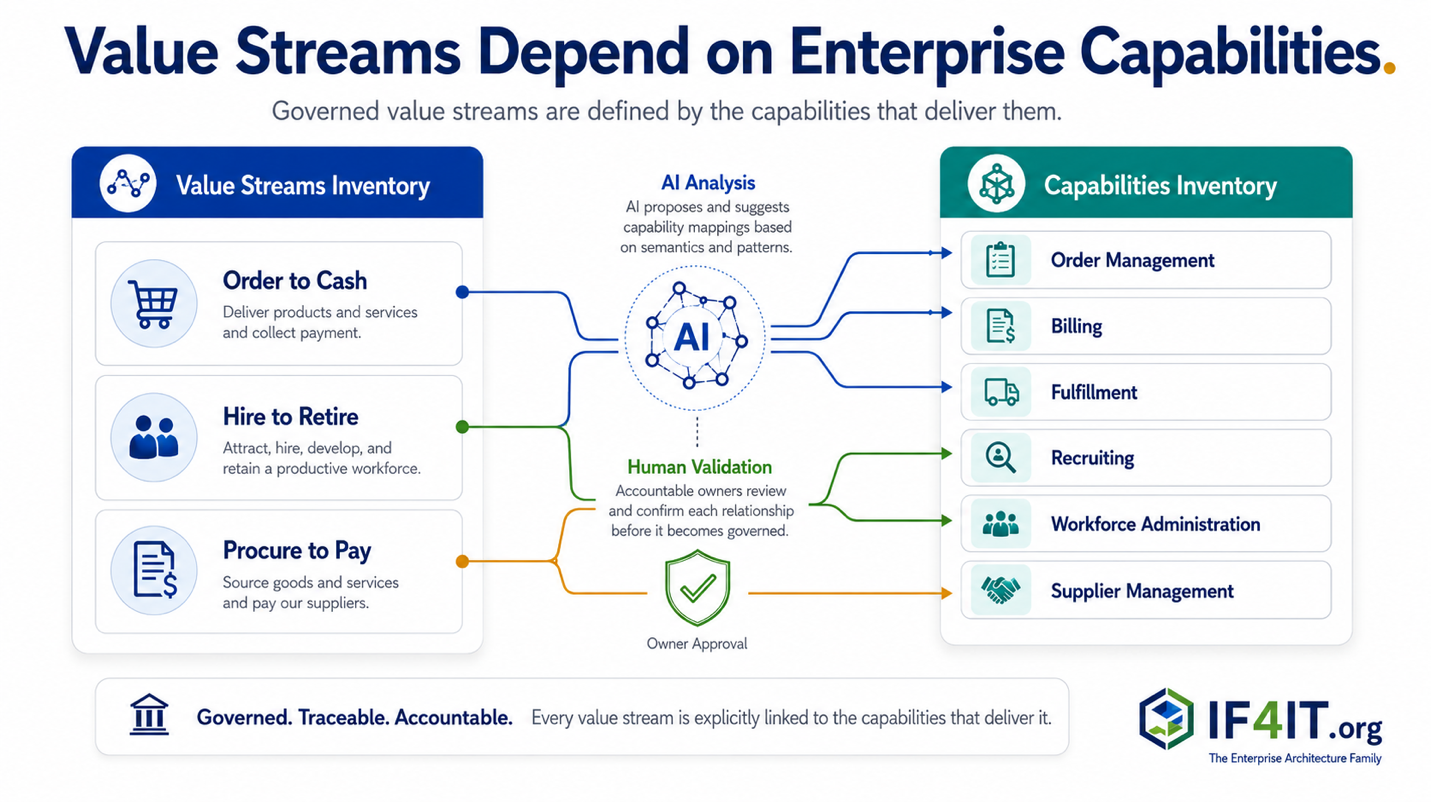
Value Streams Depend on Enterprise Capabilities

Article

Value Streams Depend on Enterprise Capabilities

A value stream is not governed by being named; it is governed by being tied to the specific enterprise capabilities that actually deliver it. Most enterprises can produce a value stream's name from a workshop diagram...

read more
Value Streams Inventory and Attributes

Inventory

Value Streams Inventory and Attributes

The Value Streams Inventory is the governed enterprise record of the end-to-end flows through which the organization delivers value to stakeholders. Without it, enterprises cannot reliably see how value is delivered,...

read more
Vendors Inventory and Attributes

Inventory

Vendors Inventory and Attributes

The Vendors Inventory is the governed enterprise record of third-party organizations that provide technology, services, data, or capabilities to the enterprise. Without a reliable Vendors Inventory, leaders cannot con...

read more
What You Don’t Know About Your Own Enterprise Is Costing You: Understanding Why Enterprise Inventories Are Critical Knowledge Assets

Article

What You Don’t Know About Your Own Enterprise Is Costing You: Understanding Why Enterprise Inventories Are Critical Knowledge Assets

Enterprise inventories are strategic knowledge assets, not administrative lists. When inventories are complete, current, and connected through governed relationships, they form an Enterprise Model that enables leaders...

read more
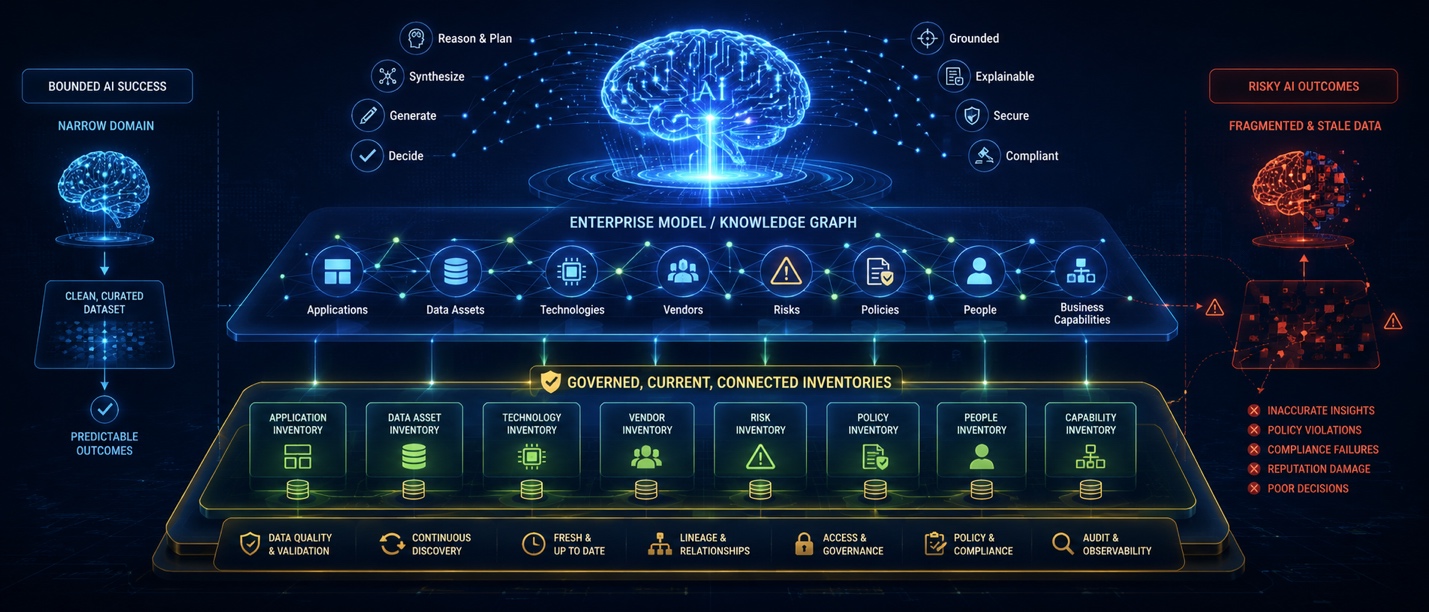
Your Enterprise AI Is Only as Good as Your Enterprise Inventories

Article

Your Enterprise AI Is Only as Good as Your Enterprise Inventories

Domain-specific AI can succeed with clean, bounded data, but enterprise-spanning AI depends on governed, current, and connected enterprise inventories. Better models, prompts, or retrieval techniques cannot compensate...

read more
Inventories Are Worth More Together — The Network Effect of a Connected Enterprise Model

Article

Inventories Are Worth More Together — The Network Effect of a Connected Enterprise Model

Enterprise inventories create their greatest value when they are governed as connected parts of an Enterprise Model rather than as isolated lists. Each new inventory adds its own information and expands the questions...

read more
One Source of Truth — How Inventories End the “Whose Numbers Are Right?” Debate

Article

One Source of Truth — How Inventories End the “Whose Numbers Are Right?” Debate

Governed enterprise inventories create a shared and authoritative factual foundation that moves cross-functional debate away from whose data is correct and toward the decisions that matter. Their value depends on reco...

read more
Stale Data Lies — Why an Inventory Is Never “Done”

Article

Stale Data Lies — Why an Inventory Is Never “Done”

An enterprise inventory is only trustworthy while it remains current. Because enterprise assets, owners, relationships, and operating conditions change continuously, inventory maintenance must be treated as an endurin...

read more
Successful Knowledge Management Requires Enterprise Inventories

Article

Successful Knowledge Management Requires Enterprise Inventories

Knowledge Management programs that focus on documents, wikis, and collaboration tools while overlooking enterprise inventories are managing only part of the enterprise's knowledge. Inventories are commonly treated as...

read more
The Cost of Not Knowing — Why Enterprise Inventories Are Critical

Article

The Cost of Not Knowing — Why Enterprise Inventories Are Critical

Enterprises pay a recurring and often hidden cost when they cannot accurately describe their systems, data, ownership, spending, dependencies, and obligations. Governed enterprise inventories reduce this cost by makin...

read more
The IT Management Graph — How an Enterprise Model Delivers What the CMDB Never Could

Article

The IT Management Graph — How an Enterprise Model Delivers What the CMDB Never Could

CMDB implementations have a well-documented history of failure, predominantly because the bridge between discovered assets and the business is rarely built, and Forrester has declared the CMDB term dead in favor of an...

read more
Using AI to Build and Maintain Enterprise Inventories and Models

Article

Using AI to Build and Maintain Enterprise Inventories and Models

Artificial intelligence can dramatically reduce the cost, time, and inconsistency involved in building and maintaining enterprise inventories by extracting, reconciling, cleansing, transforming, populating, and relati...

read more
Value Streams Depend on Enterprise Capabilities

Article

Value Streams Depend on Enterprise Capabilities

A value stream is not governed by being named; it is governed by being tied to the specific enterprise capabilities that actually deliver it. Most enterprises can produce a value stream's name from a workshop diagram...

read more
What You Don’t Know About Your Own Enterprise Is Costing You: Understanding Why Enterprise Inventories Are Critical Knowledge Assets

Article

What You Don’t Know About Your Own Enterprise Is Costing You: Understanding Why Enterprise Inventories Are Critical Knowledge Assets

Enterprise inventories are strategic knowledge assets, not administrative lists. When inventories are complete, current, and connected through governed relationships, they form an Enterprise Model that enables leaders...

read more
Your Enterprise AI Is Only as Good as Your Enterprise Inventories

Article

Your Enterprise AI Is Only as Good as Your Enterprise Inventories

Domain-specific AI can succeed with clean, bounded data, but enterprise-spanning AI depends on governed, current, and connected enterprise inventories. Better models, prompts, or retrieval techniques cannot compensate...

read more
Enterprise Inventory Management Best Practices

Best Practice

Enterprise Inventory Management Best Practices

Enterprise Inventory Management establishes governed, authoritative inventories that collectively form a connected Enterprise Model. The practices in this document help organizations define ownership, improve accuracy...

read more
AI Agents Inventory and Attributes

Inventory

AI Agents Inventory and Attributes

The AI Agents Inventory is the enterprise’s single governed record of the AI agents it builds, buys, or runs — the autonomous, model-driven software actors that take action on systems and data, or communicate with sta...

read more
Applications Inventory and Attributes

Inventory

Applications Inventory and Attributes

The Applications Inventory is the governed enterprise record of every application the organization owns, operates, licenses, or depends on — the authoritative application-level data foundation for the enterprise. With...

read more
Capabilities Inventory and Attributes

Inventory

Capabilities Inventory and Attributes

The Capabilities Inventory is the governed enterprise record of the business and IT capabilities the enterprise performs, intends to perform, or has decided to exit. It provides the stable capability vocabulary that l...

read more
Data and Information Inventory and Attributes

Inventory

Data and Information Inventory and Attributes

The Data and Information Inventory is not a data catalog or a list of files; it is the governed logical vocabulary for every named data and information type the enterprise produces, consumes, stores, or transmits. Wit...

read more
Integrations Inventory and Attributes

Inventory

Integrations Inventory and Attributes

The Integrations Inventory is the governed record of every data and information flow, making integration complexity, dependency risk, data sensitivity, technology usage, and cross-boundary movement visible across the...

read more
Regulatory Agencies Inventory and Attributes

Inventory

Regulatory Agencies Inventory and Attributes

The Regulatory Agencies Inventory is the governed root of the enterprise compliance hierarchy, identifying every body whose authority, standards, or market-access requirements create formal obligations for the enterpr...

read more
Services Inventory and Attributes

Inventory

Services Inventory and Attributes

The Services Inventory is not a Service Catalog or a list of request forms; it is the governed enterprise registry of every Service the enterprise has chosen to govern as a managed value-delivery asset across every li...

read more
Software Technologies Inventory and Attributes

Inventory

Software Technologies Inventory and Attributes

The Software Technologies Inventory is the authoritative, governed record of every software technology the enterprise procures, deploys, operates, or depends on — the database engines, runtimes, middleware, platforms,...

read more
Technical Debt Inventory and Attributes

Inventory

Technical Debt Inventory and Attributes

The Technical Debt Inventory is the governed record of the Technical Debt Items an enterprise identifies across the Assets it owns, operates, or depends on. Without a governed inventory, Technical Debt remains fragmen...

read more
Value Streams Inventory and Attributes

Inventory

Value Streams Inventory and Attributes

The Value Streams Inventory is the governed enterprise record of the end-to-end flows through which the organization delivers value to stakeholders. Without it, enterprises cannot reliably see how value is delivered,...

read more
Vendors Inventory and Attributes

Inventory

Vendors Inventory and Attributes

The Vendors Inventory is the governed enterprise record of third-party organizations that provide technology, services, data, or capabilities to the enterprise. Without a reliable Vendors Inventory, leaders cannot con...

read more
© The International Foundation for Information Technology (IF4IT) 2008 - Present
Legal Disclaimers