The International Foundation for Information Technology (IF4IT)
  • Home
  • Best Practices & More
  • Articles
  • Dictionary
  • About Us
  • Contact Us
  • Catalog
  • Search
  1. Topics
  2. IT Management

IT Management

Share:
Contact Us → Subscribe →
Agile, Waterfall, or Hybrid: An IF4IT Framework for Choosing Delivery Methodology

Best Practice

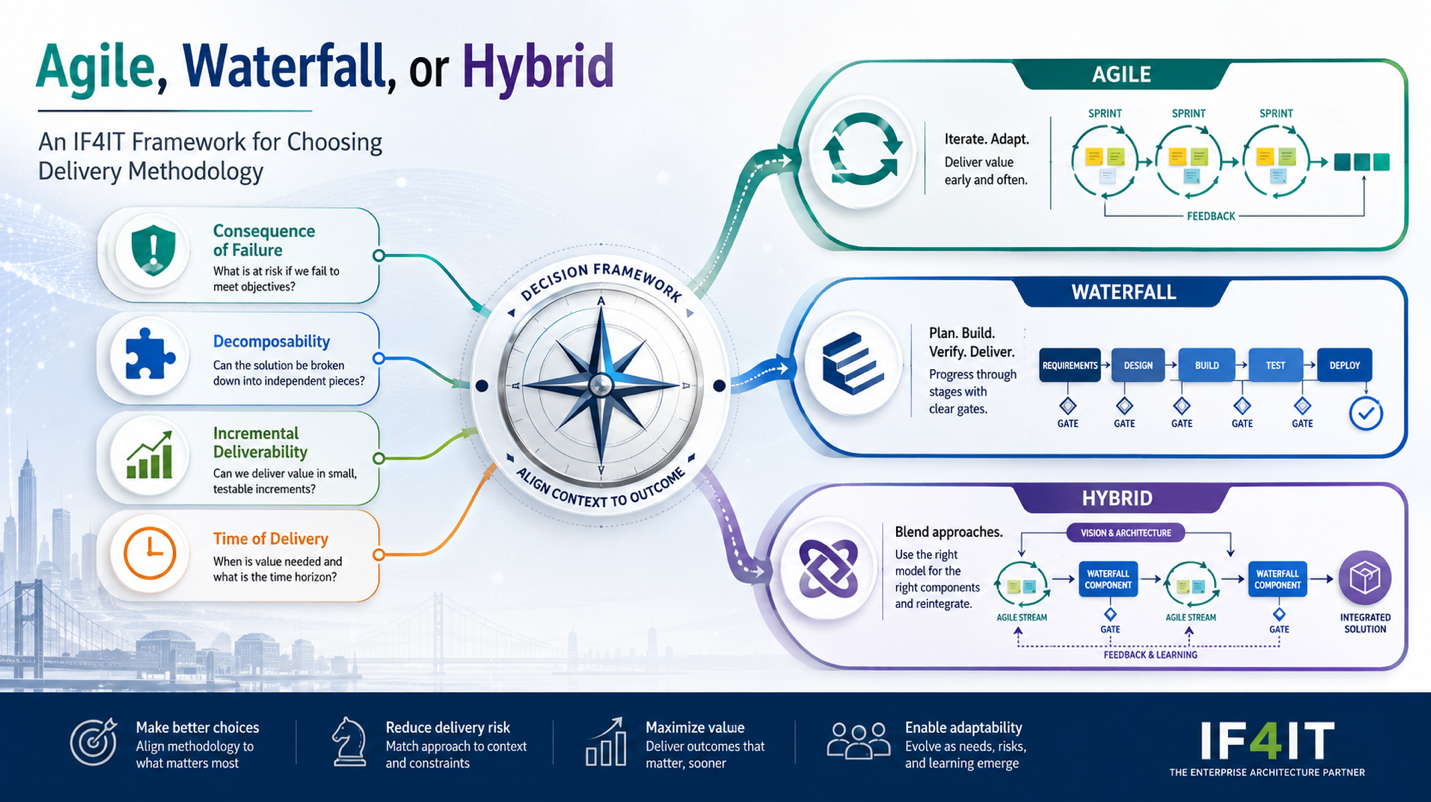
Agile, Waterfall, or Hybrid: An IF4IT Framework for Choosing Delivery Methodology

Delivery methodology is not an enterprise preference; it is a fit decision determined by the nature of the Product or Service being delivered. When organizations force all work through Agile, Waterfall, or a convenien...

read more
Application Management Best Practices

Best Practice

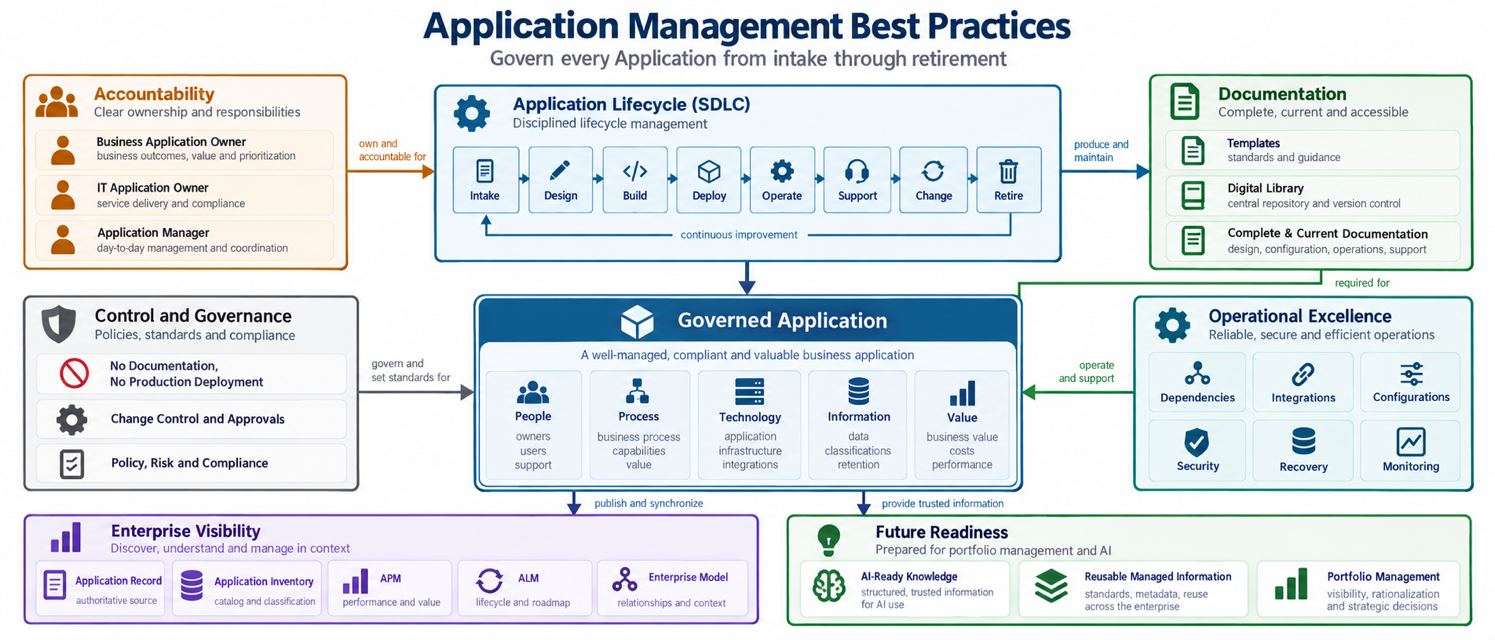
Application Management Best Practices

Application Management is the discipline of establishing clear accountability for every individual Application and of establishing, documenting, and governing everything needed to plan, build, deploy, operate, support...

read more
Enterprise Inventory Management Best Practices

Best Practice

Enterprise Inventory Management Best Practices

Enterprise Inventory Management establishes governed, authoritative inventories that collectively form a connected Enterprise Model. The practices in this document help organizations define ownership, improve accuracy...

read more
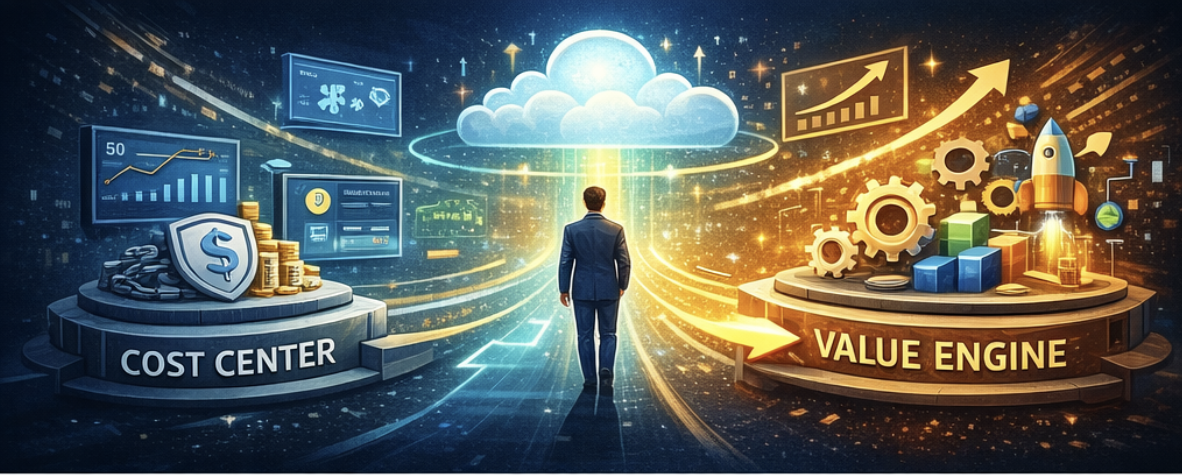
From Cost Center to Value Engine: Reframing the Role of IT in the Modern Enterprise

Article

From Cost Center to Value Engine: Reframing the Role of IT in the Modern Enterprise

IT becomes a value engine when its operating model, investment decisions, and performance measures are explicitly tied to measurable business outcomes. Reframing IT requires product and service ownership, financial tr...

read more
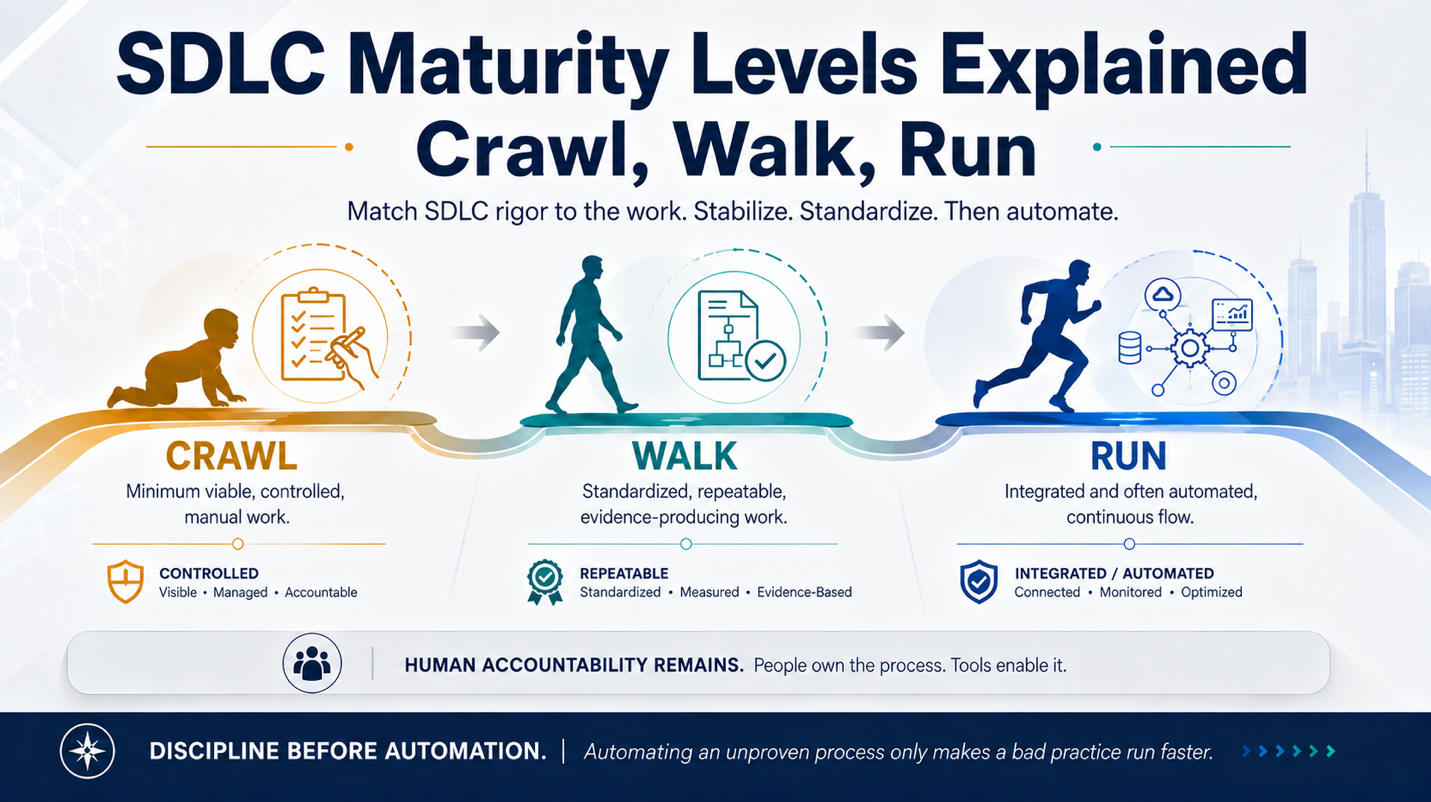
SDLC Maturity Levels Explained — Crawl, Walk, Run

Article

SDLC Maturity Levels Explained — Crawl, Walk, Run

Crawl, Walk, Run is not a maturity score to chase or a slide from a consulting deck — it is a working discipline for matching the rigor of SDLC practice to what a given piece of work actually demands. Enterprises that...

read more
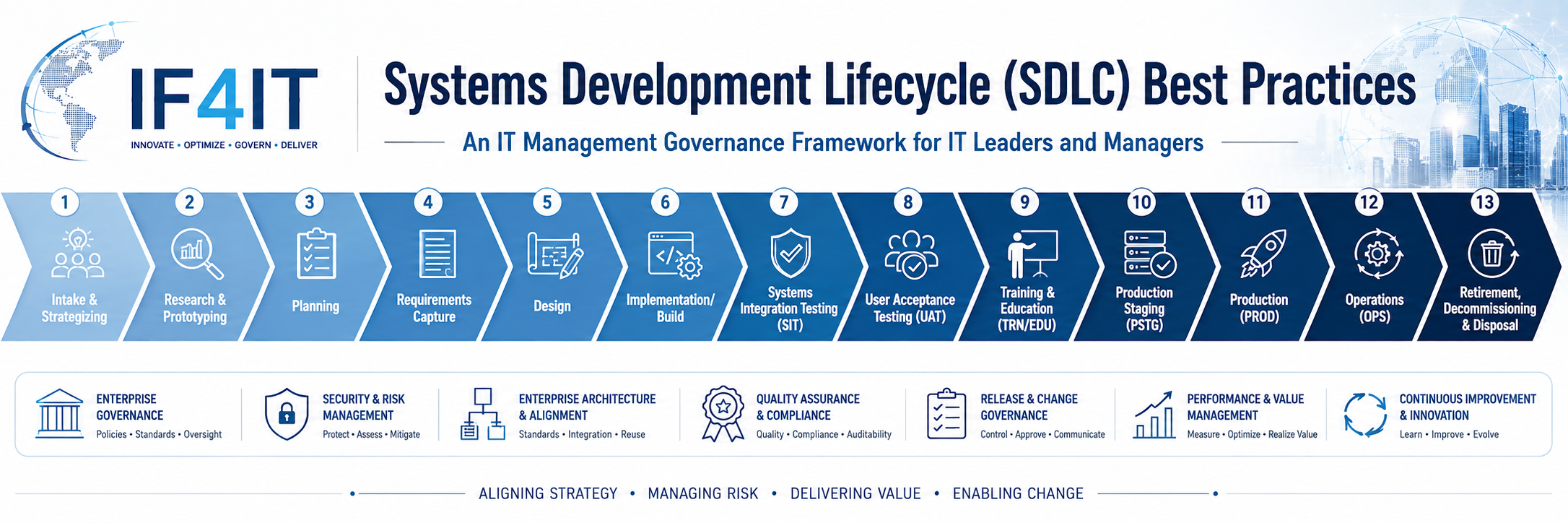
Systems Development Lifecycle (SDLC) Best Practices

Best Practice

Systems Development Lifecycle (SDLC) Best Practices

The IF4IT Systems Development Lifecycle (SDLC) is an IT management governance framework for leaders and managers—not merely a software-development process. It provides a comprehensive, tailorable 13-phase lifecycle fo...

read more
Teaching MIS/IT Management Best Practices — Why Technical Graduates Need Them Before Their First IT Job

Article

Teaching MIS/IT Management Best Practices — Why Technical Graduates Need Them Before Their First IT Job

Much of what a new MIS/IT hire must understand about working inside an IT organization rests on concepts that IT organizations share, yet MIS, IS, IT, and other technical programs rarely adequately focus on those conc...

read more
Technical Debt Management Best Practices

Best Practice

Technical Debt Management Best Practices

Technical Debt Management is the IT Management discipline for governing technical conditions and unresolved obligations that make governed Assets more costly, difficult, risky, or constrained to change, operate, secur...

read more
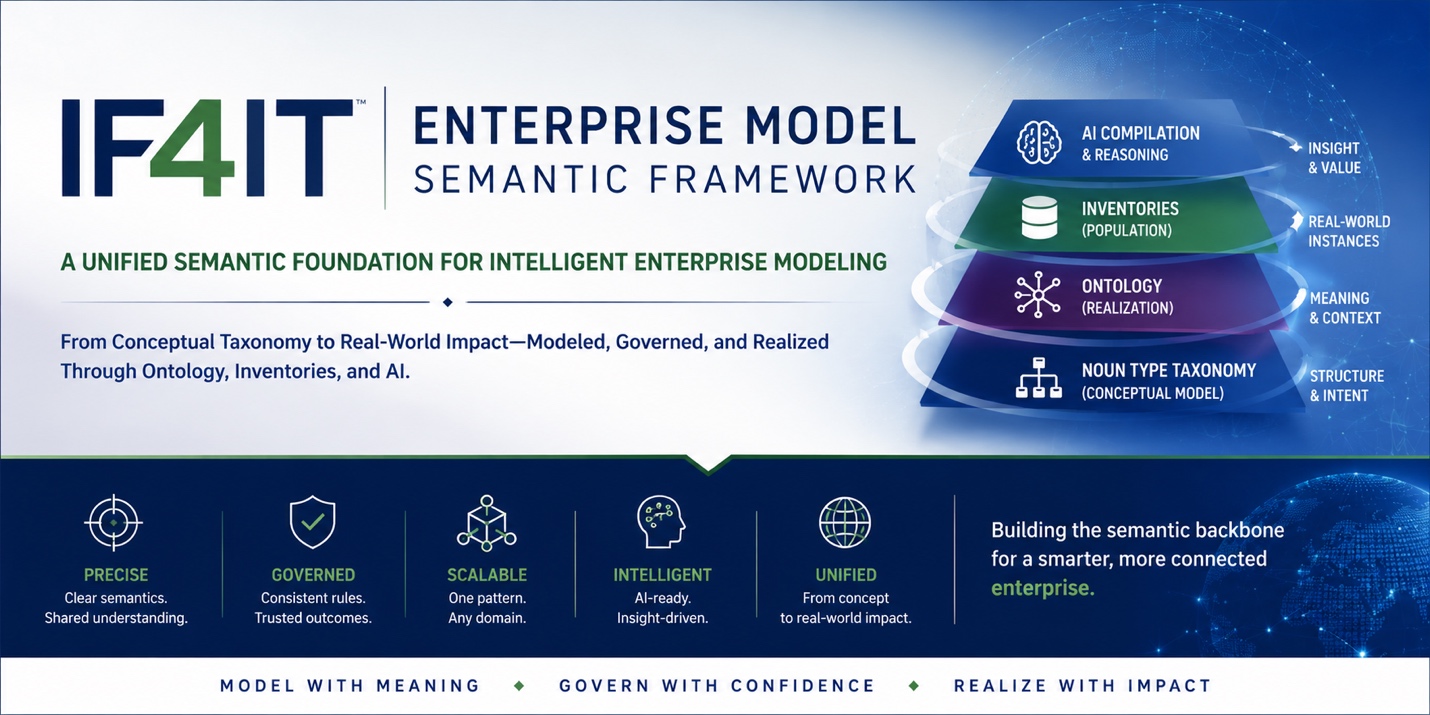
The IF4IT Enterprise Model and Modeling Best Practices

Best Practice

The IF4IT Enterprise Model and Modeling Best Practices

The IF4IT Enterprise Model and Modeling Best Practices explains how enterprises can design, govern, and use an AI-consumable semantic Enterprise Model that represents what the enterprise has, how those things relate,...

read more
Value Streams Inventory and Attributes

Inventory

Value Streams Inventory and Attributes

The Value Streams Inventory is the governed enterprise record of the end-to-end flows through which the organization delivers value to stakeholders. Without it, enterprises cannot reliably see how value is delivered,...

read more
Welcome to the IF4IT

Article

Welcome to the IF4IT

IF4IT provides openly available guidance that helps IT leaders and practitioners design, build, operate, and continuously improve high-functioning technology organizations faster and more affordably. Its materials emp...

read more
From Cost Center to Value Engine: Reframing the Role of IT in the Modern Enterprise

Article

From Cost Center to Value Engine: Reframing the Role of IT in the Modern Enterprise

IT becomes a value engine when its operating model, investment decisions, and performance measures are explicitly tied to measurable business outcomes. Reframing IT requires product and service ownership, financial tr...

read more
SDLC Maturity Levels Explained — Crawl, Walk, Run

Article

SDLC Maturity Levels Explained — Crawl, Walk, Run

Crawl, Walk, Run is not a maturity score to chase or a slide from a consulting deck — it is a working discipline for matching the rigor of SDLC practice to what a given piece of work actually demands. Enterprises that...

read more
Teaching MIS/IT Management Best Practices — Why Technical Graduates Need Them Before Their First IT Job

Article

Teaching MIS/IT Management Best Practices — Why Technical Graduates Need Them Before Their First IT Job

Much of what a new MIS/IT hire must understand about working inside an IT organization rests on concepts that IT organizations share, yet MIS, IS, IT, and other technical programs rarely adequately focus on those conc...

read more
Welcome to the IF4IT

Article

Welcome to the IF4IT

IF4IT provides openly available guidance that helps IT leaders and practitioners design, build, operate, and continuously improve high-functioning technology organizations faster and more affordably. Its materials emp...

read more
Agile, Waterfall, or Hybrid: An IF4IT Framework for Choosing Delivery Methodology

Best Practice

Agile, Waterfall, or Hybrid: An IF4IT Framework for Choosing Delivery Methodology

Delivery methodology is not an enterprise preference; it is a fit decision determined by the nature of the Product or Service being delivered. When organizations force all work through Agile, Waterfall, or a convenien...

read more
Application Management Best Practices

Best Practice

Application Management Best Practices

Application Management is the discipline of establishing clear accountability for every individual Application and of establishing, documenting, and governing everything needed to plan, build, deploy, operate, support...

read more
Enterprise Inventory Management Best Practices

Best Practice

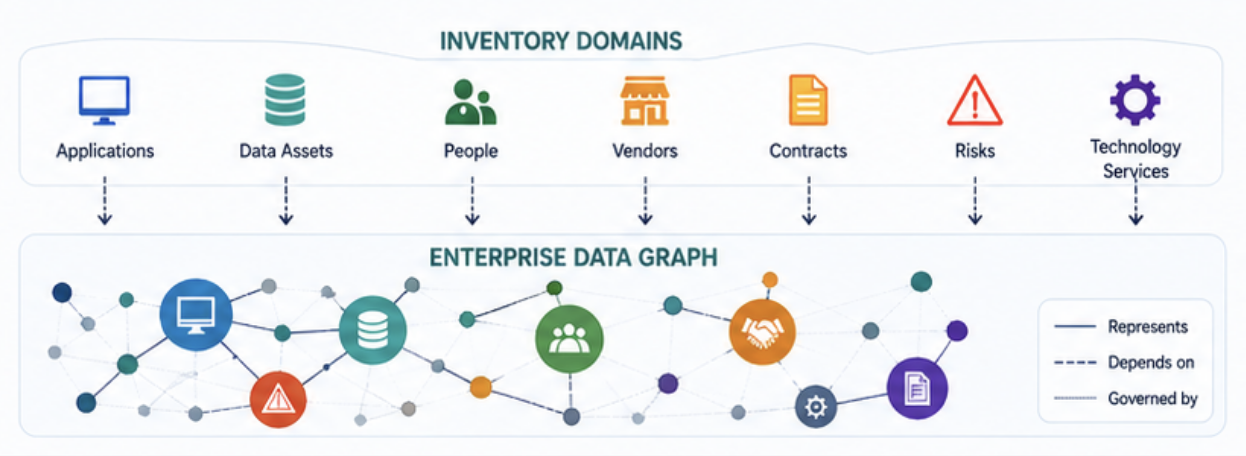
Enterprise Inventory Management Best Practices

Enterprise Inventory Management establishes governed, authoritative inventories that collectively form a connected Enterprise Model. The practices in this document help organizations define ownership, improve accuracy...

read more
Systems Development Lifecycle (SDLC) Best Practices

Best Practice

Systems Development Lifecycle (SDLC) Best Practices

The IF4IT Systems Development Lifecycle (SDLC) is an IT management governance framework for leaders and managers—not merely a software-development process. It provides a comprehensive, tailorable 13-phase lifecycle fo...

read more
Technical Debt Management Best Practices

Best Practice

Technical Debt Management Best Practices

Technical Debt Management is the IT Management discipline for governing technical conditions and unresolved obligations that make governed Assets more costly, difficult, risky, or constrained to change, operate, secur...

read more
The IF4IT Enterprise Model and Modeling Best Practices

Best Practice

The IF4IT Enterprise Model and Modeling Best Practices

The IF4IT Enterprise Model and Modeling Best Practices explains how enterprises can design, govern, and use an AI-consumable semantic Enterprise Model that represents what the enterprise has, how those things relate,...

read more
Value Streams Inventory and Attributes

Inventory

Value Streams Inventory and Attributes

The Value Streams Inventory is the governed enterprise record of the end-to-end flows through which the organization delivers value to stakeholders. Without it, enterprises cannot reliably see how value is delivered,...

read more
© The International Foundation for Information Technology (IF4IT) 2008 - Present
Legal Disclaimers