The International Foundation for Information Technology (IF4IT)
  • Home
  • Best Practices & More
  • Articles
  • Dictionary
  • About Us
  • Contact Us
  • Catalog
  • Search
  1. Topics
  2. Knowledge Management

Knowledge Management

Share:
Contact Us → Subscribe →
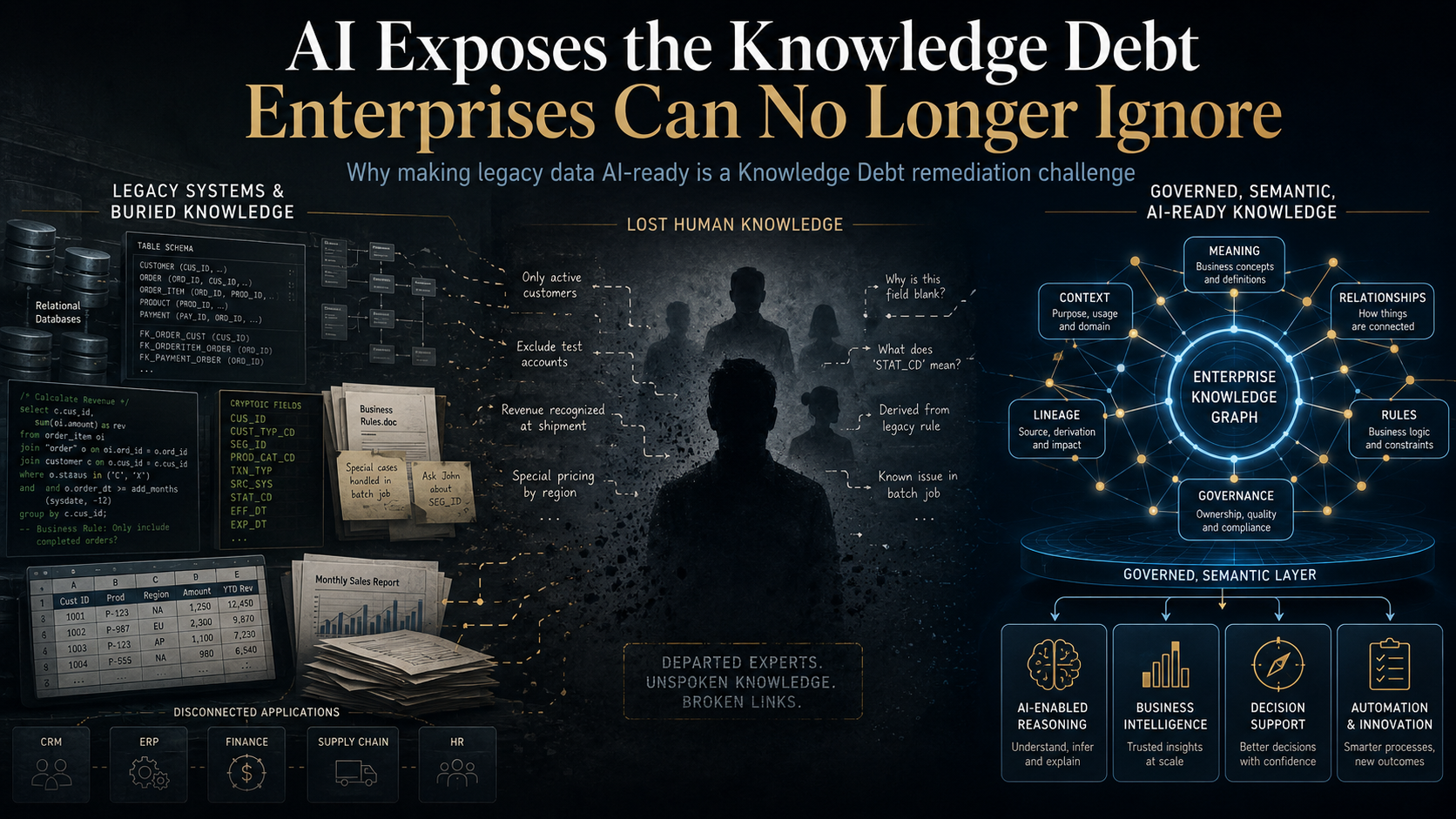
AI Exposes the Knowledge Debt Enterprises Can No Longer Ignore

Article

AI Exposes the Knowledge Debt Enterprises Can No Longer Ignore

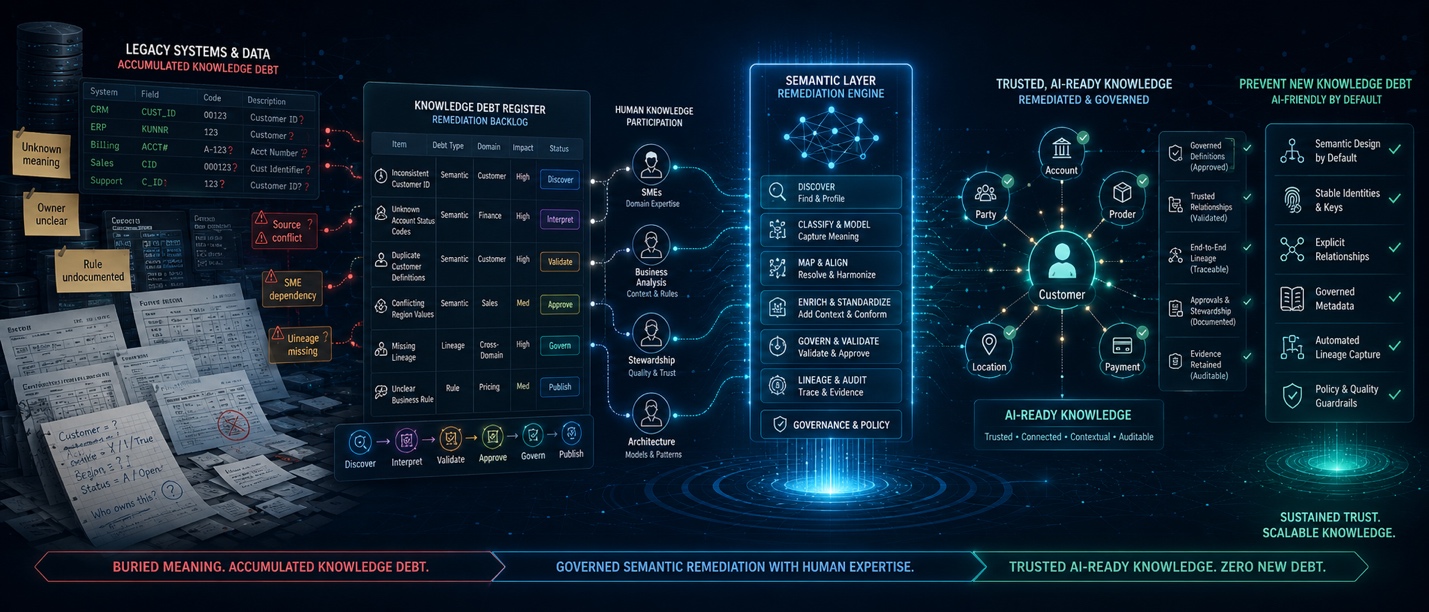
AI is exposing Knowledge Debt: the accumulated loss, fragmentation, and implicit capture of enterprise meaning across systems, data structures, rules, terminology, documentation, and human memory. Making legacy data A...

read more
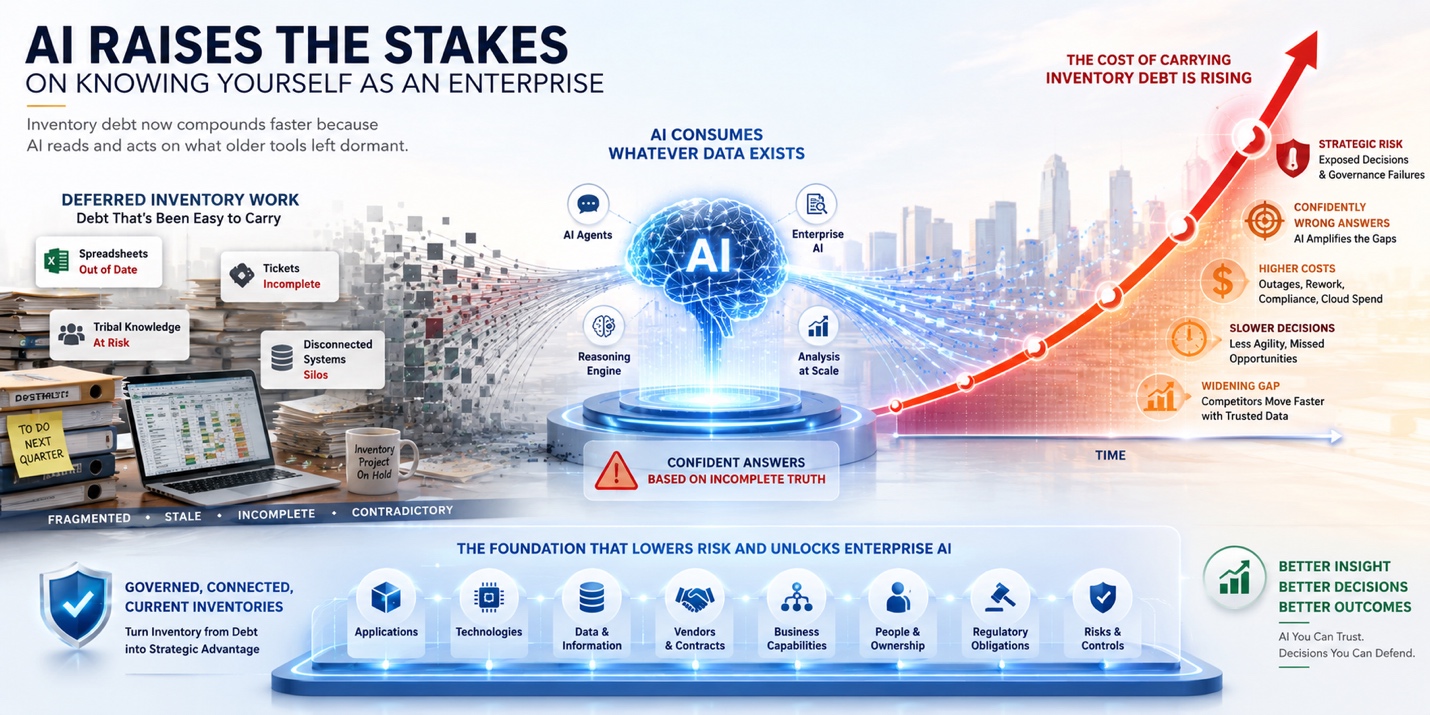
AI Raises the Stakes on Knowing Yourself as an Enterprise

Article

AI Raises the Stakes on Knowing Yourself as an Enterprise

Artificial intelligence sharply increases the cost of carrying incomplete, stale, fragmented, or contradictory enterprise inventory data because AI systems can turn those defects into confident but unreliable answers....

read more
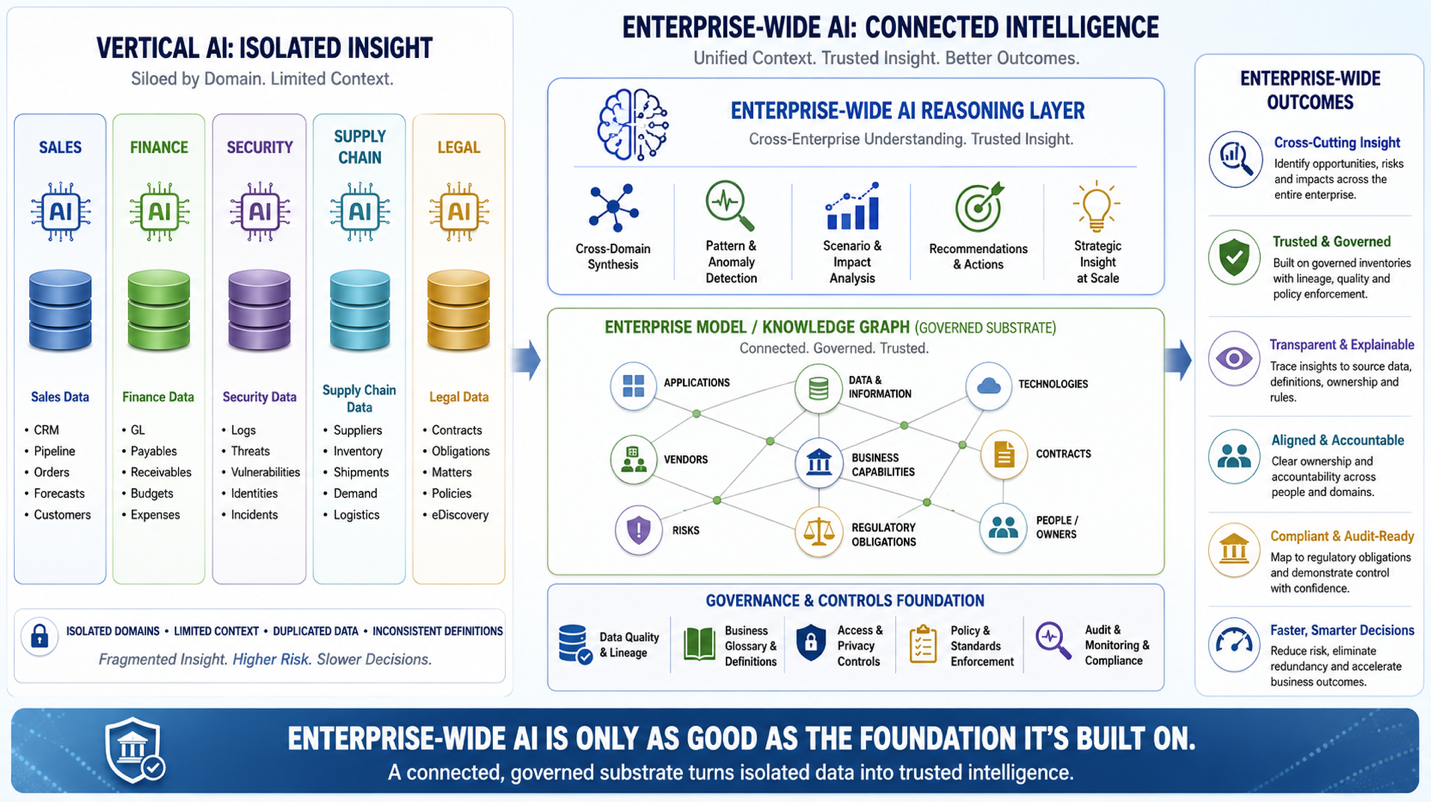
AI Right Isn’t About the Model You Buy — It’s About What You Give It to Reason Over

Article

AI Right Isn’t About the Model You Buy — It’s About What You Give It to Reason Over

Enterprise-wide Artificial Intelligence cannot become trustworthy merely by selecting a more capable model. It requires a governed, connected substrate that represents the enterprise across domains. Vertical AI can de...

read more
Building and Using Enterprise Knowledge Models with AI-Generated Data Graphs

Article

Building and Using Enterprise Knowledge Models with AI-Generated Data Graphs

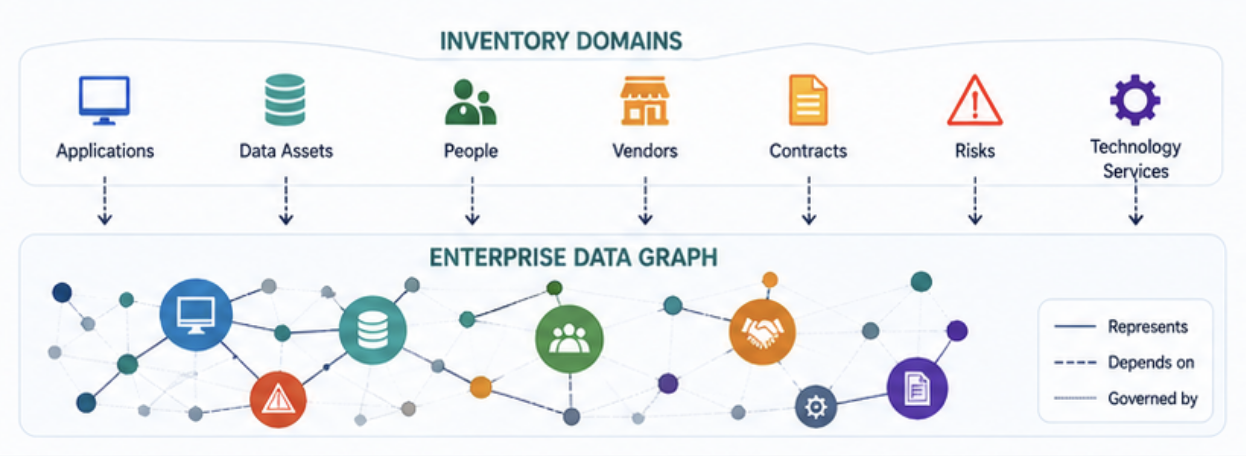
AI-generated data graphs can transform scattered enterprise knowledge into a connected Enterprise Knowledge Model that humans and AI can query, traverse, visualize, and reason over. Without a governed <u>Taxonomy</u>,...

read more
Designing, Building, and Maintaining Comprehensive and Usable Enterprise Capability Models

Best Practice

Designing, Building, and Maintaining Comprehensive and Usable Enterprise Capability Models

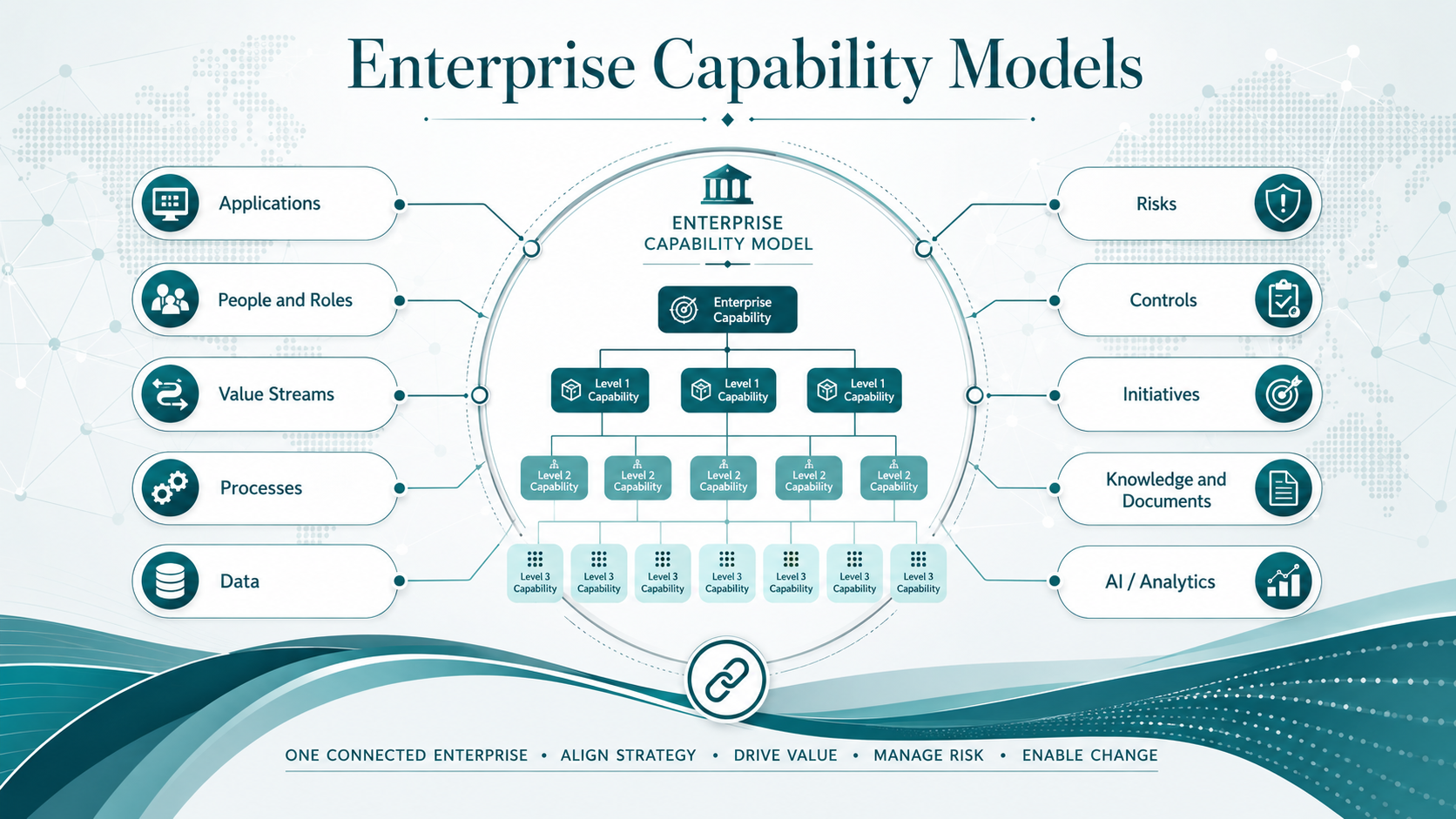
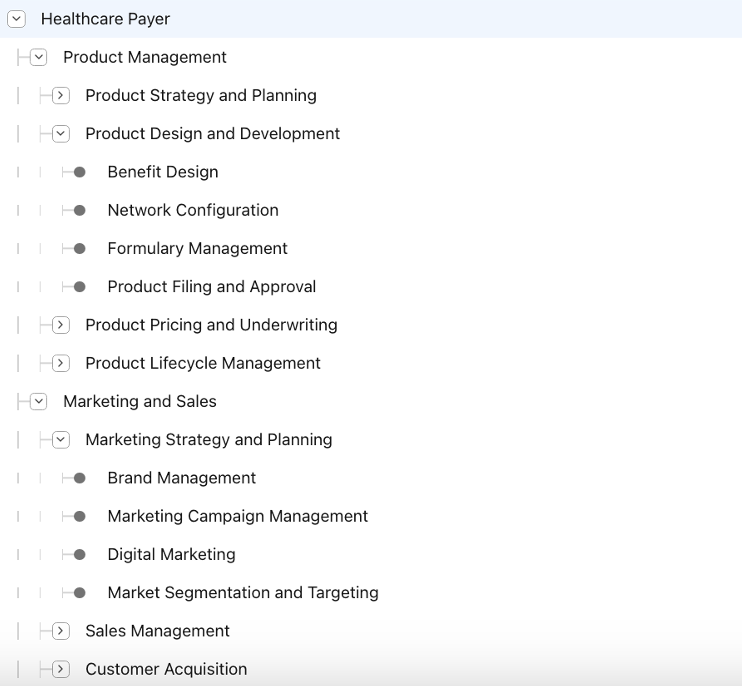
A comprehensive Enterprise Capability Model is a governed, inventory-backed knowledge asset that represents the durable abilities an enterprise performs, intends to perform, or has decided to exit. This document expla...

read more
Enterprise Capabilities Models (ECMs) as a Knowledge Management Tools

Article

Enterprise Capabilities Models (ECMs) as a Knowledge Management Tools

Enterprise Capability Models become far more valuable when enterprises use them as shared knowledge structures rather than static architecture diagrams. By relating capabilities to applications, processes, data, risks...

read more
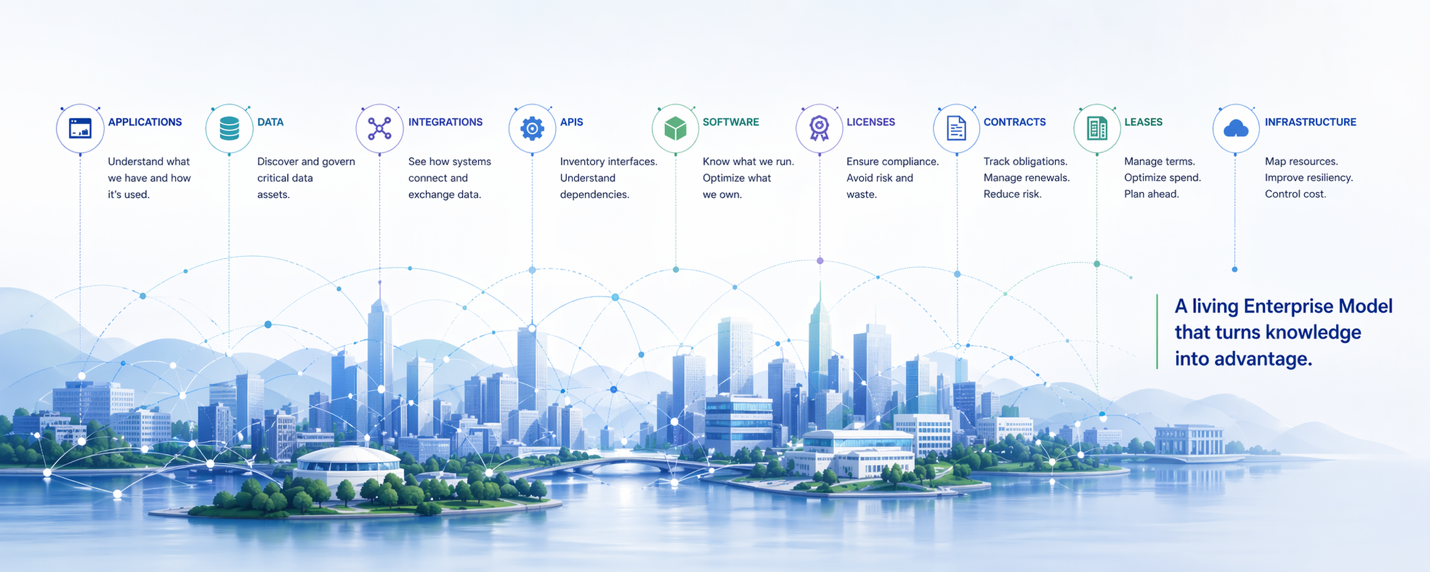
Enterprise Inventory Management Best Practices

Best Practice

Enterprise Inventory Management Best Practices

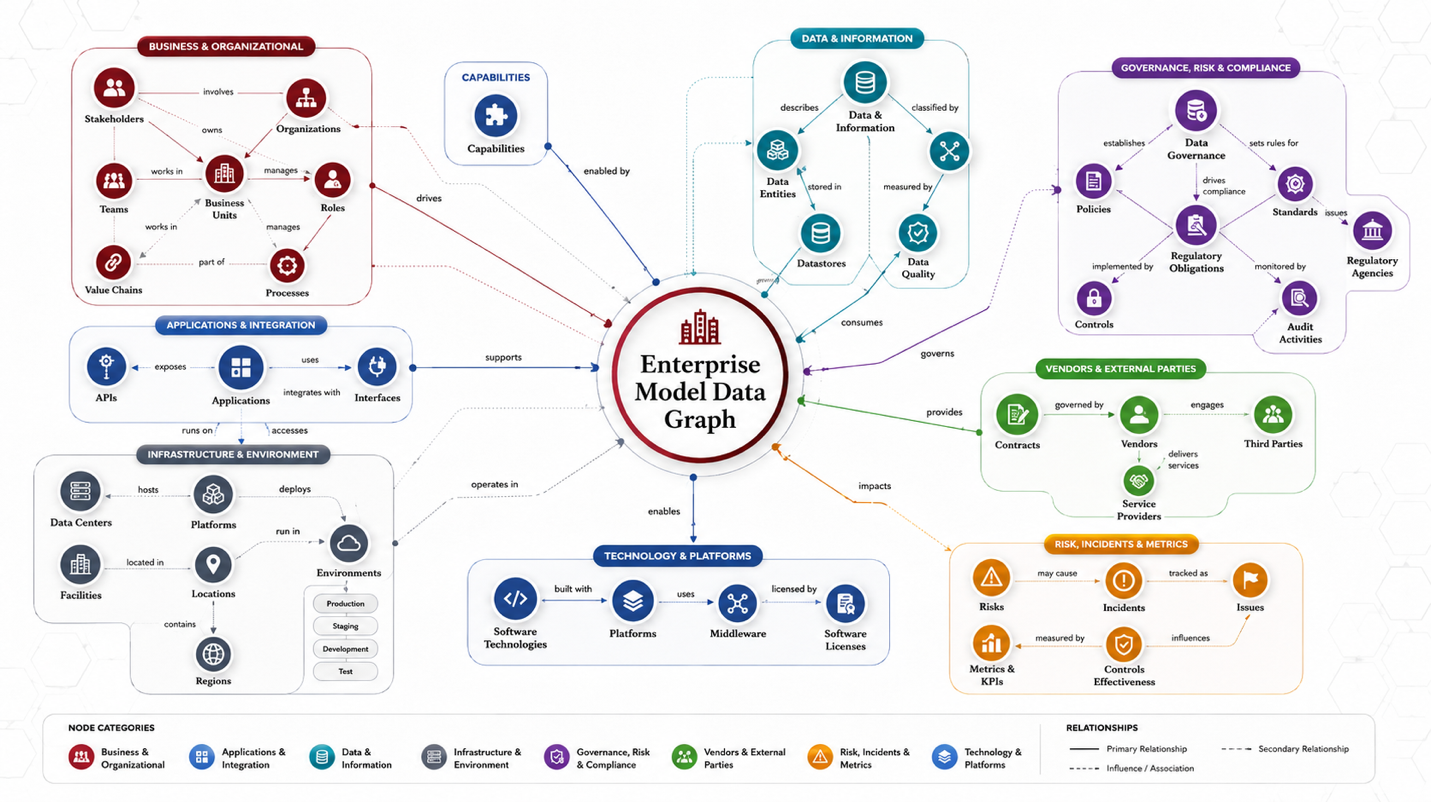
Enterprise Inventory Management establishes governed, authoritative inventories that collectively form a connected Enterprise Model. The practices in this document help organizations define ownership, improve accuracy...

read more
Integrations Inventory and Attributes

Inventory

Integrations Inventory and Attributes

The Integrations Inventory is the governed record of every data and information flow, making integration complexity, dependency risk, data sensitivity, technology usage, and cross-boundary movement visible across the...

read more
Inventories Are Worth More Together — The Network Effect of a Connected Enterprise Model

Article

Inventories Are Worth More Together — The Network Effect of a Connected Enterprise Model

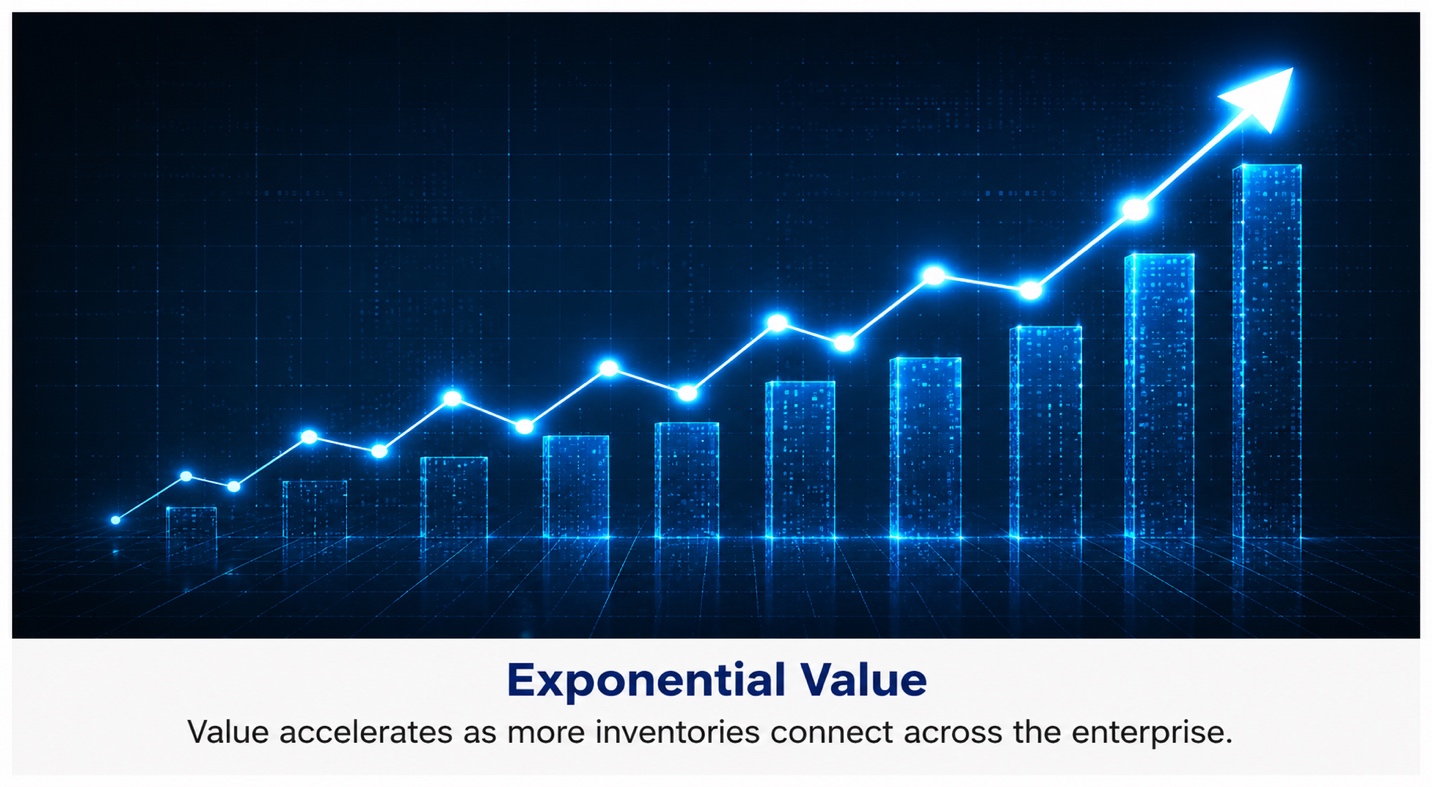
Enterprise inventories create their greatest value when they are governed as connected parts of an Enterprise Model rather than as isolated lists. Each new inventory adds its own information and expands the questions...

read more
Making Legacy Data AI-Ready Is Knowledge Debt Remediation

Article

Making Legacy Data AI-Ready Is Knowledge Debt Remediation

Making legacy data semantic and AI-ready is Knowledge Debt remediation: the governed work of making hidden, fragmented, outdated, inconsistent, inaccessible, or poorly governed enterprise meaning explicit. When enterp...

read more
One Source of Truth — How Inventories End the “Whose Numbers Are Right?” Debate

Article

One Source of Truth — How Inventories End the “Whose Numbers Are Right?” Debate

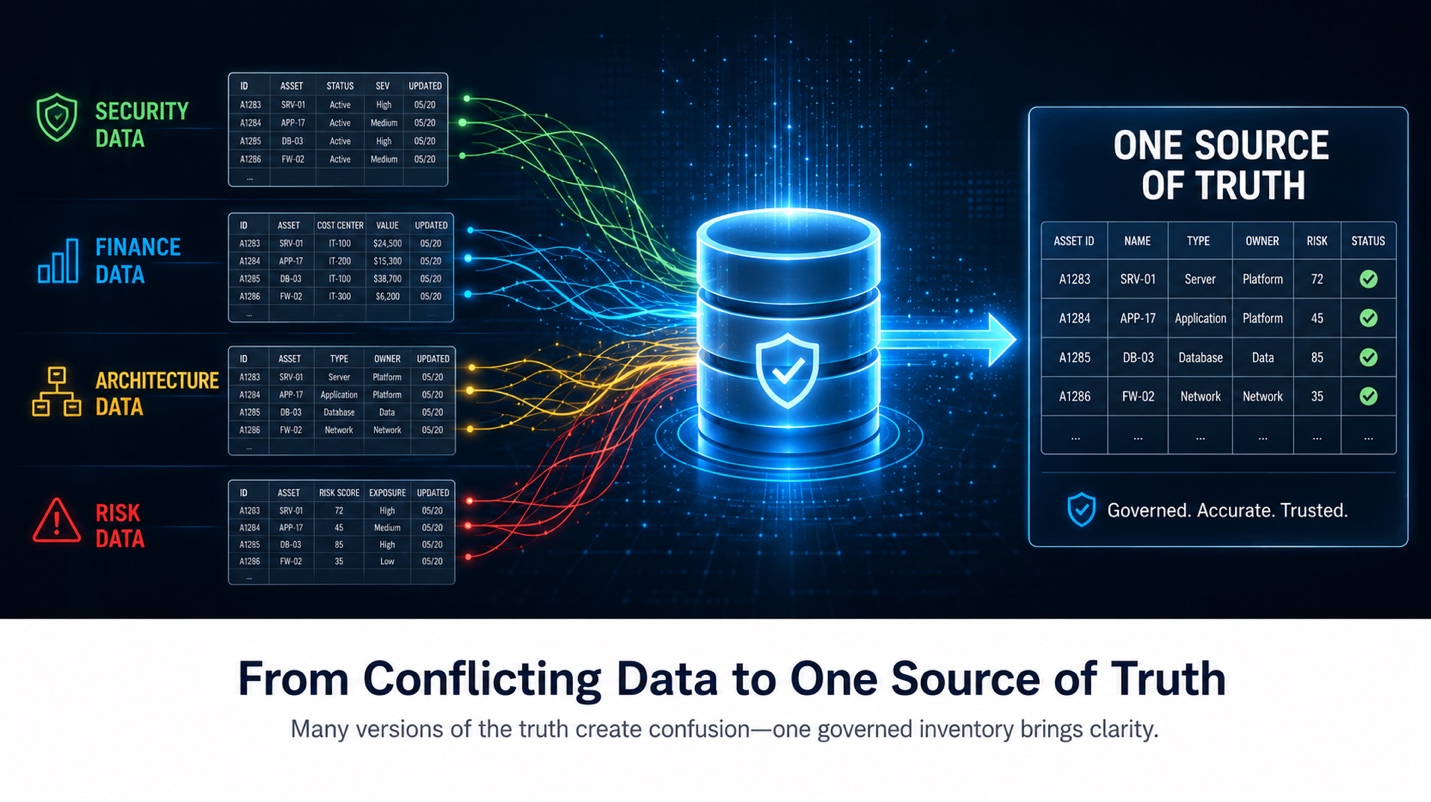
Governed enterprise inventories create a shared and authoritative factual foundation that moves cross-functional debate away from whose data is correct and toward the decisions that matter. Their value depends on reco...

read more
Solutions Architecture Best Practices and Framework

Best Practice

Solutions Architecture Best Practices and Framework

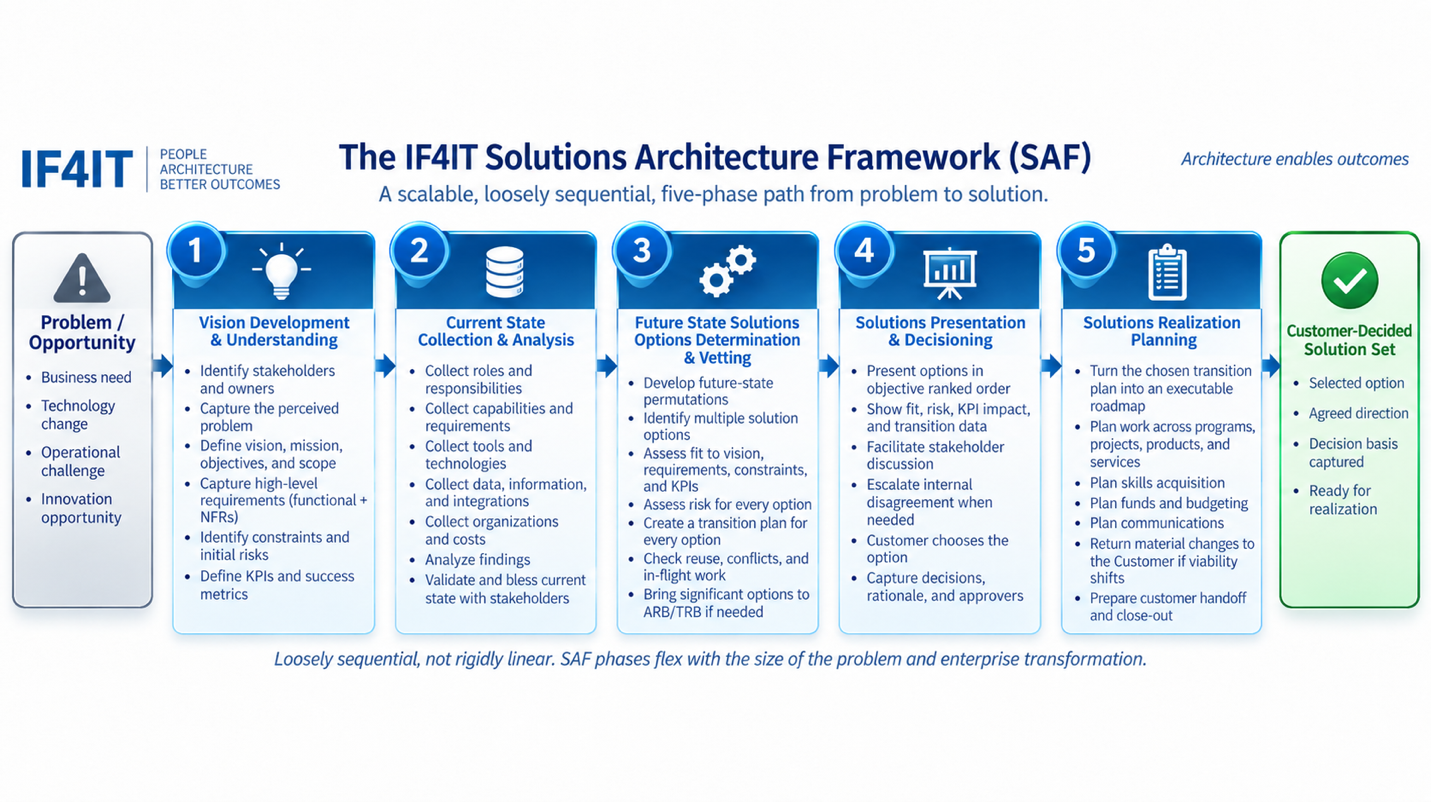
Solutions Architecture is not a new invention or a technology-selection exercise; it is a decades-proven consulting pattern, now standardized into one repeatable, governed discipline that turns an IT or Business probl...

read more
Stale Data Lies — Why an Inventory Is Never “Done”

Article

Stale Data Lies — Why an Inventory Is Never “Done”

An enterprise inventory is only trustworthy while it remains current. Because enterprise assets, owners, relationships, and operating conditions change continuously, inventory maintenance must be treated as an endurin...

read more
Successful Knowledge Management Requires Enterprise Inventories

Article

Successful Knowledge Management Requires Enterprise Inventories

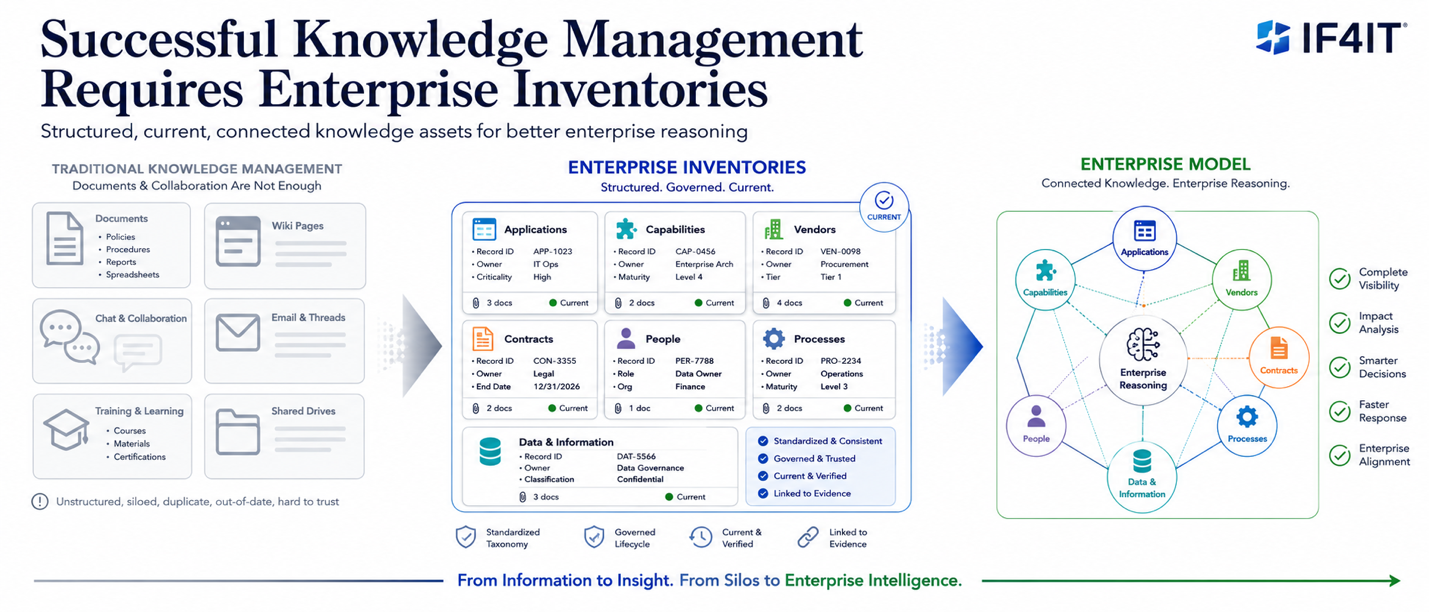
Knowledge Management programs that focus on documents, wikis, and collaboration tools while overlooking enterprise inventories are managing only part of the enterprise's knowledge. Inventories are commonly treated as...

read more
The Cost of Not Knowing — Why Enterprise Inventories Are Critical

Article

The Cost of Not Knowing — Why Enterprise Inventories Are Critical

Enterprises pay a recurring and often hidden cost when they cannot accurately describe their systems, data, ownership, spending, dependencies, and obligations. Governed enterprise inventories reduce this cost by makin...

read more
The IF4IT Enterprise Model and Modeling Best Practices

Best Practice

The IF4IT Enterprise Model and Modeling Best Practices

The IF4IT Enterprise Model and Modeling Best Practices explains how enterprises can design, govern, and use an AI-consumable semantic Enterprise Model that represents what the enterprise has, how those things relate,...

read more
THE IF4IT NOUNZ Data Compiler

Article

THE IF4IT NOUNZ Data Compiler

IF4IT NOUNZ is a data compiler that applies Data-Driven Compilation and Data-Driven Synthesis to transform governed enterprise data into reusable data graphs, semantic relationships, taxonomies, ontologies, visualizat...

read more
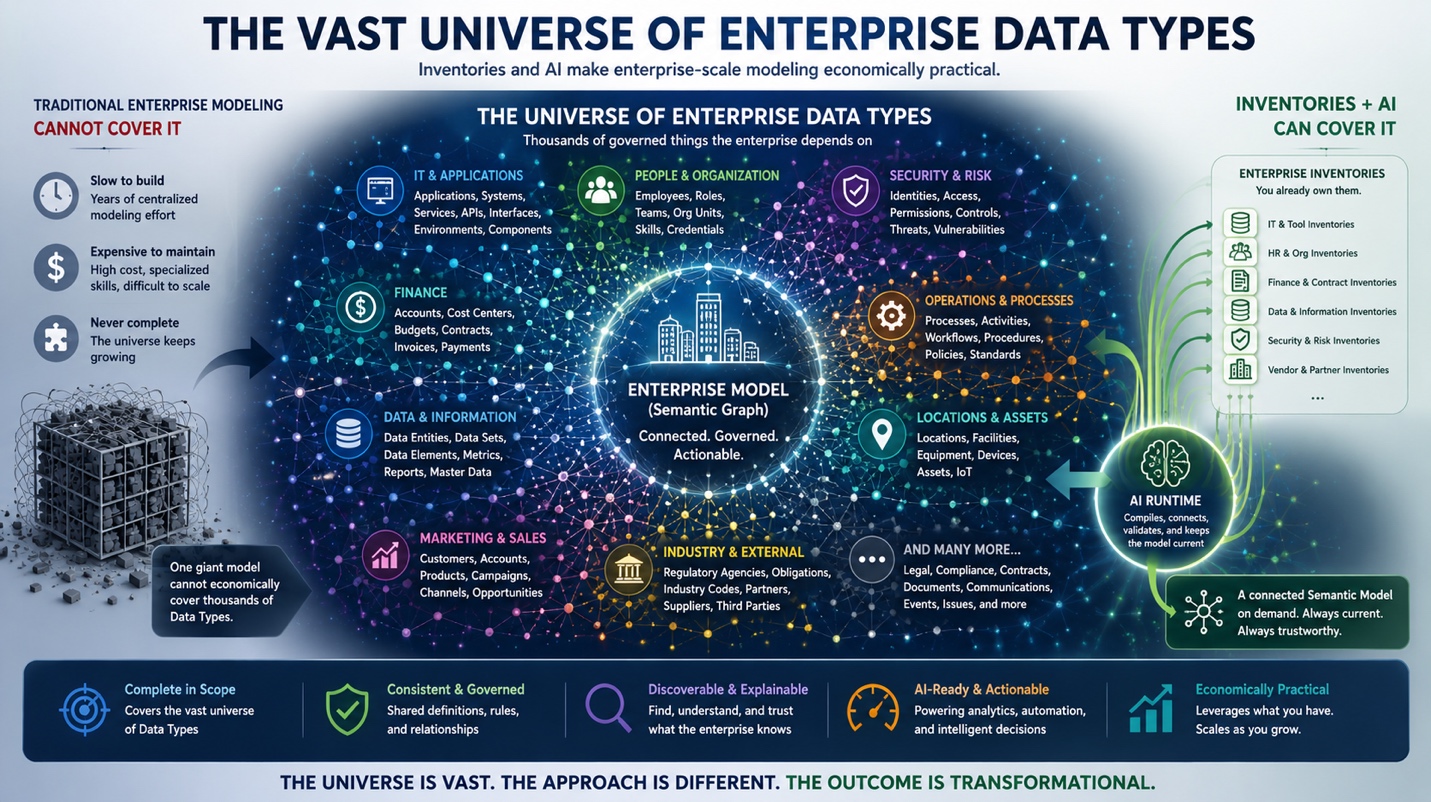
The Universe Of Enterprise Data Types Is Vast — Why Traditional Enterprise Modeling Cannot Cover It But Inventories And AI Can

Article

The Universe Of Enterprise Data Types Is Vast — Why Traditional Enterprise Modeling Cannot Cover It But Inventories And AI Can

Traditional centralized enterprise modeling cannot economically or operationally cover the full universe of enterprise Data Types. Enterprises can instead combine governed inventories with AI to compile a connected, s...

read more
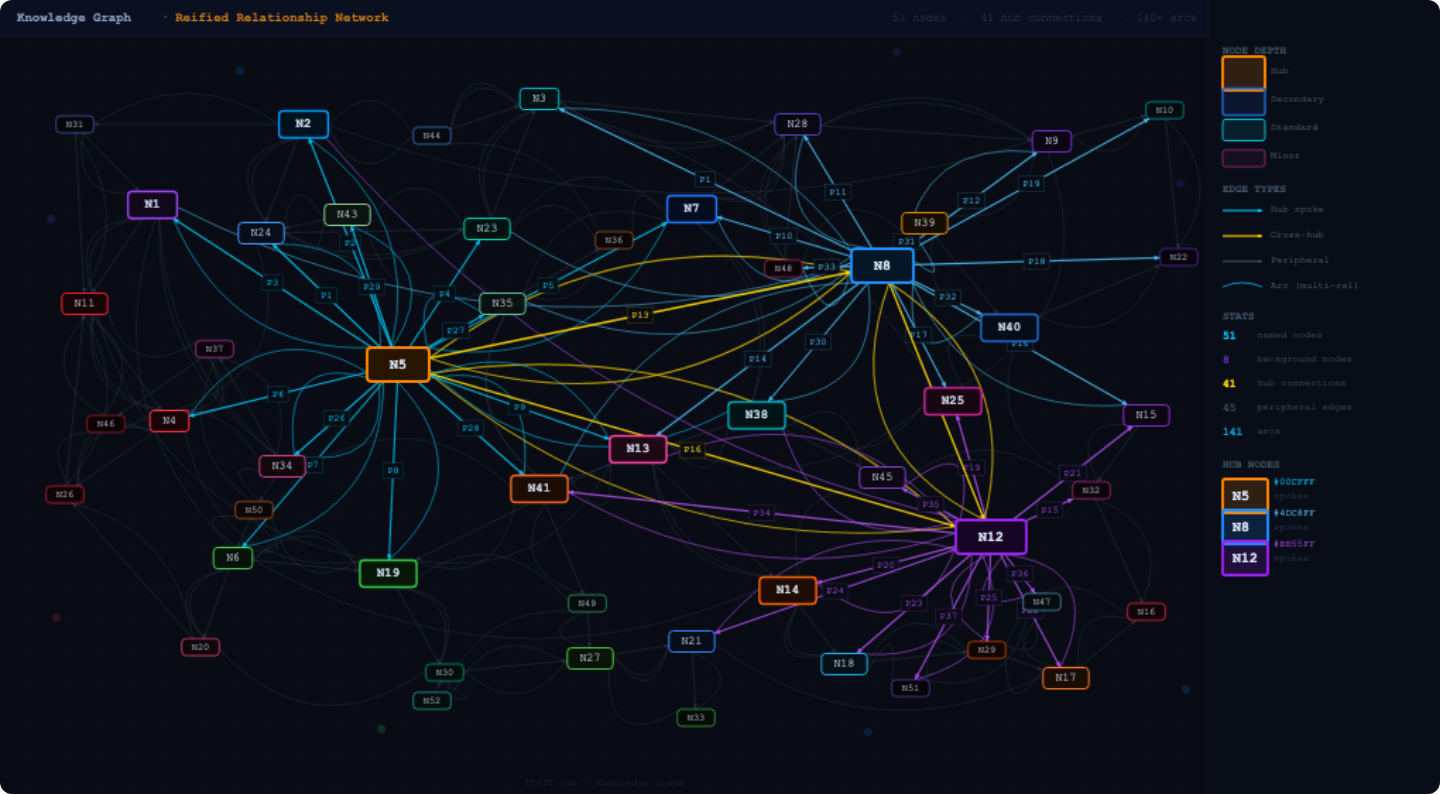
Understanding Reified Relationships, N-Tuples, and How They Give Life to Data

Article

Understanding Reified Relationships, N-Tuples, and How They Give Life to Data

Reification turns a relationship from an implicit connector into a first-class data object that can carry meaning, context, history, and governance. N-tuple depth describes how richly each reified relationship is repr...

read more
Using AI to Build and Maintain Enterprise Inventories and Models

Article

Using AI to Build and Maintain Enterprise Inventories and Models

Artificial intelligence can dramatically reduce the cost, time, and inconsistency involved in building and maintaining enterprise inventories by extracting, reconciling, cleansing, transforming, populating, and relati...

read more
What You Don’t Know About Your Own Enterprise Is Costing You: Understanding Why Enterprise Inventories Are Critical Knowledge Assets

Article

What You Don’t Know About Your Own Enterprise Is Costing You: Understanding Why Enterprise Inventories Are Critical Knowledge Assets

Enterprise inventories are strategic knowledge assets, not administrative lists. When inventories are complete, current, and connected through governed relationships, they form an Enterprise Model that enables leaders...

read more
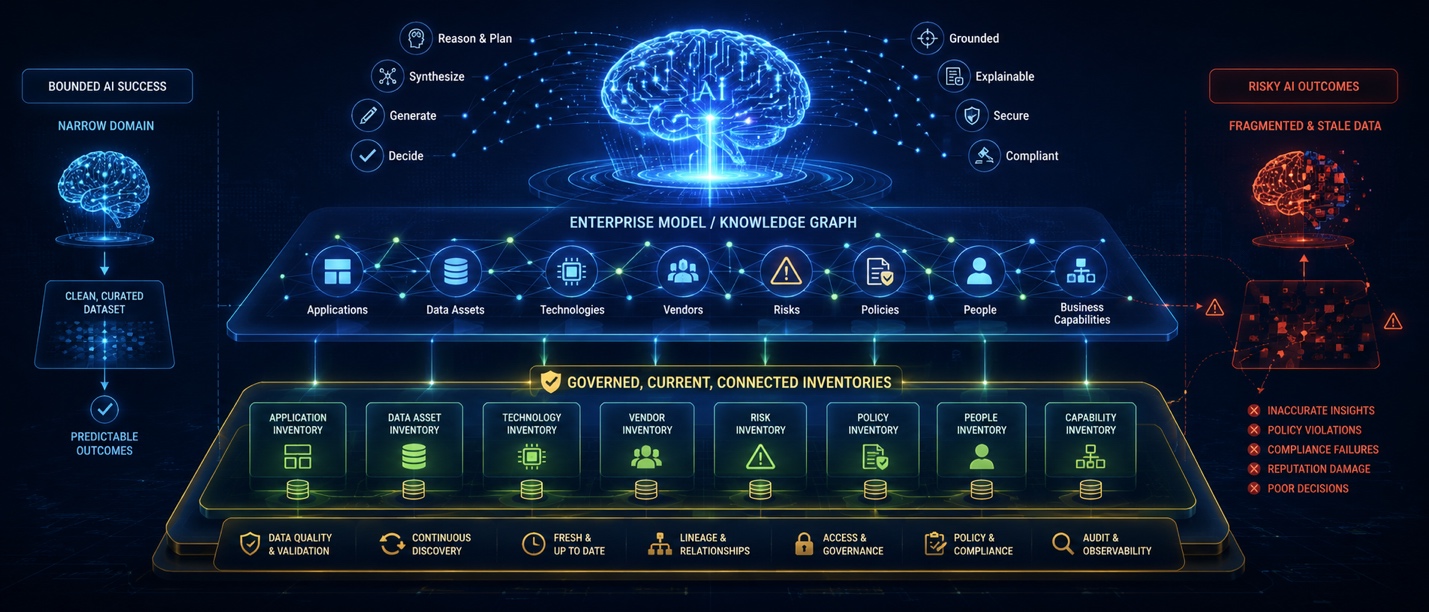
Your Enterprise AI Is Only as Good as Your Enterprise Inventories

Article

Your Enterprise AI Is Only as Good as Your Enterprise Inventories

Domain-specific AI can succeed with clean, bounded data, but enterprise-spanning AI depends on governed, current, and connected enterprise inventories. Better models, prompts, or retrieval techniques cannot compensate...

read more
AI Exposes the Knowledge Debt Enterprises Can No Longer Ignore

Article

AI Exposes the Knowledge Debt Enterprises Can No Longer Ignore

AI is exposing Knowledge Debt: the accumulated loss, fragmentation, and implicit capture of enterprise meaning across systems, data structures, rules, terminology, documentation, and human memory. Making legacy data A...

read more
AI Raises the Stakes on Knowing Yourself as an Enterprise

Article

AI Raises the Stakes on Knowing Yourself as an Enterprise

Artificial intelligence sharply increases the cost of carrying incomplete, stale, fragmented, or contradictory enterprise inventory data because AI systems can turn those defects into confident but unreliable answers....

read more
AI Right Isn’t About the Model You Buy — It’s About What You Give It to Reason Over

Article

AI Right Isn’t About the Model You Buy — It’s About What You Give It to Reason Over

Enterprise-wide Artificial Intelligence cannot become trustworthy merely by selecting a more capable model. It requires a governed, connected substrate that represents the enterprise across domains. Vertical AI can de...

read more
Building and Using Enterprise Knowledge Models with AI-Generated Data Graphs

Article

Building and Using Enterprise Knowledge Models with AI-Generated Data Graphs

AI-generated data graphs can transform scattered enterprise knowledge into a connected Enterprise Knowledge Model that humans and AI can query, traverse, visualize, and reason over. Without a governed <u>Taxonomy</u>,...

read more
Enterprise Capabilities Models (ECMs) as a Knowledge Management Tools

Article

Enterprise Capabilities Models (ECMs) as a Knowledge Management Tools

Enterprise Capability Models become far more valuable when enterprises use them as shared knowledge structures rather than static architecture diagrams. By relating capabilities to applications, processes, data, risks...

read more
Inventories Are Worth More Together — The Network Effect of a Connected Enterprise Model

Article

Inventories Are Worth More Together — The Network Effect of a Connected Enterprise Model

Enterprise inventories create their greatest value when they are governed as connected parts of an Enterprise Model rather than as isolated lists. Each new inventory adds its own information and expands the questions...

read more
Making Legacy Data AI-Ready Is Knowledge Debt Remediation

Article

Making Legacy Data AI-Ready Is Knowledge Debt Remediation

Making legacy data semantic and AI-ready is Knowledge Debt remediation: the governed work of making hidden, fragmented, outdated, inconsistent, inaccessible, or poorly governed enterprise meaning explicit. When enterp...

read more
One Source of Truth — How Inventories End the “Whose Numbers Are Right?” Debate

Article

One Source of Truth — How Inventories End the “Whose Numbers Are Right?” Debate

Governed enterprise inventories create a shared and authoritative factual foundation that moves cross-functional debate away from whose data is correct and toward the decisions that matter. Their value depends on reco...

read more
Stale Data Lies — Why an Inventory Is Never “Done”

Article

Stale Data Lies — Why an Inventory Is Never “Done”

An enterprise inventory is only trustworthy while it remains current. Because enterprise assets, owners, relationships, and operating conditions change continuously, inventory maintenance must be treated as an endurin...

read more
Successful Knowledge Management Requires Enterprise Inventories

Article

Successful Knowledge Management Requires Enterprise Inventories

Knowledge Management programs that focus on documents, wikis, and collaboration tools while overlooking enterprise inventories are managing only part of the enterprise's knowledge. Inventories are commonly treated as...

read more
The Cost of Not Knowing — Why Enterprise Inventories Are Critical

Article

The Cost of Not Knowing — Why Enterprise Inventories Are Critical

Enterprises pay a recurring and often hidden cost when they cannot accurately describe their systems, data, ownership, spending, dependencies, and obligations. Governed enterprise inventories reduce this cost by makin...

read more
THE IF4IT NOUNZ Data Compiler

Article

THE IF4IT NOUNZ Data Compiler

IF4IT NOUNZ is a data compiler that applies Data-Driven Compilation and Data-Driven Synthesis to transform governed enterprise data into reusable data graphs, semantic relationships, taxonomies, ontologies, visualizat...

read more
The Universe Of Enterprise Data Types Is Vast — Why Traditional Enterprise Modeling Cannot Cover It But Inventories And AI Can

Article

The Universe Of Enterprise Data Types Is Vast — Why Traditional Enterprise Modeling Cannot Cover It But Inventories And AI Can

Traditional centralized enterprise modeling cannot economically or operationally cover the full universe of enterprise Data Types. Enterprises can instead combine governed inventories with AI to compile a connected, s...

read more
Understanding Reified Relationships, N-Tuples, and How They Give Life to Data

Article

Understanding Reified Relationships, N-Tuples, and How They Give Life to Data

Reification turns a relationship from an implicit connector into a first-class data object that can carry meaning, context, history, and governance. N-tuple depth describes how richly each reified relationship is repr...

read more
Using AI to Build and Maintain Enterprise Inventories and Models

Article

Using AI to Build and Maintain Enterprise Inventories and Models

Artificial intelligence can dramatically reduce the cost, time, and inconsistency involved in building and maintaining enterprise inventories by extracting, reconciling, cleansing, transforming, populating, and relati...

read more
What You Don’t Know About Your Own Enterprise Is Costing You: Understanding Why Enterprise Inventories Are Critical Knowledge Assets

Article

What You Don’t Know About Your Own Enterprise Is Costing You: Understanding Why Enterprise Inventories Are Critical Knowledge Assets

Enterprise inventories are strategic knowledge assets, not administrative lists. When inventories are complete, current, and connected through governed relationships, they form an Enterprise Model that enables leaders...

read more
Your Enterprise AI Is Only as Good as Your Enterprise Inventories

Article

Your Enterprise AI Is Only as Good as Your Enterprise Inventories

Domain-specific AI can succeed with clean, bounded data, but enterprise-spanning AI depends on governed, current, and connected enterprise inventories. Better models, prompts, or retrieval techniques cannot compensate...

read more
Designing, Building, and Maintaining Comprehensive and Usable Enterprise Capability Models

Best Practice

Designing, Building, and Maintaining Comprehensive and Usable Enterprise Capability Models

A comprehensive Enterprise Capability Model is a governed, inventory-backed knowledge asset that represents the durable abilities an enterprise performs, intends to perform, or has decided to exit. This document expla...

read more
Enterprise Inventory Management Best Practices

Best Practice

Enterprise Inventory Management Best Practices

Enterprise Inventory Management establishes governed, authoritative inventories that collectively form a connected Enterprise Model. The practices in this document help organizations define ownership, improve accuracy...

read more
Solutions Architecture Best Practices and Framework

Best Practice

Solutions Architecture Best Practices and Framework

Solutions Architecture is not a new invention or a technology-selection exercise; it is a decades-proven consulting pattern, now standardized into one repeatable, governed discipline that turns an IT or Business probl...

read more
The IF4IT Enterprise Model and Modeling Best Practices

Best Practice

The IF4IT Enterprise Model and Modeling Best Practices

The IF4IT Enterprise Model and Modeling Best Practices explains how enterprises can design, govern, and use an AI-consumable semantic Enterprise Model that represents what the enterprise has, how those things relate,...

read more
Integrations Inventory and Attributes

Inventory

Integrations Inventory and Attributes

The Integrations Inventory is the governed record of every data and information flow, making integration complexity, dependency risk, data sensitivity, technology usage, and cross-boundary movement visible across the...

read more
© The International Foundation for Information Technology (IF4IT) 2008 - Present
Legal Disclaimers