The International Foundation for Information Technology (IF4IT)
  • Home
  • Best Practices & More
  • Articles
  • Dictionary
  • About Us
  • Contact Us
  • Catalog
  • Search
  1. Topics
  2. Technical Debt Management

Technical Debt Management

Share:
Contact Us → Subscribe →
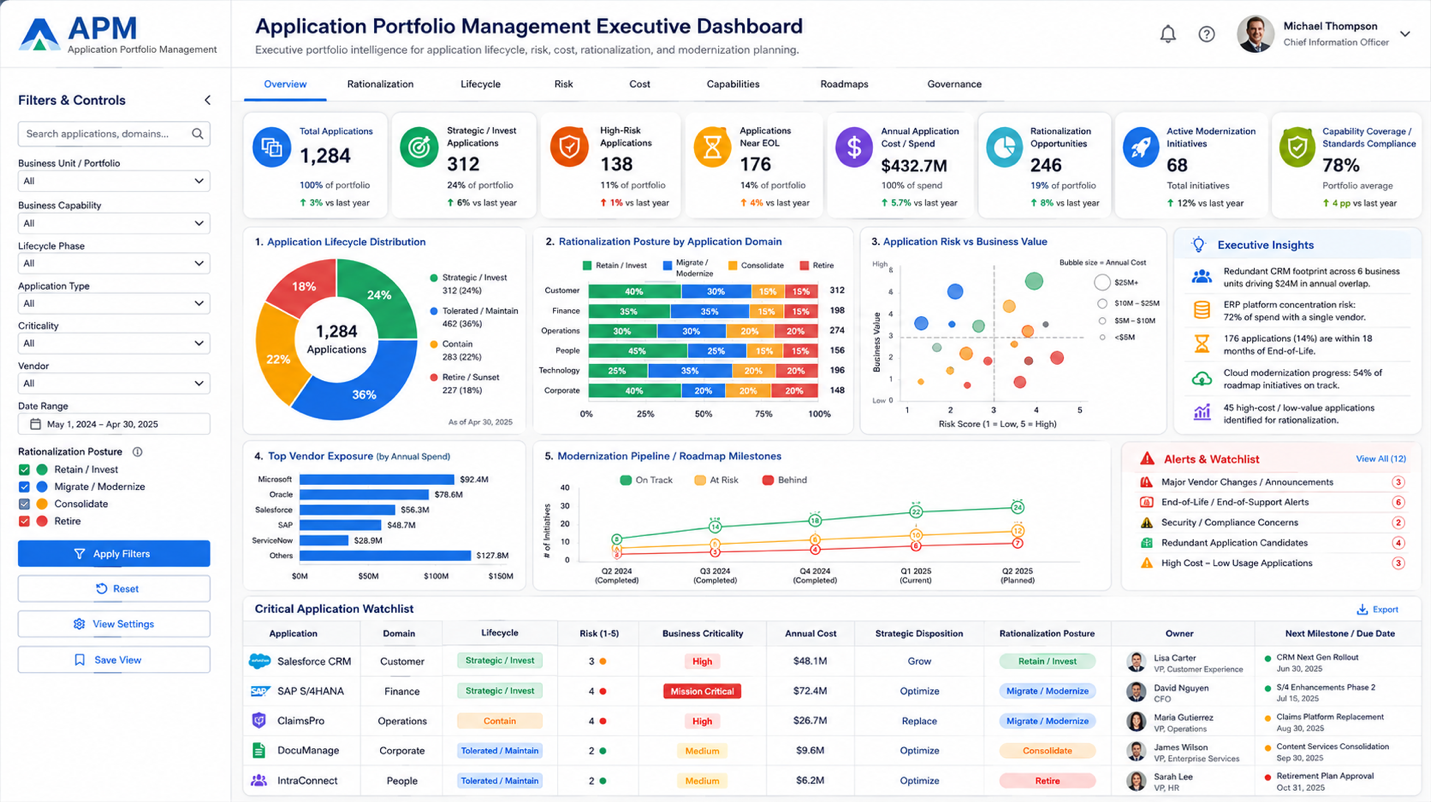
Application Portfolio Management (APM) Best Practices

Best Practice

Application Portfolio Management (APM) Best Practices

Application Portfolio Management (APM) is not an inventory spreadsheet or a purchased tool; it is the enterprise discipline that governs, funds, rationalizes, and strategically evolves every application the organizati...

read more
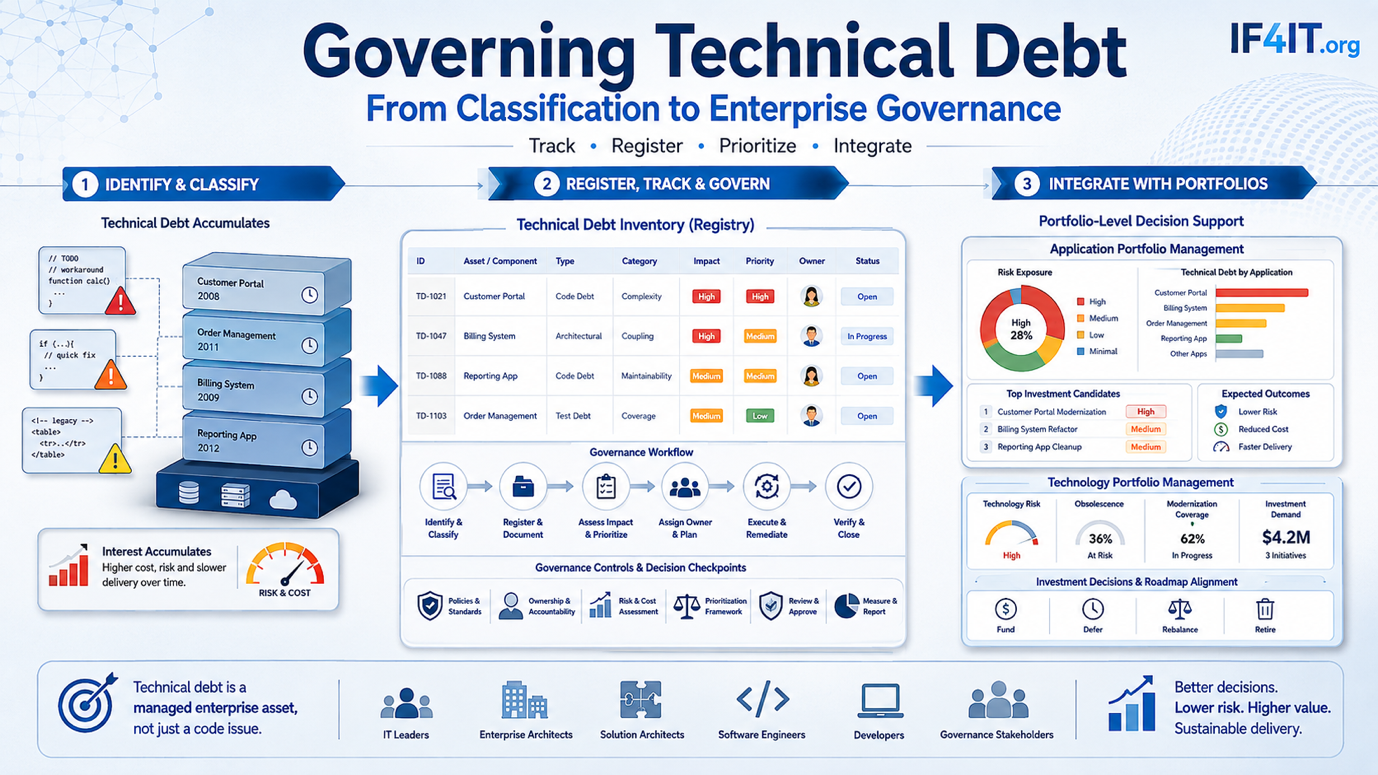
Governing Technical Debt as an Enterprise Discipline — The Framework That Helps IT Leaders Establish Technical Debt Tracking and Governance

Article

Governing Technical Debt as an Enterprise Discipline — The Framework That Helps IT Leaders Establish Technical Debt Tracking and Governance

Technical debt has been extensively classified and discussed for more than three decades, yet most IT organizations still lack a systematic governance framework for managing it as an enterprise management discipline....

read more
Technical Debt Inventory and Attributes

Inventory

Technical Debt Inventory and Attributes

The Technical Debt Inventory is the governed record of the Technical Debt Items an enterprise identifies across the Assets it owns, operates, or depends on. Without a governed inventory, Technical Debt remains fragmen...

read more
Technical Debt Management Best Practices

Best Practice

Technical Debt Management Best Practices

Technical Debt Management is the IT Management discipline for governing technical conditions and unresolved obligations that make governed Assets more costly, difficult, risky, or constrained to change, operate, secur...

read more
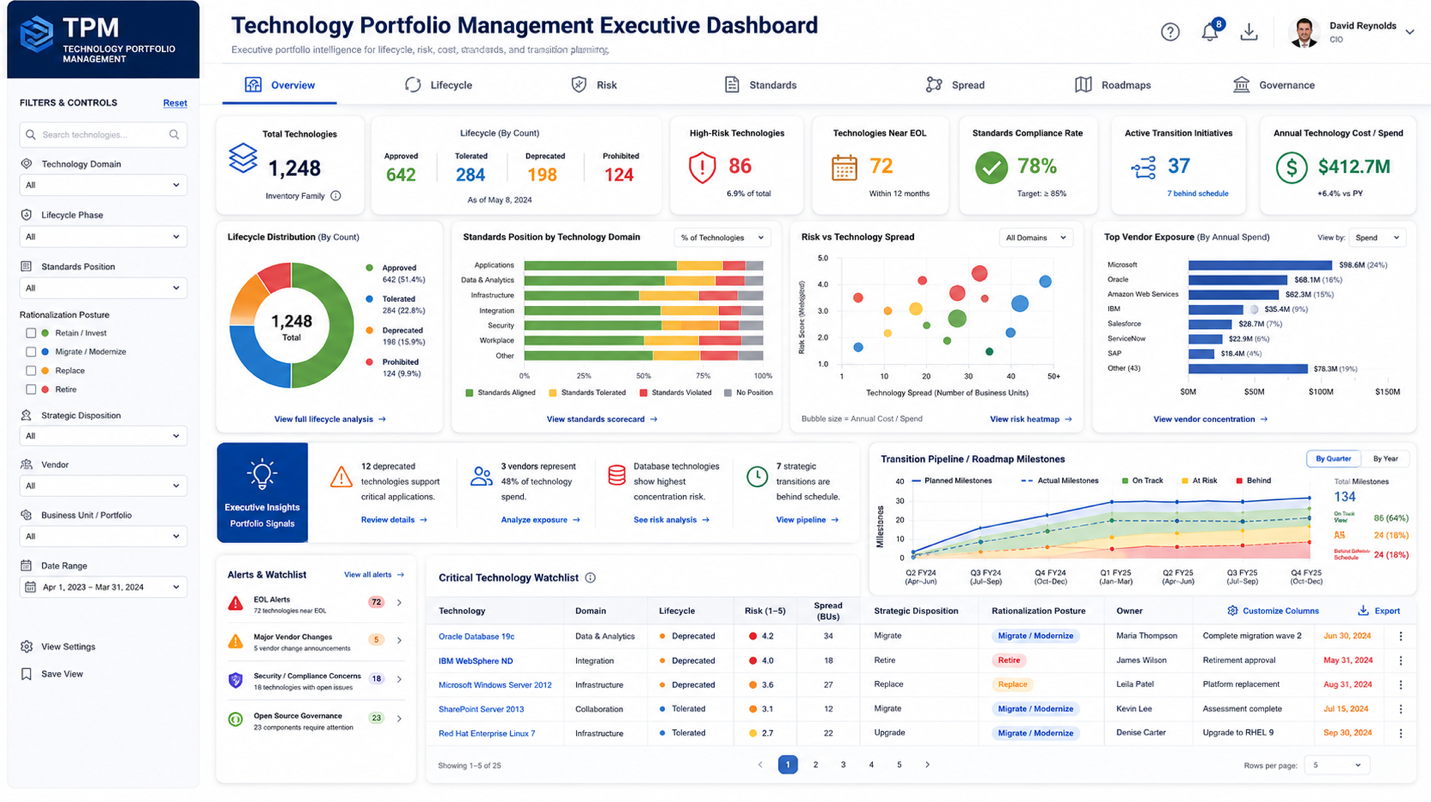
Technology Portfolio Management (TPM) Best Practices

Best Practice

Technology Portfolio Management (TPM) Best Practices

Technology Portfolio Management is the enterprise discipline for governing technologies as strategic assets through connected inventories, explicit ownership, lifecycle and standards controls, evidence-based assessmen...

read more
Governing Technical Debt as an Enterprise Discipline — The Framework That Helps IT Leaders Establish Technical Debt Tracking and Governance

Article

Governing Technical Debt as an Enterprise Discipline — The Framework That Helps IT Leaders Establish Technical Debt Tracking and Governance

Technical debt has been extensively classified and discussed for more than three decades, yet most IT organizations still lack a systematic governance framework for managing it as an enterprise management discipline....

read more
Application Portfolio Management (APM) Best Practices

Best Practice

Application Portfolio Management (APM) Best Practices

Application Portfolio Management (APM) is not an inventory spreadsheet or a purchased tool; it is the enterprise discipline that governs, funds, rationalizes, and strategically evolves every application the organizati...

read more
Technical Debt Management Best Practices

Best Practice

Technical Debt Management Best Practices

Technical Debt Management is the IT Management discipline for governing technical conditions and unresolved obligations that make governed Assets more costly, difficult, risky, or constrained to change, operate, secur...

read more

Technology Portfolio Management (TPM) Best Practices

Best Practice

Technology Portfolio Management (TPM) Best Practices

Technology Portfolio Management is the enterprise discipline for governing technologies as strategic assets through connected inventories, explicit ownership, lifecycle and standards controls, evidence-based assessmen...

read more
Technical Debt Inventory and Attributes

Inventory

Technical Debt Inventory and Attributes

The Technical Debt Inventory is the governed record of the Technical Debt Items an enterprise identifies across the Assets it owns, operates, or depends on. Without a governed inventory, Technical Debt remains fragmen...

read more
© The International Foundation for Information Technology (IF4IT) 2008 - Present
Legal Disclaimers